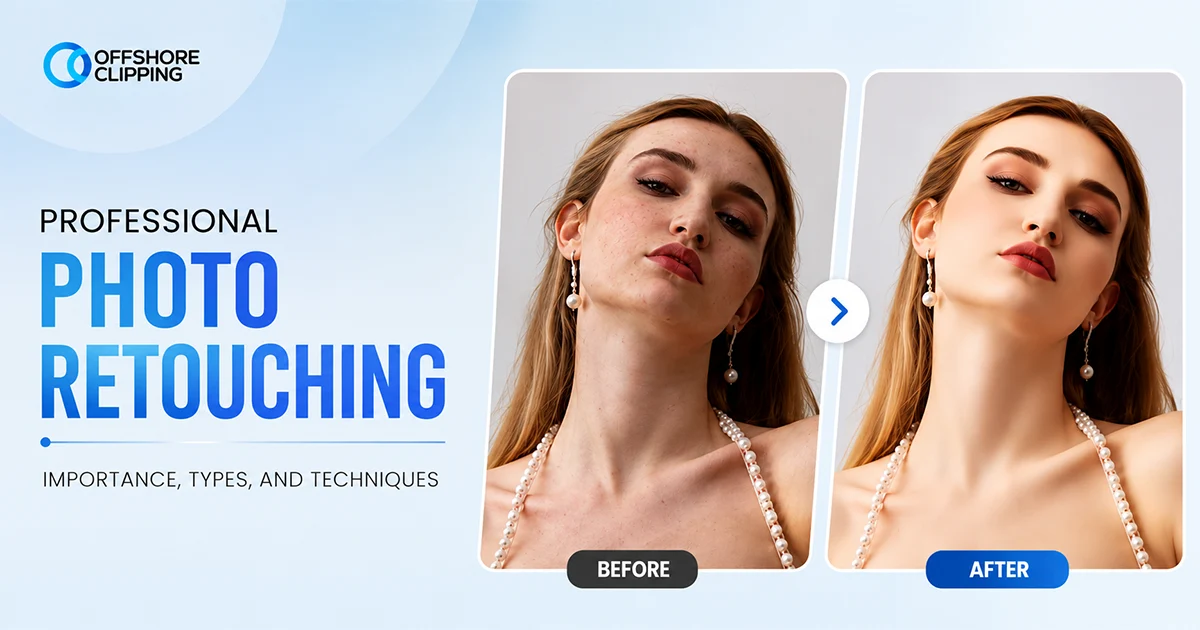
Photo retouching (also called image retouching) is the process of fixing flaws and fine-tuning a photo’s skin, color, shadows, background, and blemishes so it looks polished and commercially ready. Unlike general photo editing, which covers any change made to an image, retouching focuses specifically on correcting imperfections and elevating quality, without altering the photo’s original composition.
E-commerce brands, fashion labels, advertising agencies, and photographers all rely on professional retouching to turn a raw shot into a publish-ready image one that builds trust, holds attention, and converts browsers into buyers.
Quick definition: Photo retouching = removing flaws (skin marks, dust, distractions, color casts) + enhancing quality (tone, sharpness, shadows) = a flawless, commercially usable image.
What is Photo Retouching?
Photo retouching (also known as digital image retouching or simply retouching) is a specialized branch of image editing focused on removing flaws and enhancing the visual quality of a photograph. A retoucher works at both the basic and advanced levels, including resizing, background cleanup, color correction, tone balancing, contrast, and brightness adjustments to make an image look natural, balanced, and market-ready.
The most common software for photo retouching includes Adobe Photoshop, Adobe Lightroom, GIMP, Skylum Luminar, and Affinity Photo.
Why is Photo Retouching Important?
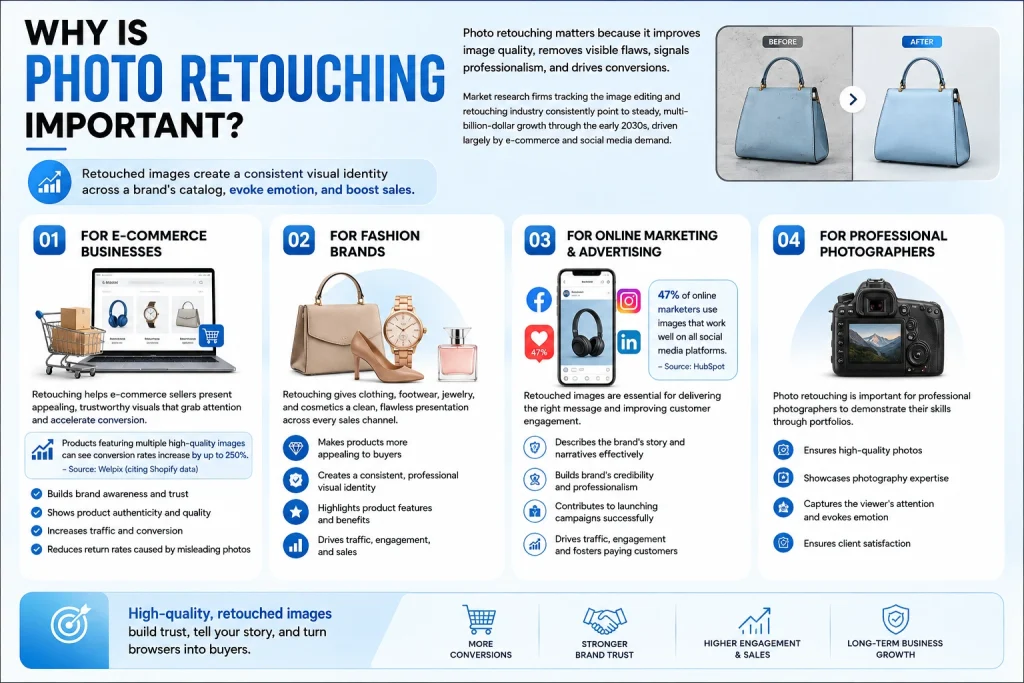
Photo retouching matters because it improves image quality, removes visible flaws, signals professionalism, and drives conversions. Fashion brands, manufacturers, online marketers, content creators, and industries like retail, e-commerce, and automotive all depend on it. Market research firms tracking the image editing and retouching industry consistently point to steady, multi-billion-dollar growth through the early 2030s, driven largely by e-commerce and social media demand. Retouched images create a consistent visual identity across a brand’s catalog, evoke emotion, and boost sales.
For E-commerce Businesses
Retouching helps e-commerce sellers present appealing, trustworthy visuals that grab attention and accelerate conversion. Welpix, citing Shopify data, reports that products featuring multiple high-quality images can see conversion rates increase by up to 250%. Amazon, eBay, and Shopify all enforce strict image-quality guidelines.
- Builds brand awareness and trust
- Shows product authenticity and quality
- Increases traffic and conversion
- Reduces return rates caused by misleading photos
For Fashion Brands
Retouching gives clothing, footwear, jewelry, and cosmetics a clean, flawless presentation across every sales channel.
- Makes products more appealing to buyers
- Creates a consistent, professional visual identity
- Highlights product features and benefits
- Drives traffic, engagement, and sales
For Online Marketing & Advertising
Image retouching is important for advertising and online marketing to secure high-quality images for conveying the right message and improving customer engagement. A blog by HubSpot revealed that 47% of online marketers use images that work well on all social media platforms. Online marketers use images to implement digital marketing techniques to gain competitive advantages. Retouched images impact online marketing and advertising in the following ways.
- Describes the brand’s story and narratives effectively
- Builds the brand’s credibility and professionalism
- Contributes to launching campaigns successfully
- Drives traffic and engagement and fosters paying customers
For Professional Photographers?
Photo retouching is important for professional photographers to demonstrate their skills through portfolios. Retouching provides an artistic, detail-oriented, and professional presentation for the photographer’s work in the competitive visual-driven market. By retouching photos, photographers receive the following advantages.
- Ensures high-quality photos
- Showcases photography expertise
- Captures the viewer’s attention and evokes emotion
- Ensures client satisfaction
Types of Photo Retouching?
Retouching is categorized by purpose and subject. Here’s a quick overview of all 18 types, followed by a detailed breakdown of each one below:
| Type | What It Does | Common Use Cases |
|---|---|---|
| High-End Retouching | Pixel-precise editing without distorting the image | Fashion, e-commerce, advertising, real estate |
| Portrait Retouching | Skin tone, stray hair, and blemish correction | Model photography, magazines, editorials |
| Headshot Retouching | Facial improvement while keeping natural features | Corporate, LinkedIn/social profiles |
| Product Retouching | Color, size, and distraction correction | E-commerce, food, electronics, beauty |
| Commercial Retouching | Light/color adjustment for promotional use | Digital and print ad campaigns |
| Fashion Retouching | Combines model, product, and beauty retouching | Apparel, footwear, jewelry brands |
| Beauty Retouching | Basic to high-end editing on products/models | Cosmetics, skincare brands |
| Model Photo Retouching | Face, skin, hair, and body retouching | Influencers, fashion agencies |
| Body Retouching | Slimming, shaping, cellulite removal | Fitness, fashion, beauty brands |
| Skin Retouching | Removes temporary marks, keeps natural ones | Fashion, beauty, influencers |
| Hair Retouching | Flyaways, volume, shine, color correction | Fashion, beauty, e-commerce |
| Makeup Retouching | Fine-tunes eyes, brows, lips, jawline | Influencers, beauty brands |
| Glamour Retouching | Facial features, skin tone, hair enhancement | Fashion/cosmetic ads |
| Editorial Retouching | Platform-tailored aesthetic improvement | Magazines, billboards, publishing |
| Creative Retouching | Collaging, blending, reshaping | Conceptual, surreal imagery |
| Packshot Retouching | Packaging, labeling, branding cleanup | E-commerce, cosmetic packaging |
| Stock Photo Retouching | Color, exposure, sharpening, noise reduction | Stock photography |
1. High-End Retouching
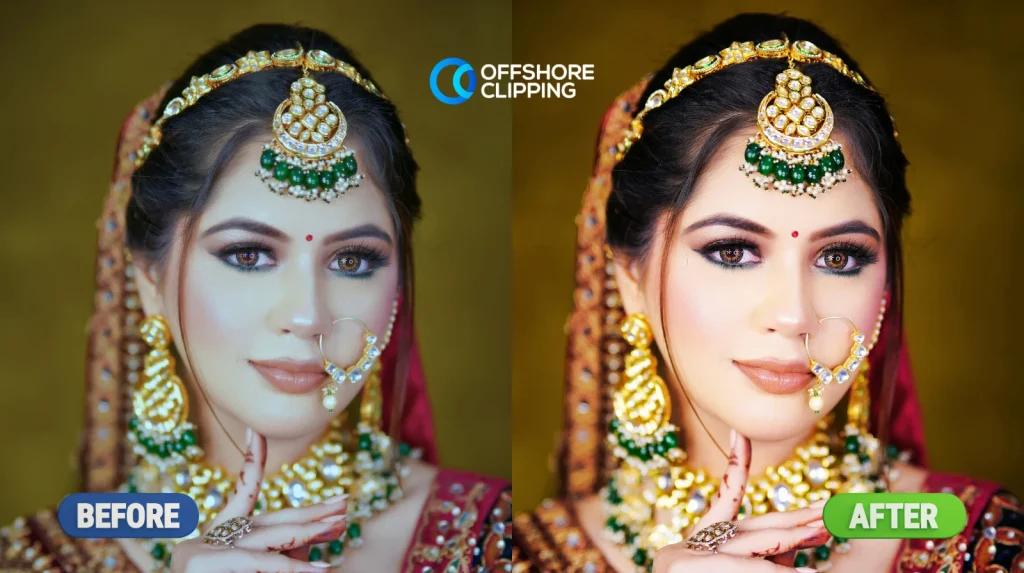
High-end retouching is an artistic and sophisticated photo retouching process without deforming any pixels. High-end retouching is used to ensure high standards and top-notch refinement in commercial photography. This retouching provides flawless photos, removes imperfections, and brings dramatic color combinations.
Use cases:
- High-end photos are mostly used in the fashion industry,
- e-commerce industry,
- marketing and advertising,
- model photography,
- real estate photography, and
- portrait photography.
2. Portrait Retouching
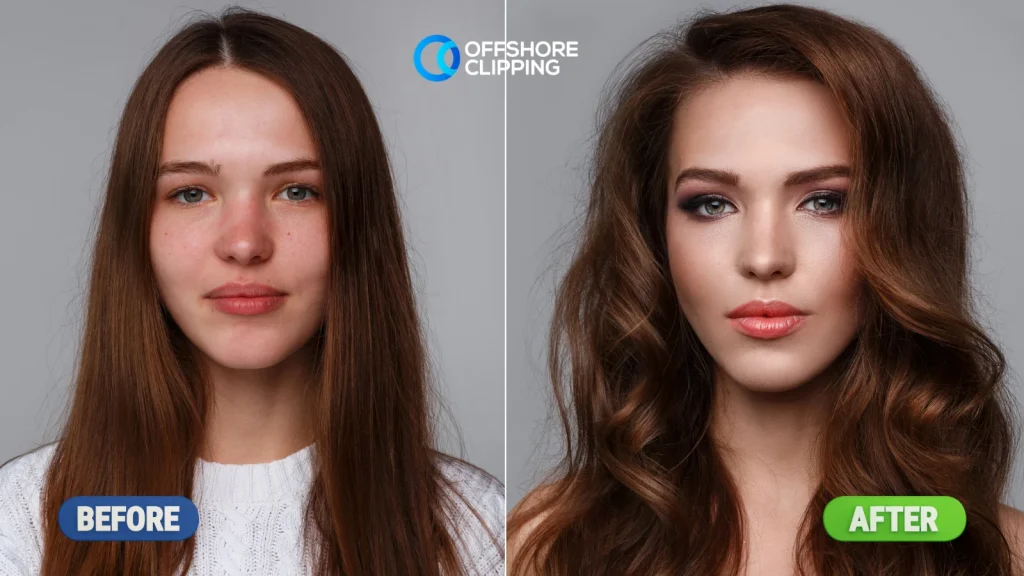
Portrait retouching is dedicated to editing digital images with models. A retoucher manipulates the model’s images from different angles—adjusts skin tone, removes stray hairs & facial blemishes, brightens teeth, and eliminates dark spots. Retouching displays people’s personalities and overall image vibes.
Use cases:
- Portrait retouching is used in model photography,
- magazine,
- advertising, and
- editorial features in print media.
3. Headshot Retouching
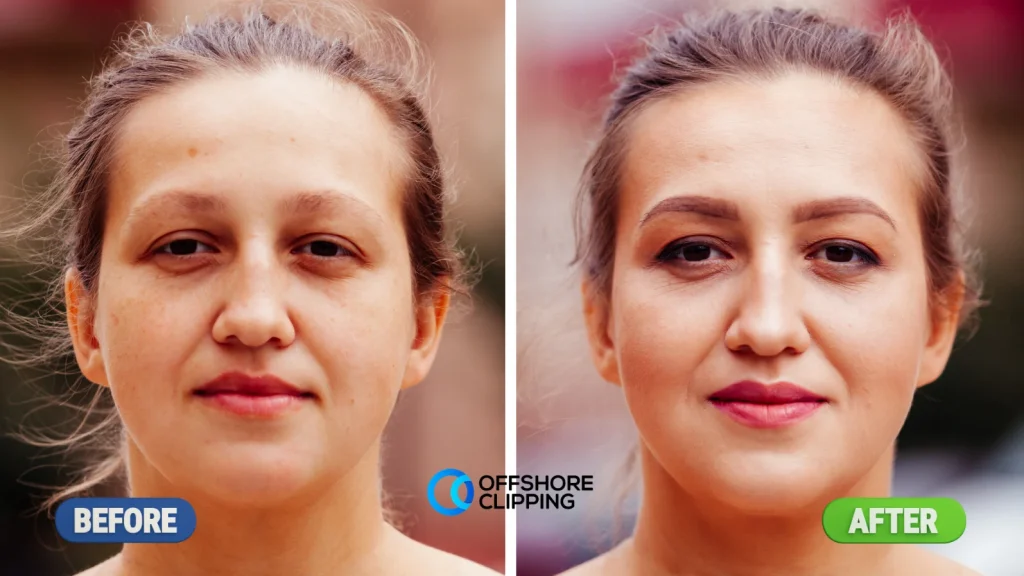
Headshot retouching is a specific retouching type applied only to the face. Headshot retouching aims to improve facial appearance, retain natural features, and remove blemishes. A fresh and healthy face increases viewers’ approachability and displays professionalism.
Use cases:
- Headshot retouching is mostly used in corporate and business profile photos,
- social media portfolios, and
- entertainment industries.
4. Product Retouching
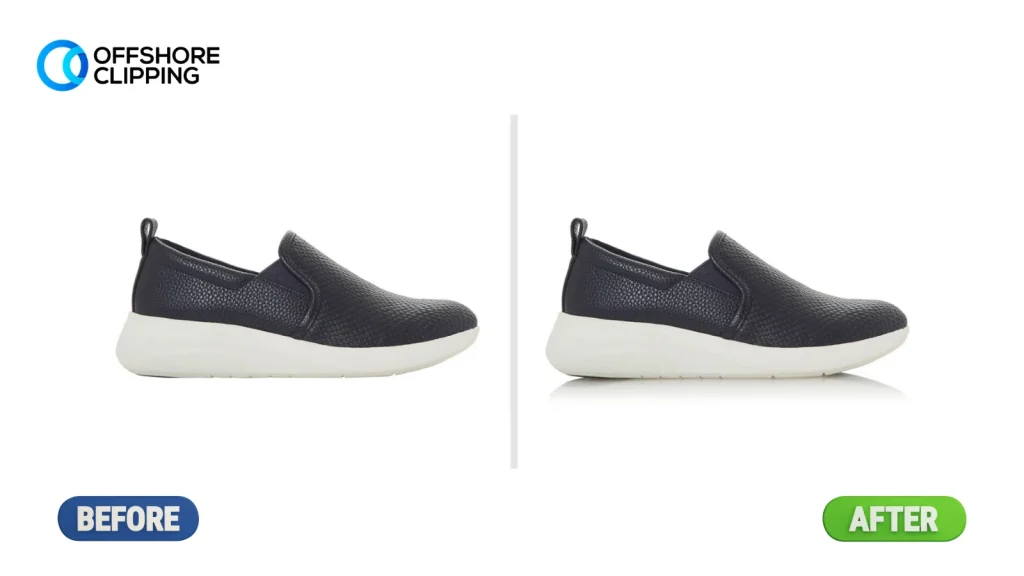
Product retouching is the editing process to enhance product images. Product photo retouching makes the product realistic by adjusting color and size, eliminating distractions, and improving quality. High-quality product images boost online product sales and minimize return rates.
Use cases:
- Product image retouching is mostly used in the e-commerce industry,
- food industry,
- electronic gadgets,
- beauty, and
- healthcare industry.
5. Commercial Retouching
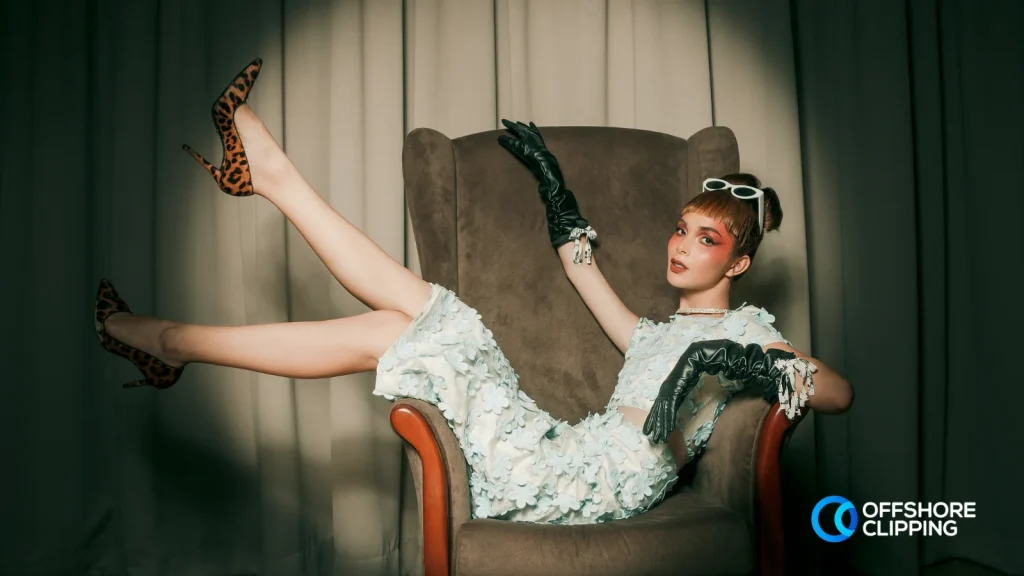
Commercial retouching refers to retouching images to fulfill promotional and marketing purposes. Commercial retouchers create visually appealing images that spark viewers’ curiosity and drive traffic to the brands. This type of retouching involves light and color adjustments, flaw correction, and highlighting features.
Use cases:
- Commercial photo retouching is used for online campaigns and
- advertising on digital & print media.
6. Fashion Retouching
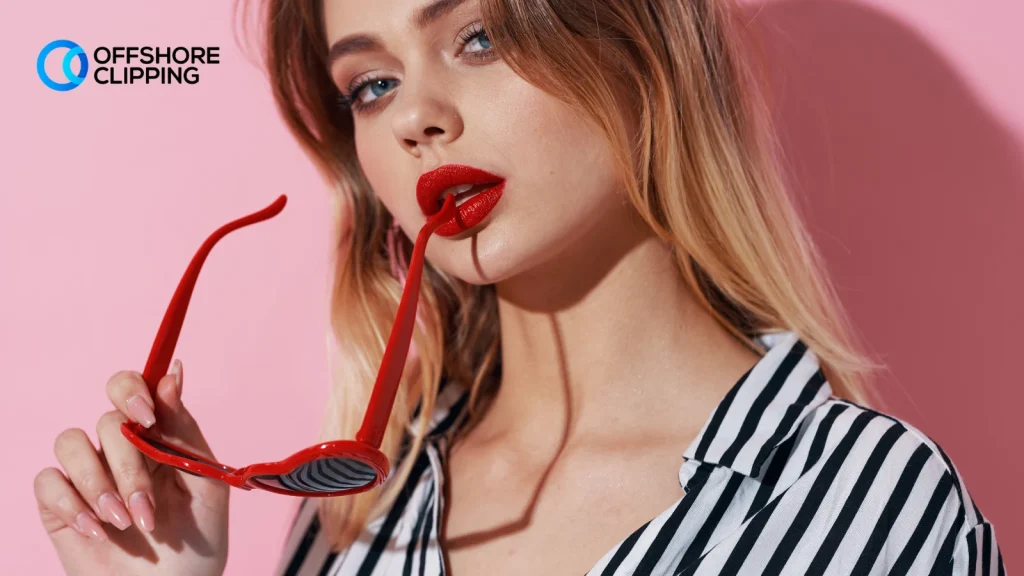
Fashion retouching is an exclusive editing process for fashion products and models’ photos. Fashion photo retouching focuses on color, appearance, and detail. It creates visually stunning photos by eliminating flaws and enhancing resolution and quality. Fashion image retouching involves model retouching, beauty retouching, product retouching, etc.
Use cases:
- Apparel industry,
- footwear industry,
- beauty and skincare industry,
- cosmetics industry,
- healthcare industry,
- jewelry & accessories industry, and
- fashion photographers mostly hire fashion photo retouching solutions.
7. Beauty Retouching
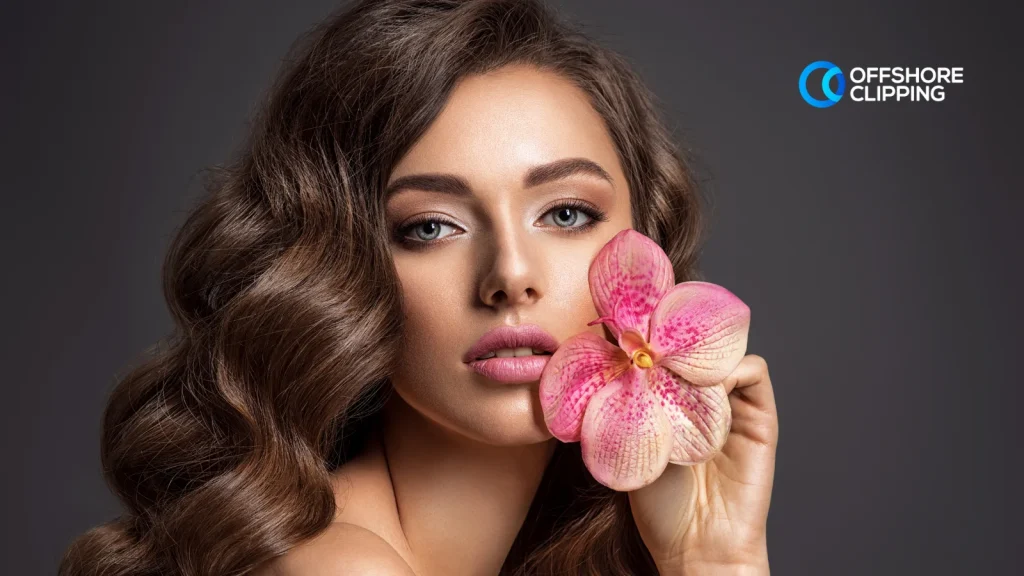
Beauty retouching refers to retouching beauty product photos. Beauty retouching involves both product and model photos. So the retouching work varies from basic-level editing to high-end editing, color correction, resizing, following symmetry correction, etc. Such photos help viewers see before-and-after effects and impact conversion.
Use cases:
- Beauty retouching is used by beauty products,
- cosmetics,
- skincare, and health improvement products manufacturers,
- online marketers, and
- model photographers.
8. Model Photo Retouching
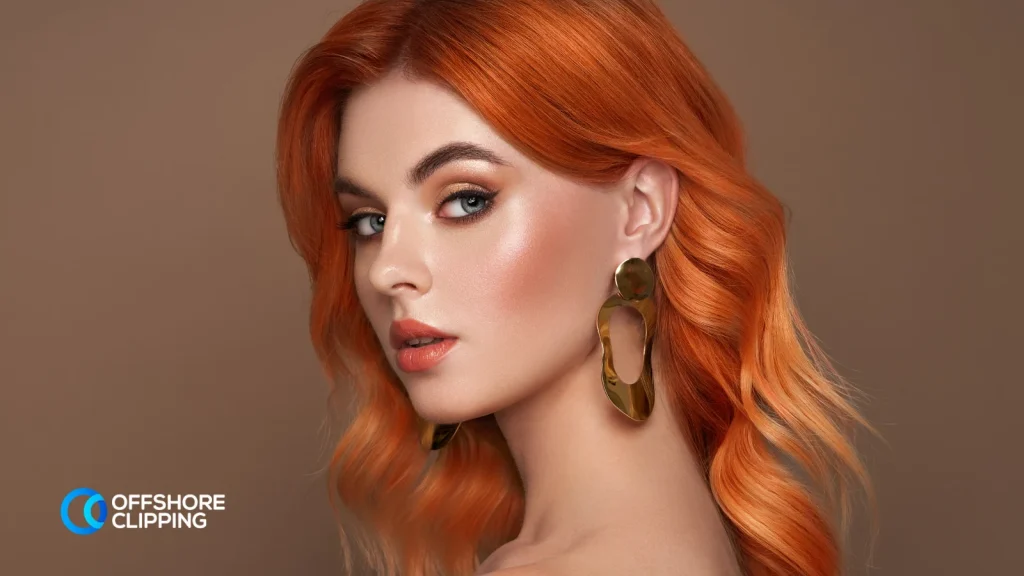
Model photo retouching is a dedicated retouching solution for editing lifestyle photos and model photos. Model retouching makes images attractive, glamorous, and flawless. The process of retouching the model includes face, skin, hair, and body retouching.
Use cases:
- E-commerce store owners,
- professional photographers,
- advertising agencies,
- beauty brands,
- fashion brands, and
- social media influencers use model retouching.
9. Body Retouching
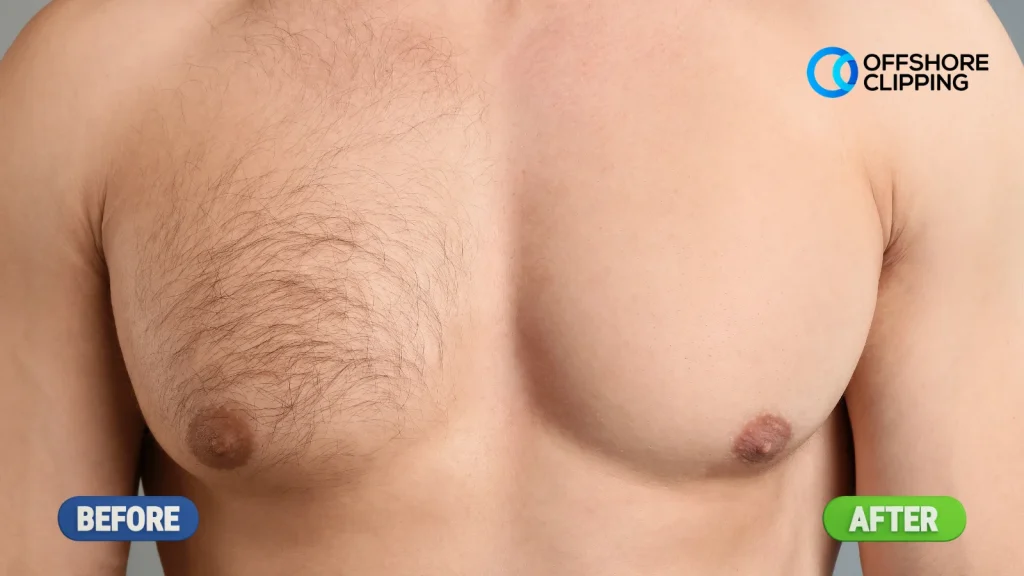
Body retouching is the photo editing work of adjusting the human body. Common body photo retouching techniques include body slimming, shaping, eliminating cellulite from muscles, arms, belly, and thighs, highlighting natural curves, height adjustment, etc. Such photos display the models with the perfect body shape that viewers crave.
Use cases:
- Fashion businesses,
- beauty products,
- health and fitness product brands,
- advertising agencies,
- online marketers, and
- the e-commerce industry mostly look for body photo retouching solutions.
10. Skin Retouching
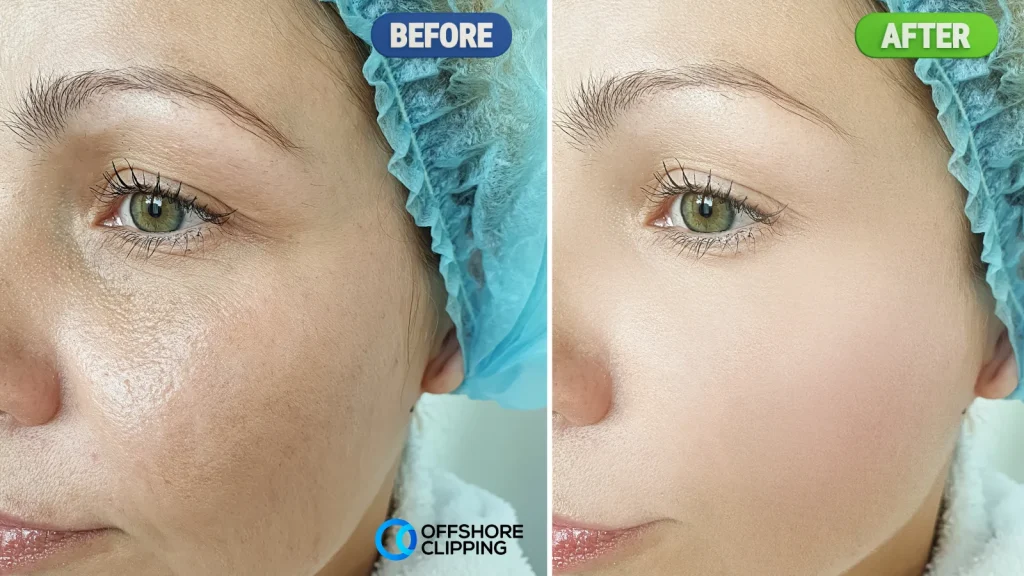
Skin retouching refers to removing unwanted blemishes in the skin and rejuvenating it. In skin photo retouching, temporary marks (acne and pores) are removed. Permanent marks such as birthmarks, moles, and age-based marks are kept. Skin retouching makes model photos naturally glowing, devoid of any artificial look.
Use cases:
- Skin retouching is sought by fashion and beauty industries,
- models and influencers, and
- professional photographers.
11. Hair Retouching
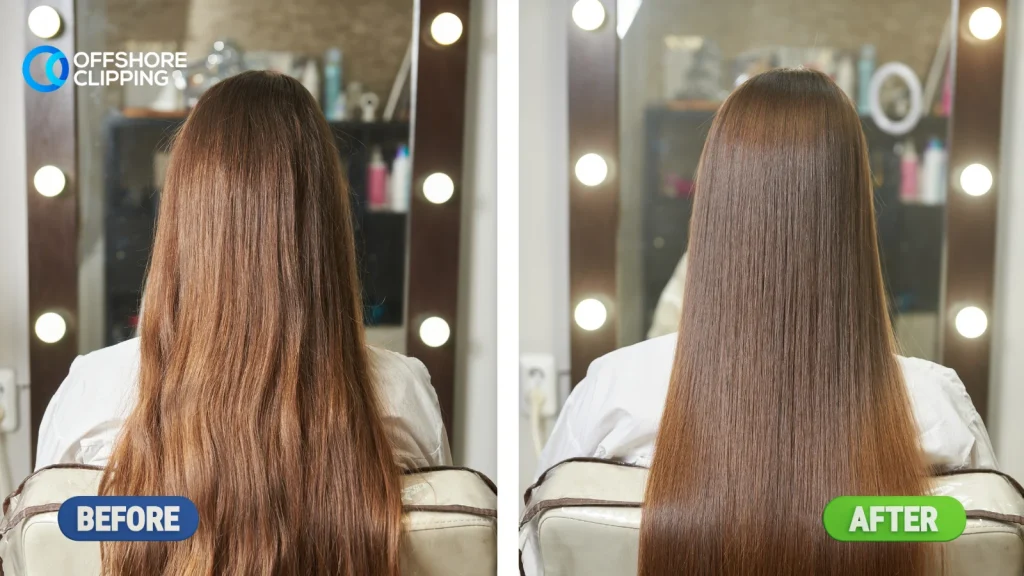
Hair retouching works on frizzy and loose hair strands and secures stylish-looking hair. Hair photo retouching includes removing flyaway hair, adding hair volume, shine, color correction, and refining images.
Use cases:
- Hair retouching is mostly used in the fashion and beauty products industry,
- e-commerce industry,
- online advertising, etc.
12. Makeup Retouching
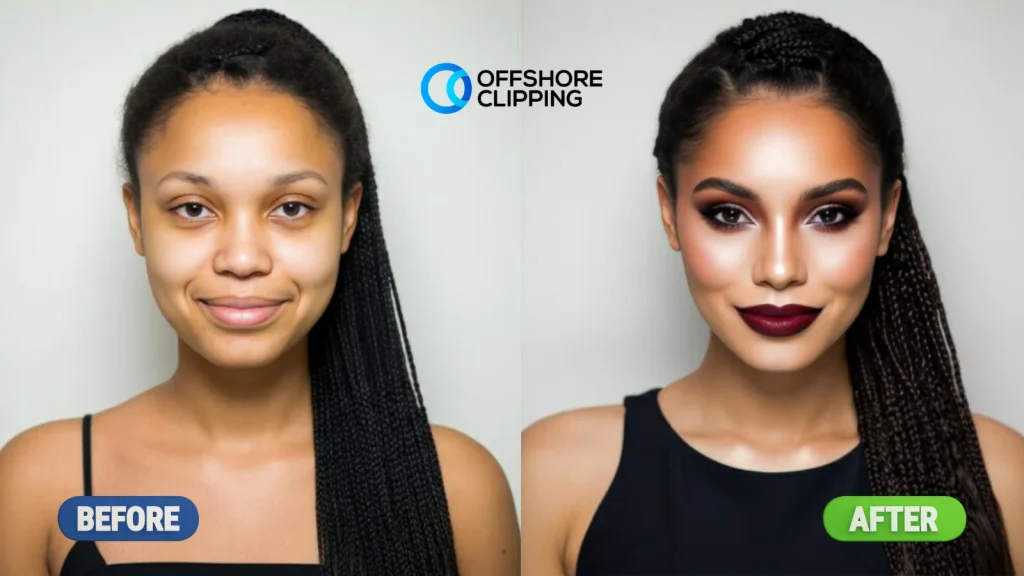
Makeup retouching is the retouching process of fine-tuning and highlighting the makeup on the eyes, eyebrows, cheeks, lips, jawline, etc. Makeup retouching is a precise retouching process. Product images get highlighted for features and benefits. Models’ images focus on looking attractive yet natural. This type of retouching accentuates the subject’s appearance and delivers a professional makeup look.
Use cases:
- Social media influencers, e-commerce brands,
- professional photographers,
- beauty and cosmetics industry mainly uses makeup retouching.
13. Glamour Retouching
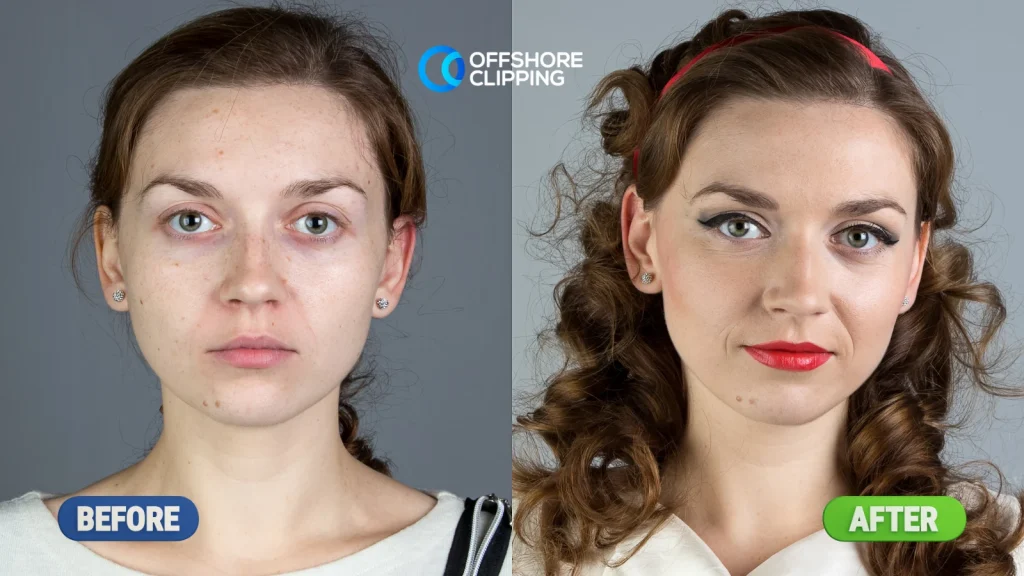
Glamour retouching is a digital makeup technique to update a model’s look visually. Glamour retouching includes many improvements, for example, enhancing facial features & skin tone, cohesive color tone, removing flaws, and adjusting hair. The edited images look gorgeous to look at.
Use cases:
- Glamour photo retouching is particularly used in advertising and print media for fashion and cosmetic brands,
- lifestyle photography, and
- portrait photography.
14. Editorial Retouching
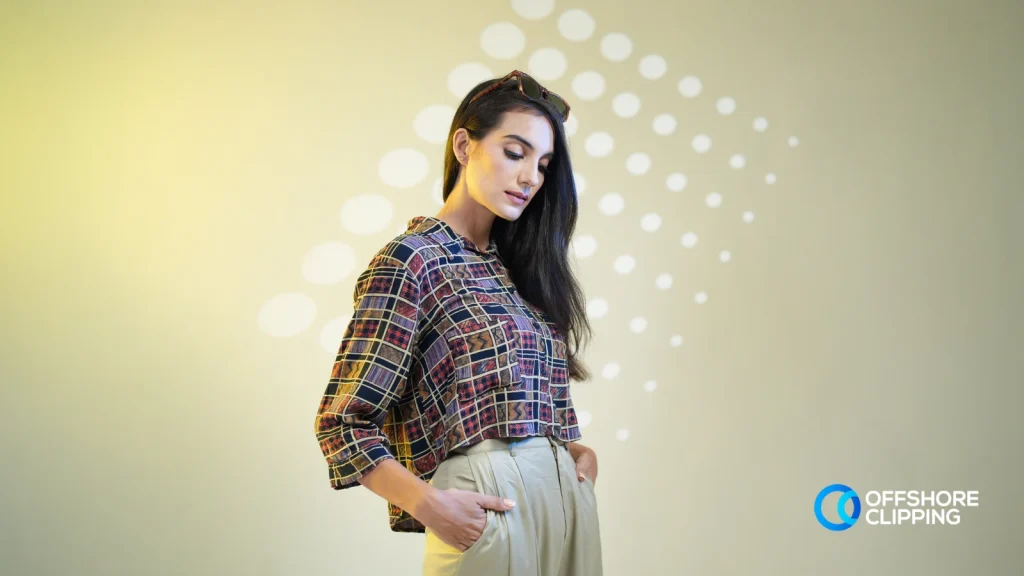
Editorial retouching is solely for editorial images published on editorial platforms and magazines. Editorial photos mainly promote concepts and emphasize the subject. Depending on the publishing platform, editorial retouching includes aesthetic improvement, detail editing, photo restoration, etc.
Use cases:
15. Creative Retouching
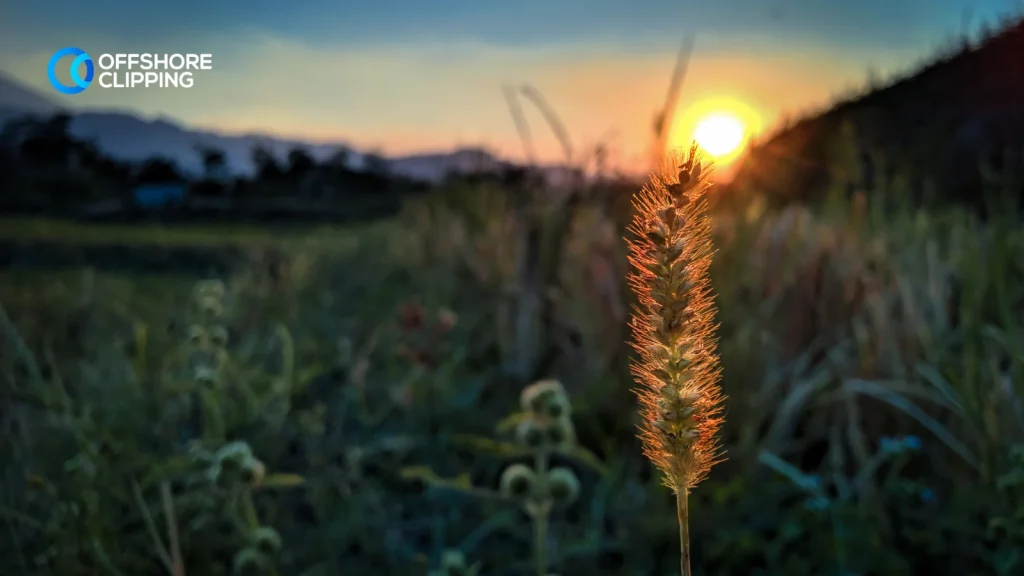
Creative retouching is the combination of artistic and custom retouching. Creative retouching includes photo collaging, brand-specific custom retouching, industry trend following, etc. This retouching includes different blending, reshaping, blurring, painting, and dissolving techniques. The final retouched photos turn out as thought-provoking and interesting to view.
Use cases:
- Creative retouching creates imaginative, unique, surreal imagery.
16. Old Photo Retouching
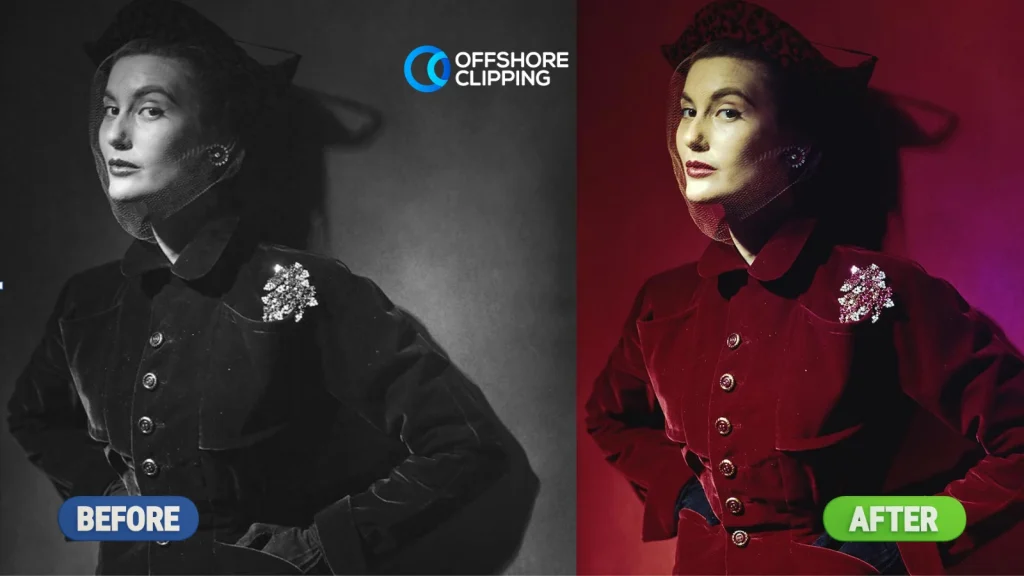
Retouching old photos is used by individuals and organizations to protect precious memories. Old image retouching removes scratches, tears, water damage, fading colors, and blur. It improves image quality, vibe, and look. Old photo retouching delivers similar results to photo restoration.
Use cases:
- Old photo retouching is used for reviving old memories and restoring lost & torn images.
17. Packshot Retouching
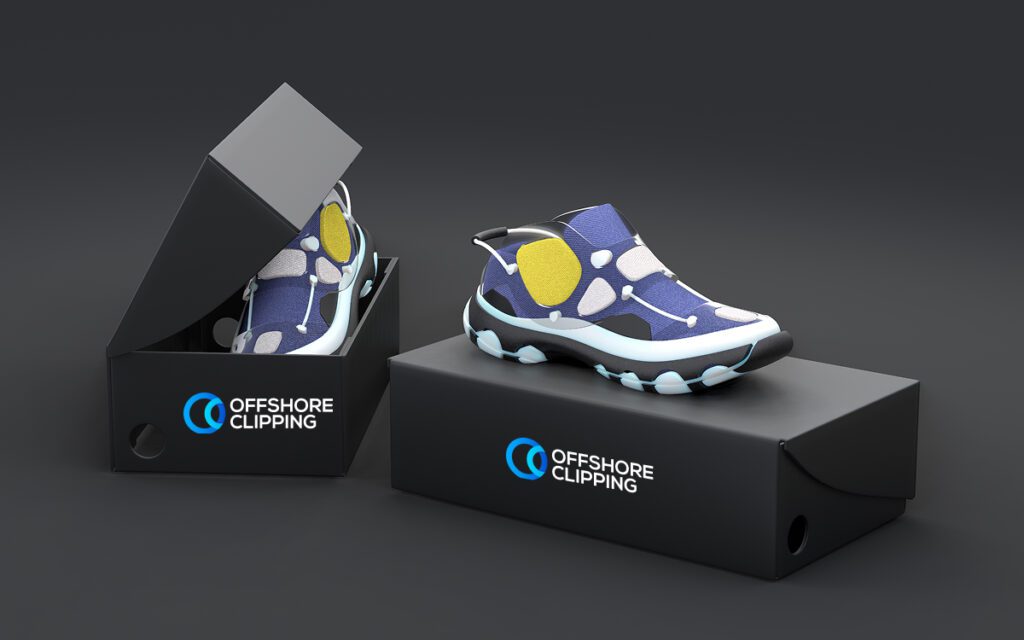
Packshot retouching is the retouching process for packshot or packaging images. Packshot photos contain labeling, packaging, or branding. It shows product ingredients, usefulness, and many more. Retouching makes the image information readable and clear to them.
Use cases:
- Product photographs,
- beauty, and cosmetic photographs mostly use packshot retouching in their e-commerce product photos.
18. Stock Photo Retouching
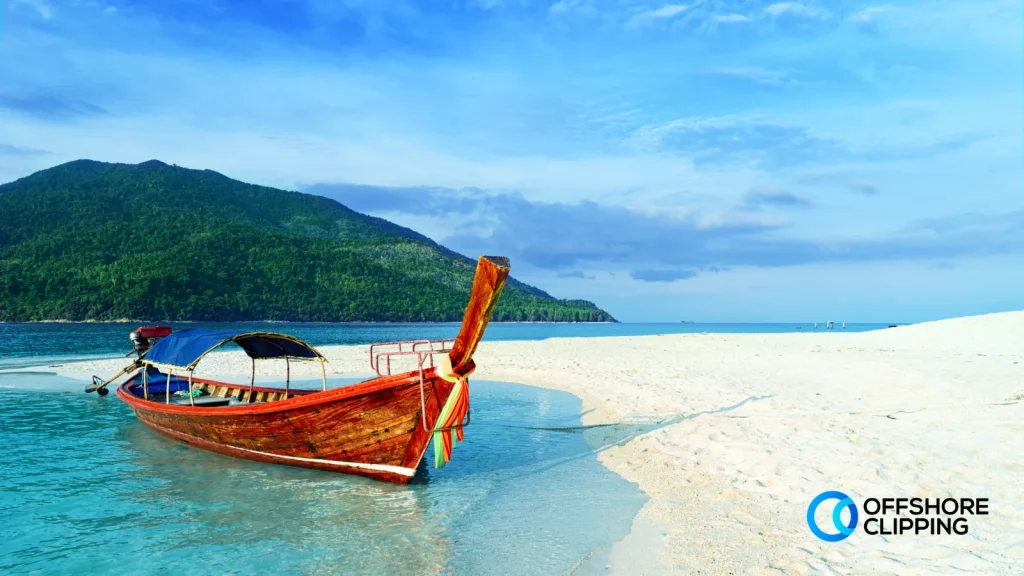
Stock-photo-retouching offers marketable and eye-catching photos. Stock image retouching includes color correction, exposure, sharpening, noise reduction, and technical adjustments to bring aesthetic improvement. Retouching enhances stock image accessibility, perceived value, and versatility among users.
Use cases:
- Professional photographers mostly use stock photo retouching solutions.
What are the Different Photo Retouching Techniques?
Different photo retouching techniques include color adjustment, image resizing, shadow creation, noise reduction, e-commerce retouching, image toning, dodge and burn, and reshaping. Retouching techniques are categorized into 3 different levels.
- Basic-level photo retouching techniques
- High-end photo retouching techniques
- Advanced photo retouching techniques
Basic Photo Retouching
Basic photo retouching is image retouching work that focuses on making essential alterations and improving images in some areas. It includes several edits as follows.
Photo Culling: Photo culling is the process of categorizing photos based on quality in different folders. Photo retouchers select the best-looking photos before starting the post-production work. They categorize images in different areas, which is known as culling. Photo culling comes in 2 types.
- Culling In: Sorting images from best to worst.
- Culling Out: Sorting images from worst to best.
Color Adjustment: Color adjustments involve editing colors’ appearance, white balance, contrast, exposure, intensity, darkness, and brightness. Photo retouchers use non-destructive methods to implement color and tonal balances in images to achieve a well-balanced, natural look.
Hue and Saturation: Hue means the color variations, and saturation means the intensity of a particular hue. Adjusting saturation and hue can cause slight changes in the color scheme to alter the color completely. This retouching technique reveals color diversity in photos that don’t appear during photoshoots.
Image Resizing: Photo resizing is the process of resizing images to a certain file format. E-commerce platforms, print media, and social media images have specific image guidelines. Photo editors mainly follow publishing platforms’ size guidelines for images.
Object Removal: Object removal ensures clutter-free, clean images. Clear images gain viewers’ attention. Photo editing software tools offer the following tools to remove unwanted and distracting objects from images.
- Content-aware fill tool
- Object selection tool
- Clone stamp tool
- Patch tool
- Lasso tool
Shadow Creation: Shadow creation is a retouching technique to add artificial shadows to images. Adding shadows makes the subject appear realistic and believable. There are 5 types of artificial shadows.
- Natural/original shadow: Natural shadows appear in daily life.
- Photoshop drop shadow/box shadow: Drop shadows are digitally created effects to simulate a shadow.
- Mirror/reflection shadow effect: Reflection or mirror shadow appears on a reflective surface.
- Floating shadow creation: A floating shadow is an illusion of shadow that appears detached.
- Cast shadow: A cast shadow appears on a surface.
Retouchers create authentic-looking shadows with accurate depth, color, and dimension. The shadow creation process needs a blur effect, brush tool, and masking technique.
Noise Reduction: Noise is the pixelated and grainy appearance of images that appears due to low-light photography, high ISO in camera settings, or digital artifacts. Photo retouchers balance noise removal to keep a natural appearance.
Product Cleanup: For product photos, basic-level retouching ensures pristine presentation removal of distractions, dust specks, and scratches, and adding correct color and visual information.
Image Dimensions: Dimension of the image means the height and width of the image. Photo dimensions are measured in pixels. A retouched image follows a specific dimension for its publication. Dimensions affect photo file size, visual quality, display, and printing.
Image Resolution: Image resolution is the detail in an image, measured in PPI (pixels per inch) or DPI (dots per inch). The resolution of a photo determines how many pixels are inside a certain area. Higher-resolution retouched images contain more data, and lower-resolution photos contain a loss of data or pixelation.
High-end Photo Retouching
High-end photo retouching refers to professional, precise, and meticulous work that requires in-depth niche understanding and is often used in commercial platforms. High-end retouching includes the following work.
Beauty Retouch: Beauty retouching is a digital photo retouching technique to enhance a person’s look. Beauty photo retouching involves editing techniques that refine images. So the retouched photos have a dramatic transformation in appearance. Beauty retouching is often used in model photographs to fulfill brands’ commercial targets. Commercial-grade beauty retouching involves the following editing tasks.
- Blemish Removal: Blemish removal is the process of eliminating acne, temporary scars, facial imperfections, or spots that appear on the face. It ensures clean and natural skin.
- Skin Smoothing: Skin smoothing works on facial bumps, uneven skin, pimples, and skin roughness. So, it ensures a natural and rejuvenating tone for portrait photographs and commercial photographs.
- Eye Retouching: Eye retouching involves the work of making the eyes bigger, smaller, clearer, and more defined, adjusting eye color, eye bags, etc. Such editing can add dimension to portrait photographs and make the person look attractive.
- Wrinkle Adjustment: Wrinkle adjustment in photo retouching is performed based on the model’s age. Instead of removing all wrinkles, digital retouching makes realistic alterations. So, the model’s face appears natural and authentic.
- Braces Removal & Teeth Whitening: Professional retouching brings out models’ natural smiles by whitening teeth and removing braces. A radiant smile ensures a welcoming and approachable look to the target audience.
- Stray Hair Removal: Stray hair removal in retouching changes stray and loose hair strands to a refined look. This technique ensures the model’s hair has volume, and the hair shines to make him/her appear neat and professional.
- Model’s Figure Editing: Retouching the human body is the work of changing body proportions and shape. It makes the model look healthy while maintaining realism and naturalism.
- Airbrushing Skin: Airbrushing is a skin blemishes, uneven skin tone, facial bumps, and wrinkle removal technique in Photoshop. Airbrushing is used in model photos and portrait photos. The beauty airbrushing tool is also used for whitening teeth and hair & eye color.
Image Toning: Toning in images means the level of warmth, coolness, black, or white according to different shades of color. Digital toning in photos emphasizes the right style, color, and mood to bring the desired output.
Background Adjustment: Background adjustment is the image backdrop modification technique in retouching. Adding background, swapping/replacing background, background removal, background enlargement, adding blur, changing color- to ensure consistency in photos.
Dodge and Burn: Dodge and Burn is an image retouching method for adjusting the lightness and darkness of an image. Conscious editing of brightness and darkness enhances photo contrast and adds dimension and depth.
Photo Reshaping: Photo reshaping is an image manipulation technique of distorting, cutting, or adding any object to change its shape or structure. Examples of photo reshaping are muscle and abs enhancement, model body adjustment, fat removal, fixing awkward posture, etc.
Spot Removal: Spot removal is the process of removing any unwanted spots, marks, or distractions from the photos. Expert photo retouchers use the ‘Spot Healing Brush’ tool from image editing software to remove blemishes and naturally blend the surrounding pixels, creating a natural appearance. Spot removal is specifically used for model images, product images, and portrait photographs.
Scratch Removal: Scratch removal is used for removing scratch marks on e-commerce products. Sometimes, shooting scratched products is the only option for photographers. Hence, they use several tools to remove those marks, including the Clone Stamp Tool, Healing Brush Tool, and AI-powered tools.
Dodge and Burn: Dodge and burn is a photo editing technique to adjust lightness and darkness in images. It is used in overexposed and underexposed images to bring back the right amount of light in images.
Adding Reflection: Reflection is used in retouched photos to create artistic effects. Reflection increases the subject’s visual appeal, adds depth, and sparks viewers’ interest. Product photography, cosmetic photography, and model photography often use reflection during promotion and marketing.
Clipping Path: A clipping path is a closed vector path around a subject that is used for isolating it. Any object in photos can be added or removed using clipping.
E-commerce Retouching: E-commerce retouching refers to the compiled retouching techniques implemented in product photos to enhance product image looks for online sales. High-quality images connect viewers with brands. As a result, potential buyers trust the brand and decide to buy. E-commerce retouching involves the following adjustments.
- Color Correction
- Background Removal
- Shadow Creation
- Image Sharpening
- Photo Resizing
- Distraction Removal
- Product Cleaning, etc.
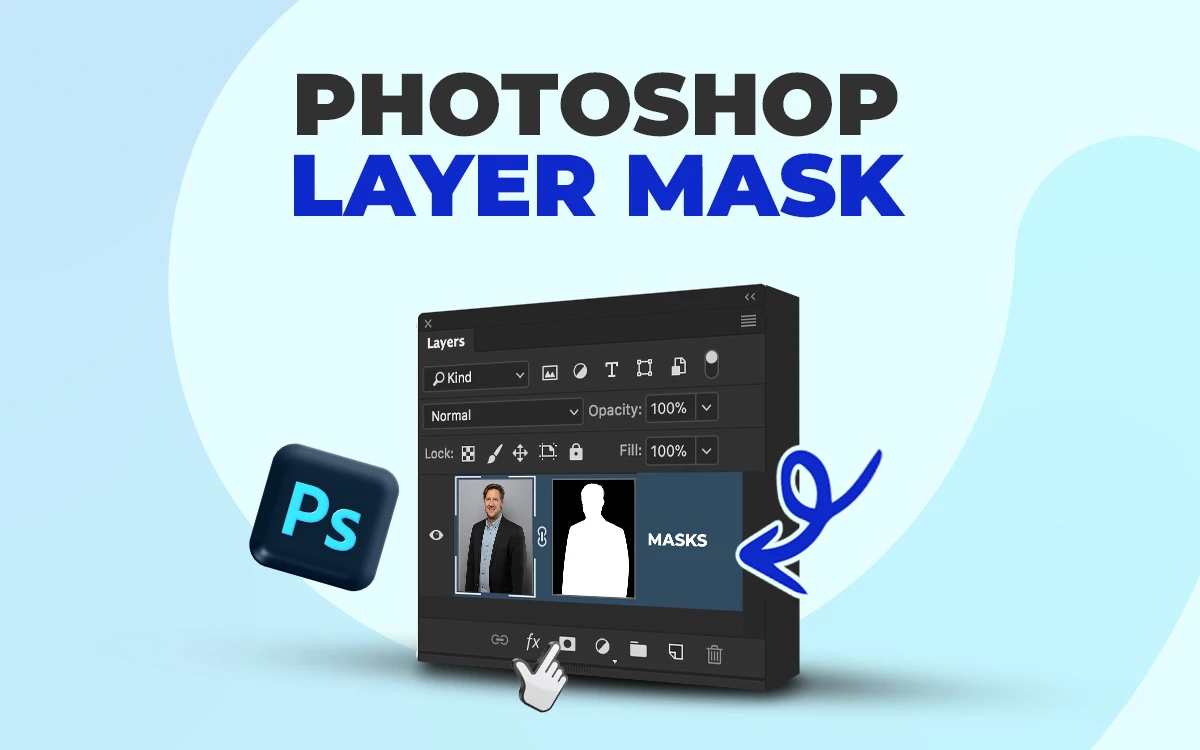
Masking: Masking is an editing technique to hide and reveal some parts of a layer selectively. Masking blends color, brightness, and intricate object isolation.
Layering: Layering involves multiple image adjustments that create a non-destructive workflow. Each layer stores different elements, allowing selective editing. So editing in one layer doesn’t affect the other layers.
Advanced Photo Retouching Techniques
Advanced retouching techniques refer to the most intricate, creative, and custom techniques to fulfill client’s business-specific image requirements. Advanced retouching delivers sophisticated and professional-standard photos. The implemented techniques of advanced retouching are as follows.
Frequency Separation: Frequency separation, also called frequency adjustment, is a retouching technique to separate an image’s color and texture. Frequency separation is used for accurate adjustments in photos without losing any data. It is used for retouching portrait images.
Color Grading & Color Correction: Color correction and color grading are mostly used for accurate and vibrant color representation. By applying curves and color layers, retouchers bring out the right color palette in the photo.
Creative Compositing: Creative compositing is merging several images, elements, and concepts into one photo to generate a new perspective. Compositing requires complex editing (for example, clipping masks) to transform the image.
HDR Retouching: HDR (High Dynamic Range) retouching is a technique to reveal the dynamism of highlights and shadows. It creates an extended range of luminosity in a photo by merging several exposures in a single image. HDR retouching is mostly used in real estate photography.
People and Object Placing: In advanced retouching, elements, objects, and people are also manipulated to create a compelling visual composition. The subject is artificially placed in the photo depending on the desired output. The final output naturally blends with the surroundings and enhances the photo’s look.
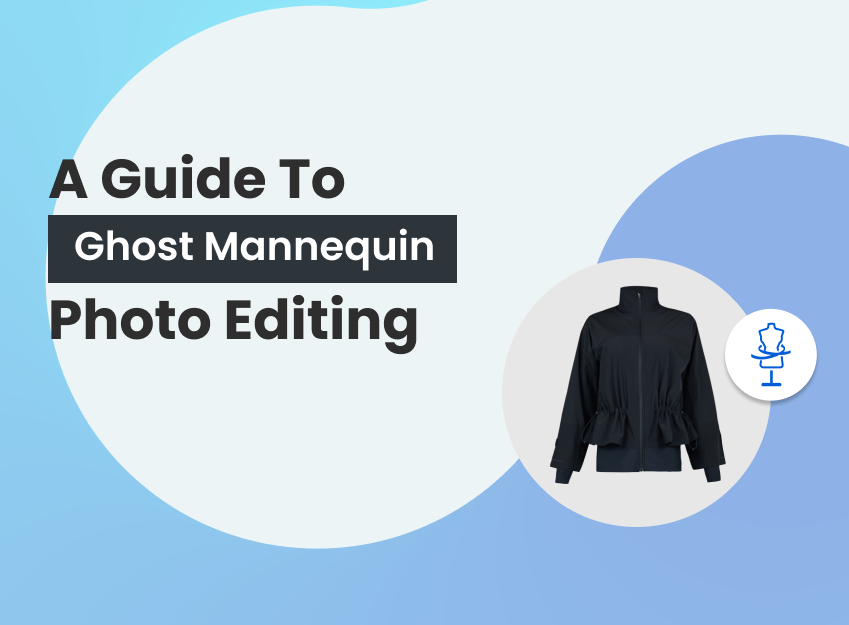
Ghost Mannequin Effect: The ghost mannequin/invisible mannequin effect is a photo editing technique to remove the body/mannequin from a garment. The ghost mannequin adds volume and gives a fitting look for the cloth. Apparel brands mostly use ghost mannequins to highlight their clothing product fit without distracting the viewers. In advanced retouching, clothes are presented professionally, without creases, free of stains or unwanted marks, and fully ironed.
Shape & Silhouette Correction: Silhouette and shape correction is a retouching technique to polish the outline of a product. It is mostly used for bags and garment products to straighten their shapes for a professional and pleasing look. Tools that are used for shape and silhouette correction are as follows.
- Warp tool
- Liquify tool
- Clone stamp tool
- Adjustment layers
- Masking techniques, etc.
Curves Adjustment: Curve adjustment is the editing technique of adjusting the tone of an RGB photo. In photos, curve adjustment is shown as a diagonal line inside a square. By moving this line, the tone of the selected area can be changed. With the curve adjustment, you can control tone, shadows, etc.
Liquify Effect: Liquifying effect is the technique of adding a creative and artistic touch to a photo. The liquifying effect includes rotating, pulling, pushing, puckering, bloating, warping, and reversing distortion. The application of the liquify effect doesn’t damage the original image data.
Digital Makeup: Digital makeup is a retouching method of applying digital cosmetics to model photos to rectify model imperfections and enhance features. It combines digital composition and visual effects to transform models’ faces into a glamorous and dramatic look.
Swapping Body Parts: Advanced retouching also allows seamless merging and replacement of body parts. Body parts swap includes swapping heads, eyes, and limbs, enhancing body features, slimming edits, etc. It is mostly applied in fashion and cosmetic photographs, advertising agencies, and digital art.
Reflection & Glare Removal: The reflection removal technique in retouching removes unwanted and unstructured glare and reflections from images. Photos with glass, mirrors, or any reflective item get the reflection. Removing reflection and glare offers image clarity. Image reflection removal is mostly used in fashion photographs, automotive photos, and commercial photography.
What is the Difference Between Photo Editing and Photo Retouching?
The differences between photo editing and photo retouching include alteration level, focus, output, and the purpose of changes.
| Parameter | Photo Editing | Photo Retouching |
| Definition | Photo editing refers to overall adjustments made to images. | Photo retouching is a specialized set of editing techniques that improve images. |
| Alteration level | Photo editing involves all types of changes. Editing improves or keeps the same content in the image. | Image retouching work is designed to make improvements to photos. |
| Focus | Editing images focuses on changing images overall. It includes color, cropping, resizing, and applying filters among other alteration techniques. | Retouching in image focuses on image correcting and improving so the subjects appear flawless and appealing. |
| Output | Edited images look improved overall. | Retouched images are flawless and surreal to look at. |
| Purpose | Image editing is the foundation for any type of changes in photos. Edited images are used for personal to commercial purposes. | Photo retouching is used on images used for commercial, promotional, and marketing purposes. |
Tools Used for Photo Retouching
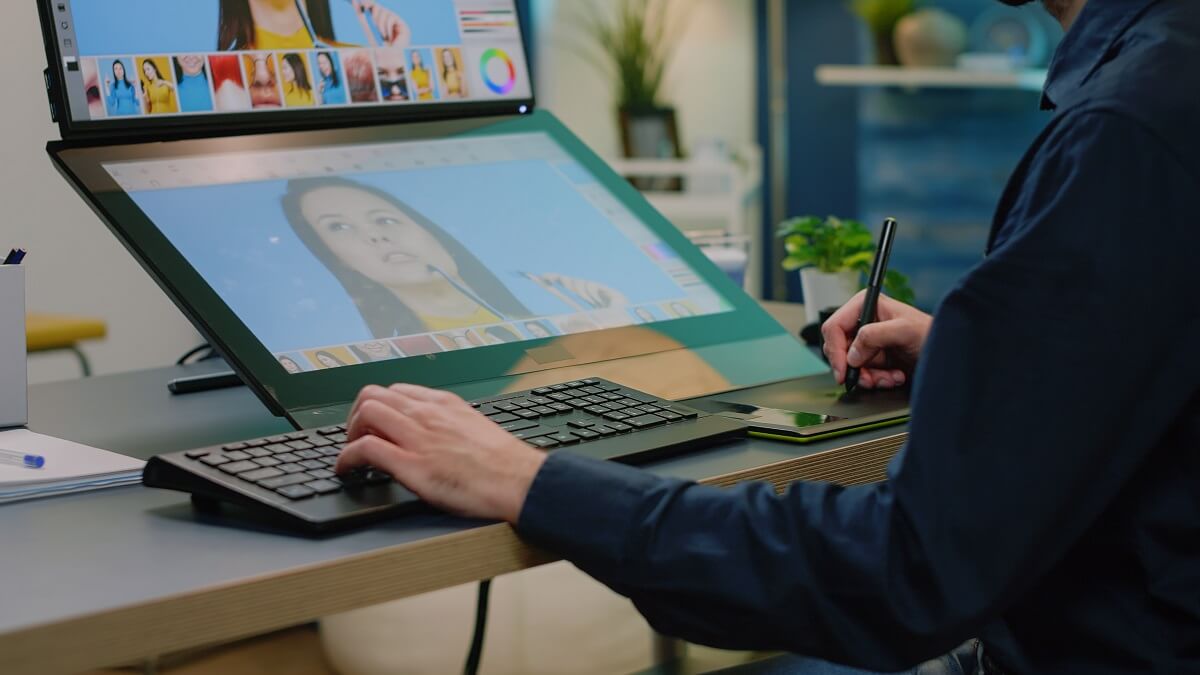
Tools that are used for photo retouching are Healing Brush Tool, Spot Healing Tool, Red Eye, Patch Tool, Content Aware Tool, Clone Tool, Dodge & Burn Tool, Blur & Sharpen Tool, Color Replacement Tool, The Pattern Stamp Tool, and Liquify Tool.
1. Healing Brush Tool: The Healing Brush Tool in Photoshop is used to remove imperfections in images and create uniformity. Users can control their work without creating any mess or trouble.
Navigation:
- Click ‘Healing Brush from the toolbox.
- Hold ‘Alt’ and click to copy the sample that you want to change.
- Click and drag to the imperfect areas where you want to apply the changes.
2. Spot Healing Brush Tool: The Spot Healing Brush Tool allows you to edit photos without selecting any samples. The tool automatically selects samples, makes adjustments, and delivers fast output.
Navigation:
- Select ‘Spot Healing Brush Tool’ from the toolbox.
- Make adjustments from the 2nd top menu bar (options like size, hardness, mode, type, etc.).
- Click/ drag wherever you need, and Photoshop will heal those spots automatically.
3. Patch Tool: The Patch Tool is another tool for removing unwanted objects, flaws, or blemishes that are large in size. Select that part for removal using any selection tools, and the Patch Tool will remove it.
Navigation:
- Click the patch tool from the same palette as the ‘Healing Brush Tool’.
- Select the area you want to blend and drag it.
4. Content-Aware Tool: The content-aware tool is a Photoshop tool that removes distractions, similar to a patch tool. It automatically detects the surroundings and fills in the spot after the object is deleted.
Navigation:
- Select the subject of removal with any selection tool.
- Click ‘Edit’ from the menu bar, go to ‘Fill’.
- Choose Content-Aware, and hit ‘OK’.
5. Red Eye Tool: While photographing under a flashlight for headshot or portrait photography, we sometimes end up having red pupils. A red-eye tool is used to remove that. It’s a much easier and time-saving tool.
Navigation:
- Click the Red Eye tool from the toolbox (below the healing brush).
- Click and drag the tool around the eye area. The crimson color will be gone.
6. Clone Tool: The clone tool duplicates a particular area and helps conceal unwanted areas. The above-mentioned tools have limitations when working with complex patterns or tiny details. And that’s where this tool liberates the users. It is quite a complementary tool for all types of photography, especially portrait photography.
Navigation:
- Go down to the left side of the toolbar until you find the ‘Clone Stamp Tool’ icon.
- Hit the right click. You will see the name.
- It will start copying/cloning the area.
- Paste it in the place you want.
Note: In the Clone Stamp Tool, the ‘plus’ sign is from where it copies, and the brush is where it pastes.
7. Pattern Stamp Tool: The pattern stamp tool is used for making patterns and creating designs in particular areas. Users can choose different patterns from the pattern palette in the options and create interesting features on their images with this tool.
Navigation:
- Go down the left side of the toolbar until you find the ‘Clone Stamp Tool’ icon. Click it, and the 2nd option is the Pattern Stamp Tool.
- Select a brush and a pattern from the palette.
- Adjust size, shape, opacity, and other specifications.
- Paint it where you need it; the pattern will be visible.
8. Dodge & Burn Tool: The dodge and burn tool is a non-destructive technique to darken or lighten any particular part or spot in the image. Dodge works to whiten the picture, whereas burn plays the role of darkening. Combining both, the shadow, tone, etc., are adjusted.
Navigation:
- Go to the tools panel.
- You will find the dodge tool icon; click it.
- The panel for the dodge tool and the burn tool will pop up.
9. Blur & Sharpen Tool: The Sharpen tool highlights some parts, and the Blur tool makes the parts obscure by blurring. Both the blur and sharpen tools work opposite to each other.
Navigation:
- Go to the tools panel.
- You will find the Blur tool icon; click it.
- The panel of the Blur tool and the Sharpen tool will pop up.
10. The Color Replacement Tool: The color replacement tool is handy for changing foreground and background color in images. Choose the color and hover the brush over your targeted spot; the color will replace the old one.
Navigation:
- Go to the tools panel.
- You will find the Brush tool icon; click it.
- The panel will open up, and you will see the color replacement tool.
11. Liquify Tool: The Liquify tool creates liquefying effects, for example, pull, push, rotate, and distortion during photo retouching.
Navigation:
- Go to Filter.
- A panel will open up; go below to liquefy.
- Click it, and there you go.
Best Software for Photo Retouching
Professionals use Adobe Photoshop, Adobe Lightroom, GIMP, Skylum Luminar, Aurora HDR, Affinity Photo, On1 Photo Raw, DxO PhotoLab 5, Pixlr, and Exposure X6 to retouch photos. The market has plenty of photo editing software available. This software offers several retouching tools. By implementing photo retouching techniques, photo retouchers bring out the best look of photos. The best 10 software programs used for photo retouching are as follows.
| Software | Best For | Starting Price |
|---|---|---|
| Adobe Photoshop | Industry-standard retouching, layers, healing tools, masking, content-aware fill | $22.99/month |
| Adobe Lightroom | Adjustment brushes, spot removal, radial/graduated filters | $11.99/month |
| GIMP | Free, open-source alternative with masking, layering, and healing tools | Free |
| Skylum Luminar | AI-powered skin retouching, structure enhancement, sky replacement | $49 |
| Aurora HDR | Tone mapping, exposure blending, AI sky enhancement | $99 |
| Affinity Photo | Layering, masking, cloning, and blending in a one-time-purchase app | $69.99 |
| ON1 Photo RAW | RAW processing plus AI-powered healing, cloning, and masking | $49.99 |
| DxO PhotoLab | U-Point precision editing, lens correction, noise reduction | $109 |
| Pixlr | Browser-based, quick AI-assisted retouching | $2.49/month |
| Exposure X7 | Spot healing, cloning, film simulation, and creative effects | $149 |
How to Hire a Photo Retoucher?
To hire a photo retoucher, you have to determine your needs and review potential retouchers. While reviewing the retouchers, consider 9 essential factors as follows.
Know Your Purposes
Determine your purposes for using the retouched photos. The retouching category would vary depending on the purpose, publishing platforms, and target audience. E-commerce sellers need professional-grade product photo retouching, whereas online marketers need glamorous image retouching to launch a campaign.
Determine Your Project Volume
Having an estimate of your project is necessary to choose the right retouchers. E-commerce sellers or professional photographers need photo retouching solutions frequently and in large volumes. An online marketer needs retouched photos from time to time. Determining your project volume by considering these factors.
- Number of images
- Project complexity level
- Type of photos you have
- Urgent project submission
Decide Freelancer or Retouching Company
Determining your project volume would give a clear picture of whom to hire. Outsourcing to a professional photo retouching agency is a wise choice for big projects and frequent image needs. Agencies offer a wide range of solutions at competitive pricing. From solopreneurs to large entrepreneurs, they have different retouching packages. Freelance photo editors are effective solutions for small projects or new content creators.
Check Retouchers’ Experience
Check photo retouchers’ work history in the photo post-production industry. Experienced photo retouchers have experience working with multiple clients. They are well-versed in premium software, different retouching tools, and techniques to achieve satisfactory results.
Learn About Retouchers’ Expertise
Know about their work style, skill level, and expertise. Each photo retouching agency has a designated team to fulfill the specific retouching work. Learn their style if that matches your versatile marketing needs.
Look for Sample Work
Sample work gives you an overview of the retouchers’ work style. Check their portfolio, which you will find in their photo gallery pages. Also, check the free-trial option to learn how fast they deliver and how they communicate, along with their working sample.
Know Retouchers’ Work Quality
Understand your target retouchers’ work quality and whether they can maintain consistency across project volume and complexity. Know about their revision process. Also, check reviews and testimonials from other service recipients and review sites, such as Trustpilot and Google Maps, about their work.
Evaluate the Pricing Structure
Generally, outsourcing photo editing and retouching services costs less than in-house photo retouchers. Pricing structure varies depending on the type of retouching work, retoucher expertise, and level of customization. Photo retouching agencies offer discounts or seasonal cut-off prices for bulk projects.
Understand the Turnaround Time
Have a direct conversation with your potential retouchers. Talk about the turnaround time and how fast they can deliver in case of an emergency. Get a clear idea of custom photo editing, retouching diversity, and revisions. Also, know the pricing difference for the faster turnaround.
Why Should You Outsource Photo Retouching Services?
You should outsource photo retouching services to ensure brand consistency and convince potential buyers. Outsourcing image retouching is a fast, cost-effective, and efficient solution. Brands and professionals collaborate with retouching agencies to access expertise and save resources.
Offshore Clipping is a certified photo editing and retouching company in NYC. With a team of 300+ photo retouchers, Offshore Clipping has been offering high-end photo retouching services for decades. Photographers, e-commerce store owners, and advertising agencies outsource to professional retouching companies for the following benefits.
- High-quality service from industry expert photo retouchers
- Budget-friendly and resource-saving photo editing solution
- Timely measurement for continuous and fluctuating image needs
- Custom and bulk image editing in a wide range of categories
- Fastest turnaround to match your deadline
- Scalable results as per your business demand
- Freeing up space for business core activities