For most serious hobbyists and working photographers, the Canon EOS R5 Mark II is the all-around best camera for sports photography right now. If your budget stops well short of $4,000, the Canon EOS R10 delivers 23 fps and modern subject tracking for under $1,000. The right choice still depends on your budget and the sport you shoot.
Sports photography punishes gear that can’t keep up. A half-second of autofocus hunting and the diving catch is gone. A slow burst rate and you’re left holding the frame right before the bat connects, not the swing itself. That’s the whole reason this guide exists: megapixel count barely matters here.
Below, we’ve broken down the 10 best cameras for sports photography that genuinely hold up. Every spec here is pulled from manufacturer documentation and cross-checked against independent lab tests and hands-on reviews.
Quick Comparison Table
| Camera | Type | Sensor | Burst (fps) | AF System | Best For |
|---|---|---|---|---|---|
| Canon EOS R5 Mark II | Mirrorless | Full-frame 45MP | 30 (elec.) | Dual Pixel AF II + Eye Control | Hybrid photo/video pros |
| Nikon Z8 | Mirrorless | Full-frame 45.7MP | 20 RAW / 120 JPEG | 493-pt subject detection | Flagship power, smaller body |
| Sony RX10 IV | Bridge (fixed lens) | 1-inch 20.1MP | 24 | 315-pt phase-detect | All-in-one zoom reach |
| Canon EOS R10 | Mirrorless (APS-C) | APS-C 24.2MP | 15 mech / 23 elec. | Dual Pixel AF II | Budget beginners |
| Sony a9 III | Mirrorless | Full-frame 24.6MP (global shutter) | 120 | 759-pt AI AF | Elite pro action & flash work |
| Canon EOS 90D | DSLR (APS-C) | APS-C 32.5MP | 10 (11 fixed-AF) | 45-pt cross-type | DSLR loyalists |
| Sony a7 III | Mirrorless | Full-frame 24.2MP | 10 | 693-pt phase-detect | Full-frame value, low light |
| Canon EOS Rebel T7 | DSLR (APS-C) | APS-C 24.1MP | 3 | 9-pt (1 cross-type) | Absolute beginners |
| Nikon D7500 | DSLR (APS-C) | APS-C 20.9MP | 8 | 51-pt (15 cross-type) | Enthusiast F-mount shooters |
| Nikon D3500 | DSLR (APS-C) | APS-C 24.2MP | 5 | 11-pt (1 cross-type) | Students & first-time buyers |
Our Top 10 Cameras for Sports Photography
We picked these 10 best sports photography cameras to cover every realistic budget and skill level. From a student’s first DSLR to a global-shutter flagship built for wire-service sports photographers.
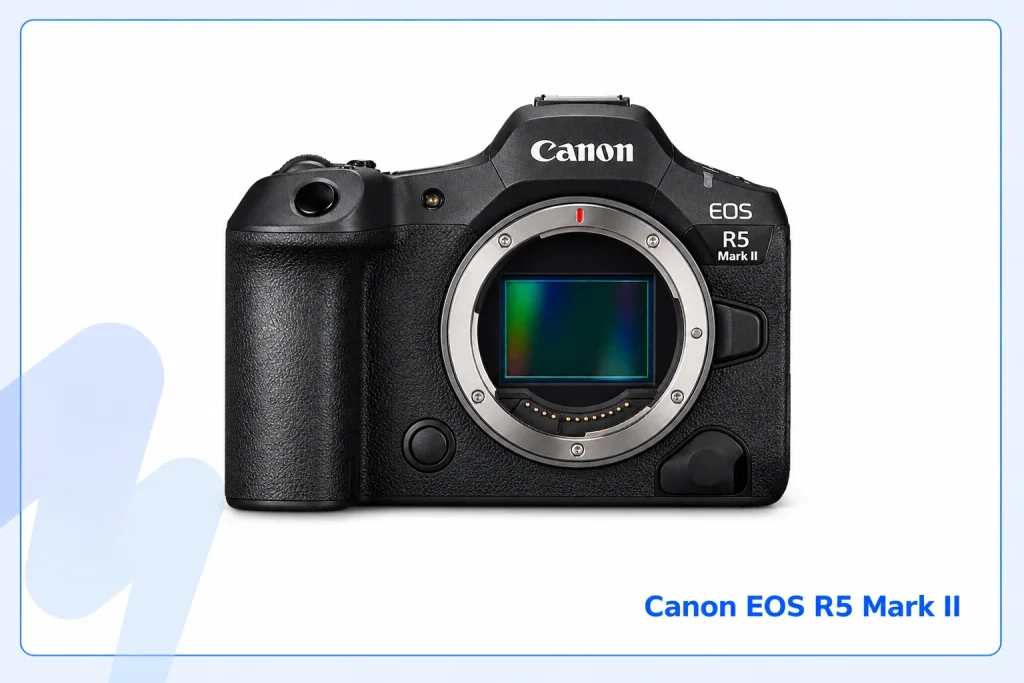
1. Canon EOS R5 Mark II
Specifications
| Sensor | 45MP full-frame stacked, back-illuminated CMOS |
| Burst Rate | Up to 30 fps electronic shutter (also selectable at 20/15/10/5 fps); 12 fps mechanical |
| Autofocus | Dual Pixel Intelligent AF II with eye-control AF and action-priority subject recognition |
| Video | 8K/60p internal RAW, 4K up to 120p |
| Storage | Dual slots – CFexpress Type B and SD (UHS-II) |
The R5 Mark II runs on a newly designed stacked, back-illuminated sensor that reads out far faster than the original R5’s. This is what unlocks 30fps shooting with far less rolling shutter distortion. Canon also added action-priority AF modes that recognize specific movements, like a basketball dribble or a soccer kick, and prioritize focus accordingly.
This is one of the fastest autofocus systems. Canon has ever shipped in a non-flagship body. Eye-control AF lets you shift the focus point just by looking at it through the viewfinder. This is a genuine advantage when a play develops faster than your thumb can move a joystick. The buffer holds up well even at 30fps, and the dual card slots mean you’re not risking a full shoot on a single card during a tournament.
| Pros | Cons |
|---|---|
| + Best-in-class autofocus with eye-control tracking | – Short battery life under heavy burst shooting |
| + 30fps electronic burst with minimal rolling shutter | – Can overheat in extended 8K video sessions |
| + 8K video for hybrid shooters | – Expensive for hobbyists |
| + Dual card slots for backup |
Best for: Working photographers and serious enthusiasts who shoot both stills and video and need a body that won’t fall behind the action.
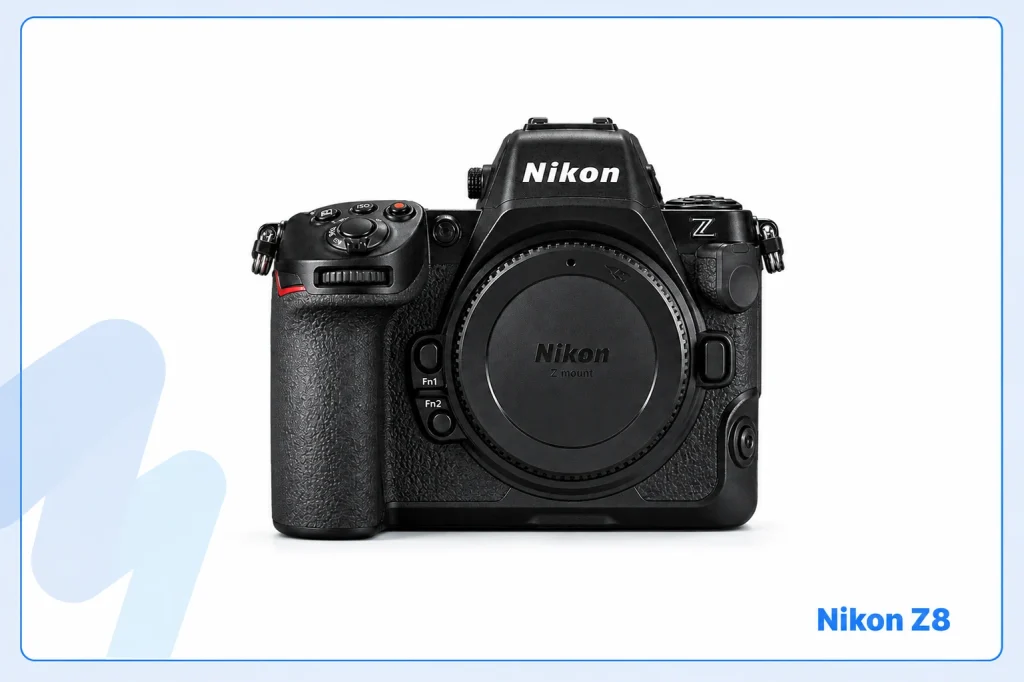
2. Nikon Z8
Specifications
| Sensor | 45.7MP full-frame stacked, back-illuminated CMOS (shared with the Nikon Z9) |
| Burst Rate | 20 fps RAW, 30 fps full-resolution JPEG, 120 fps at 11MP |
| Autofocus | 493-point phase-detect AF with subject detection for people, animals, birds, and vehicles |
| Video | 8K/60p, 4K up to 120p, internal RAW |
| Storage | Dual slots — CFexpress Type B and SD (UHS-II) |
The Z8 packs the same sensor and EXPEED 7 processor as Nikon’s flagship Z9 into a noticeably smaller, lighter body. It has no mechanical shutter at all. Every shot is captured electronically. This all but eliminates shutter vibration and lets the camera shoot in complete silence.
Subject tracking is where this camera earns its price tag. It locks onto a face, an animal, or a vehicle and rarely lets go, even through crowded scenes or erratic movement. Pre-release capture records roughly a second of frames before you fully press the shutter. This is a genuine safety net for unpredictable moments like a fast break or a diving save.
| Pros | Cons |
|---|---|
| + Flagship autofocus and buffer depth in a smaller body | – No mechanical shutter means some scenes still show minor rolling shutter |
| + Fully electronic, silent shutter | – Heavy investment for hobbyists |
| + Excellent subject detection across people, animals, and vehicles | – Menu system has a learning curve |
| + 8K RAW video |
Best for: Wildlife-crossover and serious sports shooters who want Z9-level autofocus without the Z9’s bulk and price.
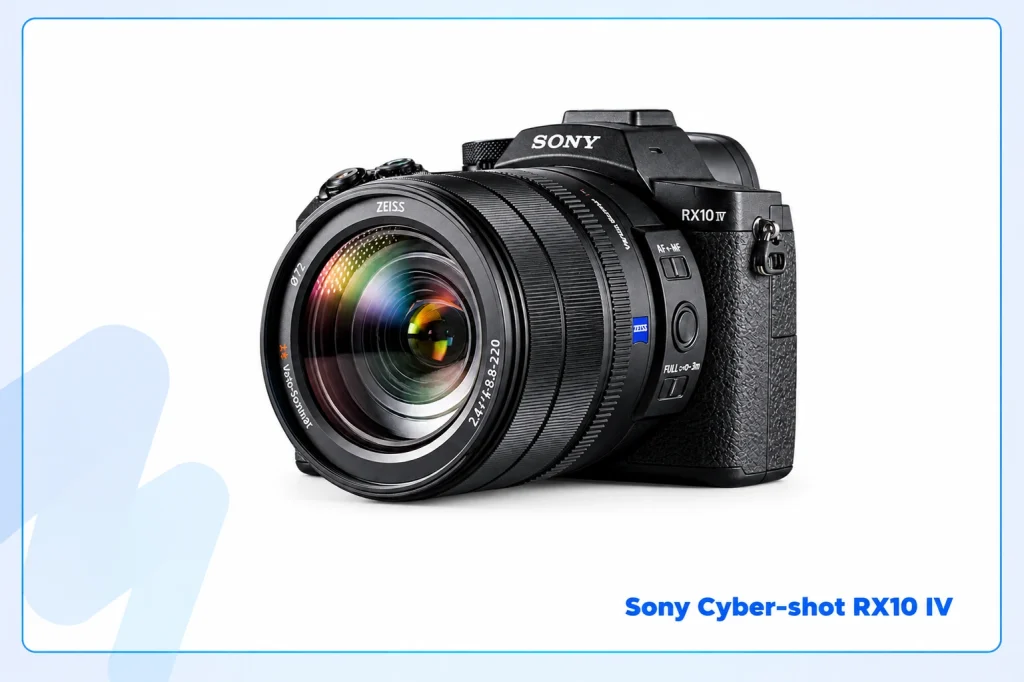
3. Sony Cyber-shot RX10 IV
Specifications
| Sensor | 1-inch 20.1MP stacked Exmor RS CMOS |
| Lens | Built-in 24–600mm equivalent zoom, f/2.4–4 |
| Burst Rate | Up to 24 fps with continuous autofocus |
| Autofocus | 315-point phase-detect AF, 0.03-second acquisition speed |
| Video | 4K UHD, Full HD up to 120p |
The RX10 IV is a bridge camera, meaning the lens is permanently attached rather than interchangeable. What makes it worth a spot on this list is that 24-600mm equivalent reach. The kind of telephoto range that would otherwise cost thousands in interchangeable lenses. This is built into one body; you never have to swap glass on mid-game.
Because the sensor is smaller than APS-C or full-frame, the RX10 IV can’t match the low-light performance of the interchangeable-lens cameras on this list. But for well-lit camera for outdoor sports, its combination of reach, a fast 24fps burst, and genuinely reliable phase-detect autofocus makes it one of the easiest ways to shoot distant action.
| Pros | Cons |
|---|---|
| + Massive 24–600mm zoom range in one body | – Smaller sensor limits low-light and indoor performance |
| + 24fps burst with reliable continuous AF | – No lens flexibility if you outgrow the built-in zoom |
| + No lenses to buy, carry, or swap mid-game | – Discontinued, so pricing varies by retailer |
| + Compact compared to an equivalent interchangeable-lens setup |
Best for: Parents and hobbyists shooting from the sidelines or bleachers who want serious zoom reach without an interchangeable-lens system.
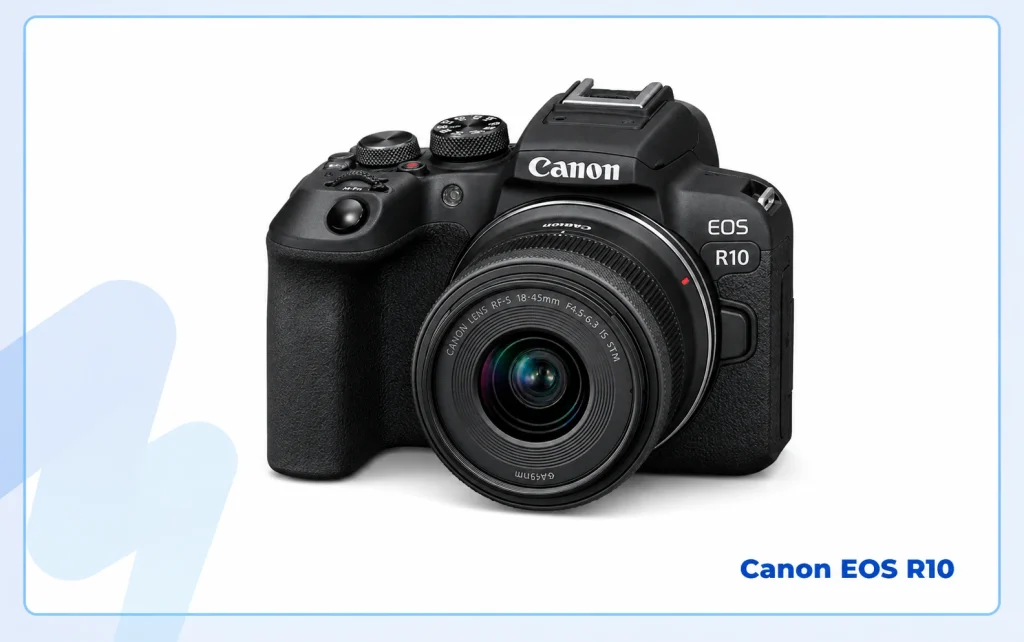
4. Canon EOS R10
Specifications
| Sensor | 24.2MP APS-C CMOS |
| Burst Rate | 15 fps mechanical shutter, 23 fps electronic shutter |
| Autofocus | Dual Pixel CMOS AF II with people, animal, and vehicle detection |
| Video | 4K UHD (cropped), Full HD up to 120p |
| Storage | Single SD card slot (UHS-II) |
| Price | $979.99 body-only |
The R10 borrows its autofocus smarts from Canon’s much pricier R-series bodies, including deep-learning subject tracking for people, animals, and vehicles. That’s a meaningful upgrade over older budget cameras that rely on simpler contrast-detection AF.
A 23fps electronic burst is genuinely fast for a camera. The autofocus keeps up with it in good light. The trade-offs that keep this camera affordable are a smaller buffer, which limits how long you can hold that top burst speed. No in-body stabilization, so a stabilized lens is worth budgeting for if you’ll shoot handheld at longer focal lengths.
| Pros | Cons |
|---|---|
| + 23fps electronic burst | – No in-body image stabilization |
| + Modern subject-detection autofocus | – Small buffer limits sustained bursts |
| + Lightweight and easy to carry all day | – Autofocus can struggle in dim gyms and evening games |
| + Flip-out touchscreen for varied angles |
Best for: Budget-conscious beginners and students who want current-generation autofocus without a flagship price tag.
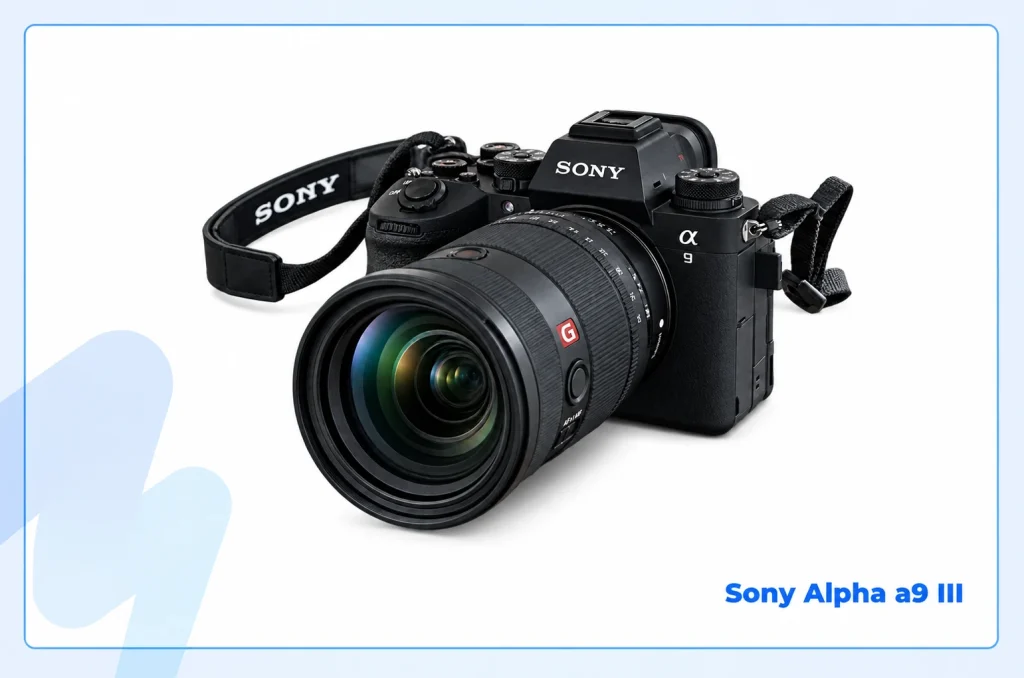
5. Sony Alpha a9 III
Specifications
| Sensor | 24.6MP full-frame stacked CMOS with a global shutter |
| Burst Rate | Up to 120 fps with full autofocus and auto-exposure, zero blackout |
| Autofocus | 759-point hybrid AF with an AI-based subject-recognition processor |
| Shutter | Fully electronic; flash sync at any shutter speed up to 1/80,000 sec |
| Storage | Dual slots – CFexpress Type A and SD (UHS-II) |
The a9 III is the first full-frame camera with a global shutter, meaning every pixel is exposed at exactly the same instant instead of being scanned row by row. That eliminates rolling shutter distortion completely and allows flash sync at any shutter speed, which matters enormously for indoor sports photographers who use flash.
120fps with full autofocus tracking and zero viewfinder blackout is a speed no other camera on this list comes close to. In practice, that means you can hold the shutter through an entire play and choose the exact peak moment afterward. It’s a specialist’s tool, priced accordingly.
| Pros | Cons |
|---|---|
| + World’s first full-frame global shutter, zero rolling shutter distortion | – Very expensive, aimed squarely at professionals |
| + 120fps blackout-free continuous shooting | – 24.6MP is modest resolution for the price bracket |
| + Flash sync at any shutter speed, ideal camera for indoor sports | – Overkill for casual or hobbyist shooters |
| + Elite-tier autofocus and subject recognition |
Best for: Professional sports and wire photographers who need the fastest, most distortion-free capture available, flash included.
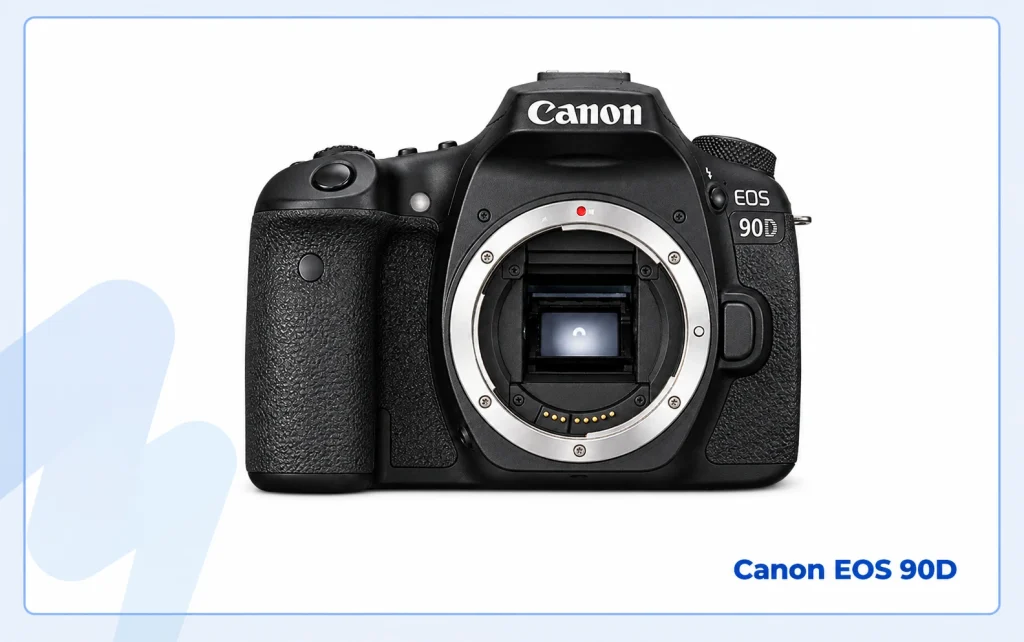
6. Canon EOS 90D
Specifications
| Sensor | 32.5MP APS-C CMOS |
| Burst Rate | 10 fps through the optical viewfinder, up to 11 fps in live view with focus locked |
| Autofocus | 45-point all cross-type AF (viewfinder); Dual Pixel CMOS AF in live view |
| Video | 4K UHD using the full sensor width, Full HD up to 120p |
| Storage | Single SD card slot (UHS-II) |
The 90D is a DSLR through and through, with an optical viewfinder that many sports shooters still prefer for zero lag. Its 32.5MP sensor is unusually high-resolution for an APS-C DSLR, which gives you extra room to crop into distant action.
10 fps through the viewfinder with continuous autofocus is respectable, though independent testing shows the through-viewfinder AF can lag slightly behind fast, straight-on subjects compared to Canon’s newer mirrorless bodies. Switching to live view improves autofocus reliability at the cost of a slightly slower burst rate.
| Pros | Cons |
|---|---|
| + High 32.5MP resolution for extra cropping room | – Through-viewfinder AF trails mirrorless competitors on fast subjects |
| + Reliable 45-point cross-type AF system | – Single card slot |
| + Optical viewfinder with zero lag and long battery life | – No in-body stabilization |
| + Familiar DSLR handling for existing Canon EF-mount owners |
Best for: DSLR loyalists and existing EF-lens owners who want strong resolution and speed without switching to mirrorless.
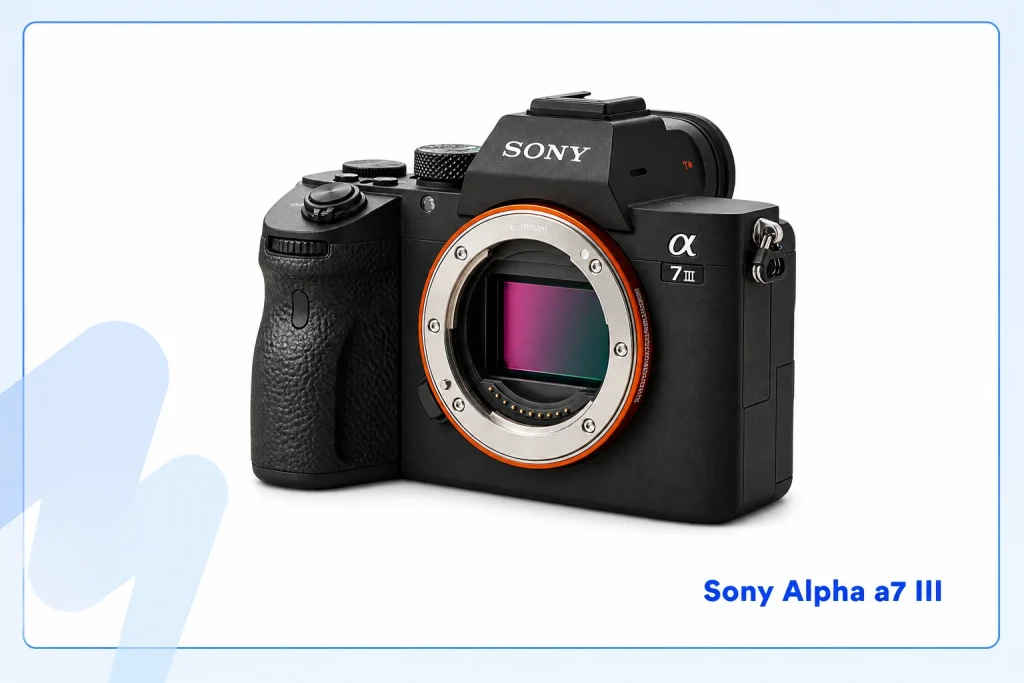
7. Sony Alpha a7 III
Specifications
| Sensor | 24.2MP full-frame back-illuminated CMOS |
| Burst Rate | 10 fps with continuous autofocus and auto-exposure |
| Autofocus | 693-point phase-detect AF plus 425 contrast-detect points, 93% frame coverage |
| Stabilization | 5-axis in-body image stabilization |
| Storage | Dual SD card slots |
The a7 III inherited its 693-point autofocus array from Sony’s flagship a9, which was a genuinely big deal when this camera launched and still holds up well today. It pairs that with a full-frame sensor that handles low light noticeably better than any APS-C camera on this list.
10 fps with reliable Eye AF tracking is more than enough for most amateur and semi-pro sports work. The full-frame sensor’s low-light performance is a real advantage for evening games and dim gyms where APS-C cameras start showing noise. It’s not the fastest burst on this list, but the autofocus hit rate is excellent.
| Pros | Cons |
|---|---|
| + Full-frame low-light performance well ahead of APS-C rivals | – 10fps burst is modest next to newer mirrorless cameras |
| + 693-point AF system inherited from a flagship body | – Single UHS-I card slot limits transfer speed |
| + In-body stabilization plus dual card slots | – Menu system feels dated compared to Sony’s newest cameras |
| + Strong value relative to newer full-frame bodies |
Best for: Photographers who want full-frame image quality and dependable autofocus for indoor or low-light sports without paying flagship prices.
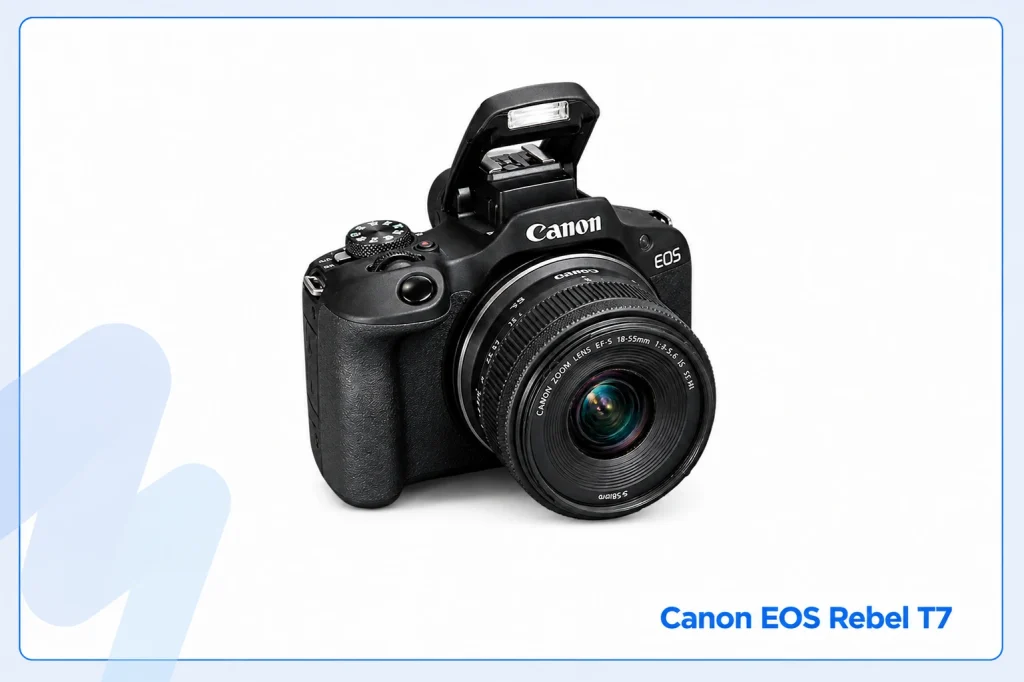
8. Canon EOS Rebel T7
Specifications
| Sensor | 24.1MP APS-C CMOS |
| Burst Rate | 3 fps |
| Autofocus | 9-point AF, 1 cross-type point |
| Video | Full HD 1080p at 30 fps (no 4K) |
| Screen | Fixed 3-inch LCD, non-touchscreen |
The Rebel T7 is Canon’s most affordable current DSLR, and it shows in the spec sheet. A basic 9-point autofocus system, no touchscreen, and a 3fps burst rate that won’t keep up with fast-breaking plays. What it does offer is Canon’s dependable color science and an optical viewfinder at the lowest price point on this list.
For casual, slower-paced action: a kid’s soccer practice, a school track meet from the stands, or recreational-league games, the T7 is genuinely usable if you anticipate the moment rather than relying on a fast burst to catch it. For anything faster, like competitive basketball or hockey, the autofocus and frame rate will leave you with a lot of near-misses.
| Pros | Cons |
|---|---|
| + Lowest price point on this list | – 3fps burst is too slow for fast action |
| + Reliable Canon color science straight out of camera | – Only 9 autofocus points with no subject tracking |
| + Simple controls that don’t overwhelm beginners | – No 4K video, no touchscreen |
| + Huge, affordable EF-lens ecosystem |
Best for: Absolute beginners and students on the tightest budget who mostly shoot slower-paced or recreational sports.
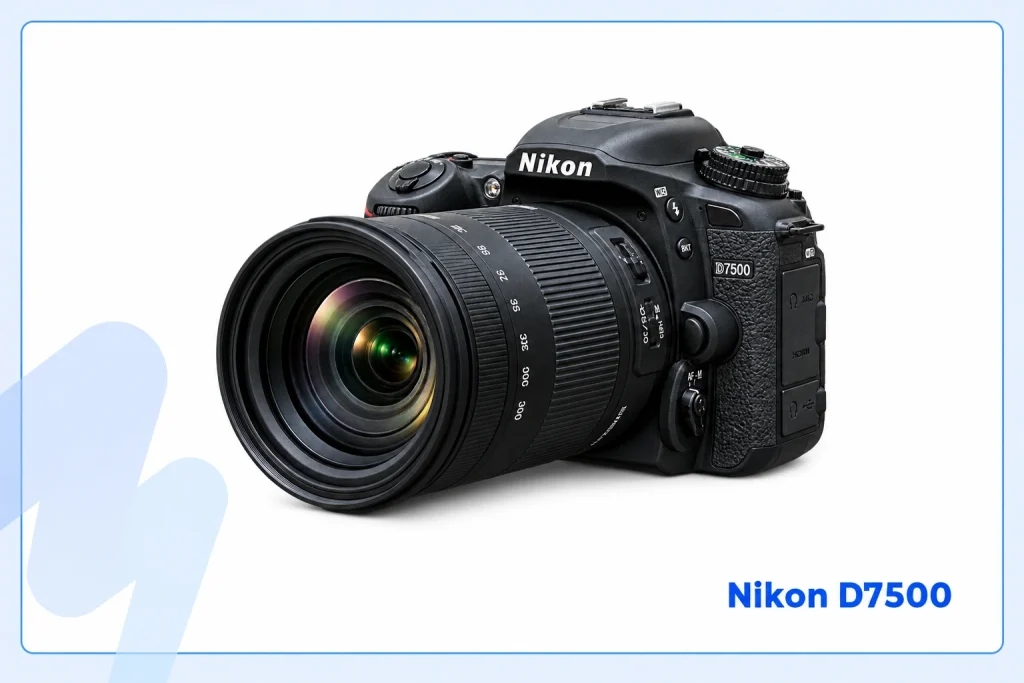
9. Nikon D7500
Specifications
| Sensor | 20.9MP APS-C CMOS |
| Burst Rate | 8 fps, with a buffer deep enough for roughly 50 JPEGs |
| Autofocus | 51-point AF system, 15 cross-type points |
| Build | Weather-sealed body |
| Video | 4K UHD at 30p |
The D7500 shares its autofocus module with Nikon’s higher-end D500. This was a standout feature at launch and still performs well for the price. Independent testing found its subject tracking and buffer depth strong enough to handle sidelines, courtside, and rink-side shooting.
8 fps isn’t flashy next to the mirrorless cameras on this list. But the buffer keeps going long after cheaper cameras have stalled. This matters more than peak speed in a lot of real sports scenarios. The weather-sealed body is a genuine plus for outdoor sports photographers who shoot in rain, snow, or dusty sidelines.
| Pros | Cons |
|---|---|
| + Deep buffer sustains long bursts better than its fps number suggests | – Discontinued, so it’s mostly a used-market buy now |
| + 51-point AF system shared with a higher-end body | – Single UHS-I card slot |
| + Weather-sealed for outdoor conditions | – No in-body stabilization |
| + Excellent value on the used market |
Best for: Enthusiast photographers with existing Nikon F-mount lenses who want strong buffer depth and weather sealing at a used-market price.
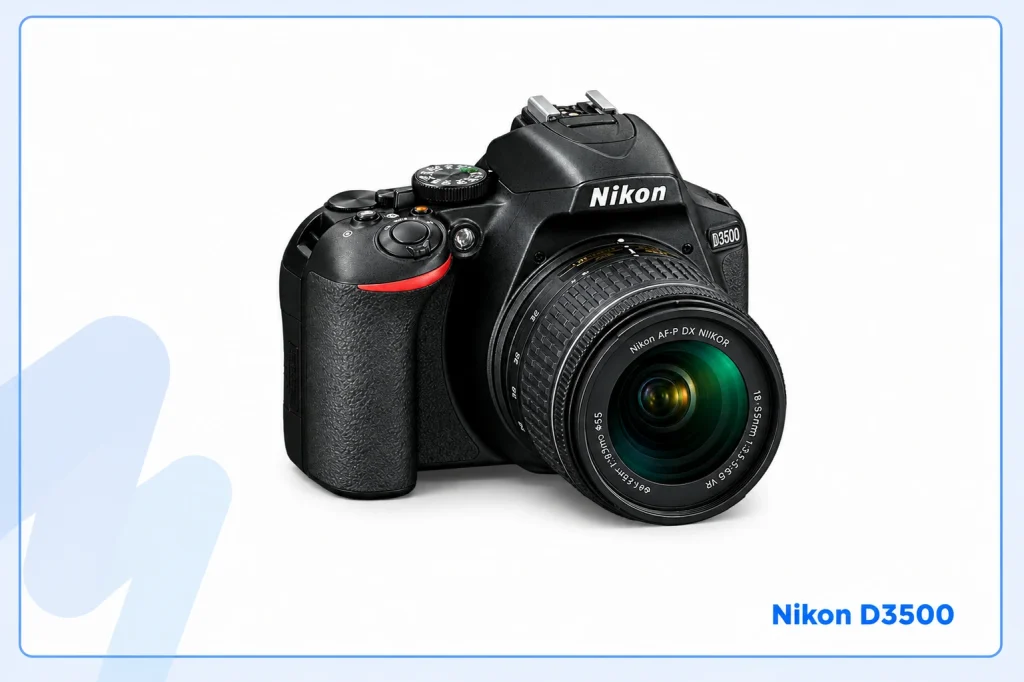
10. Nikon D3500
Specifications
| Sensor | 24.2MP APS-C CMOS |
| Burst Rate | 5 fps |
| Autofocus | 11-point AF, 1 cross-type point |
| Battery Life | Approximately 1,550 shots per charge |
| Video | Full HD 1080p up to 60 fps (no 4K) |
The D3500 was built as a first camera for new photographers. It shows in the best possible way: simple controls, a built-in Guide Mode that explains settings as you shoot, and battery life. Battery outlasts nearly every mirrorless camera on this list several times over.
5 fps and 11 autofocus points won’t compete with anything else on this list for fast, unpredictable action. But for learning the fundamentals of timing and anticipation, the actual skills that make a good sports photographer. It’s a genuinely solid, forgiving starting point. Its 24.2MP sensor also produces sharper, cleaner images than its beginner price suggests.
| Pros | Cons |
|---|---|
| + Exceptional battery life for all-day tournaments | – 5fps burst and basic AF limit fast-action results |
| + Sharp 24.2MP sensor punches above its price | – No touchscreen or articulating LCD |
| + Lightweight and easy to carry | – No 4K video |
| + Built-in Guide Mode helps true beginners learn |
Best for: Students, parents, and first-time camera buyers who want to learn photography fundamentals before investing in faster gear.
| Shot the game. Now make it look like it. Your action shots deserve a polished finish. We handle color correction, cleanup, and retouching so they’re ready to share or deliver. Get a Free Trial Edit |
How We Evaluated These Cameras
We weighed five factors for every best camera for sports photography candidate on this list. These are the specs that actually determine whether you come home with usable sports shots or a memory card full of near-misses.
Autofocus Performance
Continuous autofocus (AF-C) is non-negotiable for sports. It’s the mode that keeps refocusing as your subject moves, rather than locking focus once and holding it. We looked at how each camera’s AF system handles subject tracking (following a specific player around the frame) and eye detection (locking onto a face or eyes specifically).
Burst Shooting Speed
Frames per second (FPS) determines how many chances you get at the peak moment of a play. We noted whether each camera’s top speed requires an electronic shutter. This can introduce rolling shutter distortion on fast-moving subjects versus a mechanical shutter.
Buffer Capacity
A fast burst rate is only useful if the camera can sustain it. Buffer depth, how many RAW or JPEG files a camera can capture before slowing down to write to the memory card. We called it out wherever it meaningfully affects real shooting. Pairing any of these bodies with a fast UHS-II SD card noticeably improves buffer clearing speed.
Image Quality
Sensor performance, dynamic range, and high-ISO noise control all affect how usable your shots are once you crop in or shoot under stadium lights and gym fluorescents. Full-frame sensors generally hold up better in low light than APS-C sensors.
Lens Ecosystem
For interchangeable-lens cameras, we considered how many native telephoto options exist and whether third-party lens makers support the mount. A fast telephoto zoom is often what separates a decent sports shot from a great one.
Buying Guide: How to Choose the Best Sports Camera
- Mirrorless vs. DSLR: Mirrorless cameras generally offer faster, smarter autofocus and higher burst speeds. Because their sensors are constantly feeding data to the AF system. DSLRs answer back with longer battery life and an optical viewfinder that many photographers find easier to track fast motion through.
- APS-C vs. Full-Frame Sensor: A full-frame sensor captures more light. That means better performance in dim gyms and evening games. Plus, generally smoother backgrounds. An APS-C sensor is smaller, which gives you extra effective reach from the same lens (a crop factor) and usually comes in a lighter, more affordable body.
- Autofocus System: Look specifically for continuous autofocus (AF-C), subject tracking, and ideally eye detection AF. A camera with more autofocus points isn’t automatically better; what matters is how reliably it tracks a moving subject across the frame.
- Burst Shooting Speed: 10 fps is a reasonable minimum for most amateur sports. Fast-paced sports like hockey, basketball, and motorsports benefit from 15fps or higher.
- Image Stabilization (IBIS): In-body image stabilization helps most with handheld telephoto shots and video. It’s a nice-to-have for sports specifically, and a bigger deal if you’ll also shoot video with the same body.
- Electronic vs. Optical Viewfinder: Electronic viewfinders (EVF) show you a live preview with exposure and focus overlays, which is genuinely useful for learning. Optical viewfinders (OVF) show the real world with zero lag and no blackout between shots.
- Battery Life: Mirrorless cameras generally drain faster than DSLRs, especially at high burst rates and with the EVF running constantly. If you’re shooting all-day tournaments, budget for a spare battery or two regardless of which camera you choose.
DSLR vs. Mirrorless for Sports Photography
Both systems can absolutely deliver great sports photos. The right one comes down to what you value more day-to-day. Here’s the honest trade-off, category by category.
| Category | DSLR | Mirrorless |
|---|---|---|
| Autofocus | Reliable, but generally fewer AF points and slower subject tracking | Faster, AI-assisted tracking with wider frame coverage |
| Speed | Typically 3–11 fps on the models here | Typically 15–120 fps depending on the model |
| Battery | Often 700+ shots per charge | Usually 300–500 shots per charge |
| Weight | Generally heavier, especially with a battery grip | Generally lighter for the same sensor size |
| Lens Options | Huge, mature used and new lens markets | Growing fast, though older mounts have fewer third-party options |
| Upgrade Path | Fewer new bodies being released going forward | Where camera makers are focusing new development |
The short version: If you’re buying your first camera and the budget is tight, a DSLR like the Nikon D3500 or Canon EOS Rebel T7 still teaches the fundamentals well. If you’re investing for the next five-plus years or need to track fast, erratic subjects, mirrorless is where the autofocus technology is headed.
Essential Accessories for Sports Photography
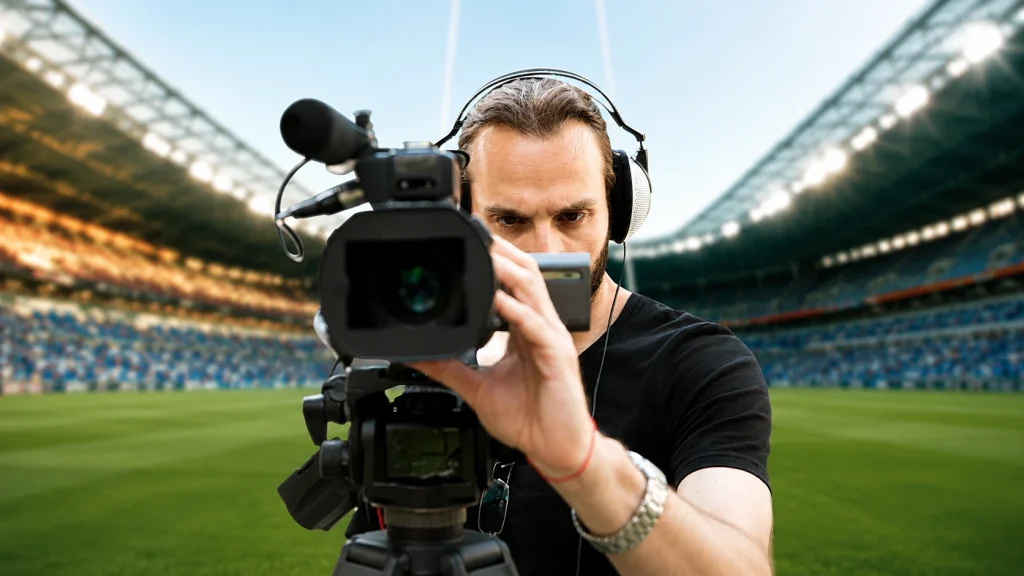
The camera body only tells half the story. These accessories round out a working sports photography camera and kit.
- Telephoto Lens: A 70-200mm f/2.8 (or your system’s APS-C equivalent) is the single highest-impact upgrade for interchangeable-lens shooters. See our guide to choosing the right camera lens for how aperture and focal length affect your shots.
- Fast UHS-II SD Cards: A slow memory card bottlenecks even the fastest camera’s buffer. UHS-II cards clear buffers noticeably faster than older UHS-I cards during long bursts.
- Extra Batteries: Mirrorless bodies especially can drain a battery in a couple of hours of continuous shooting. Carry at least one spare for a full tournament day.
- Monopod: A monopod supports heavy telephoto lenses for hours without the bulk of a full tripod, and it still lets you pan quickly with the action.
- Camera Bag: A padded bag with quick-access compartments matters more on the sidelines than in the closet. You often have seconds to swap lenses between plays.
- Lens Cleaning Kit: Outdoor sports mean dust, rain, and sunscreen fingerprints on your front element. A simple cloth and blower kit keeps images sharp.
Frequently Asked Questions
u003cstrongu003eIs DSLR or mirrorless better for sports photography?u003c/strongu003e
Mirrorless cameras generally offer faster autofocus and higher burst speeds, which suits fast, unpredictable sports. DSLRs still hold advantages in battery life and optical-viewfinder tracking. Remain a genuinely solid choice, especially for beginners on a budget.
u003cstrongu003eHow many FPS do I need for sports photography?u003c/strongu003e
10 fps is a reasonable minimum for most amateur sports. Fast-paced sports like hockey, basketball, and motorsports benefit from 15fps or higher, provided the camera’s buffer can sustain it.
u003cstrongu003eIs APS-C good enough for sports?u003c/strongu003e
Yes. APS-C sensors like the ones in the Canon EOS R10 or Nikon D7500 handle outdoor daytime sports well and give you extra effective reach from the same lens.
u003cstrongu003eWhich autofocus mode works best?u003c/strongu003e
Continuous autofocus (called AF-C on most cameras, or AI Servo on Canon DSLRs) is the standard choice for sports. It keeps refocusing as your subject moves rather than locking focus once.
u003cstrongu003eWhat lens is best for sports photography?u003c/strongu003e
A telephoto zoom in the 70-200mm range (or its APS-C equivalent) covers most sports from a reasonable sideline distance. For very distant subjects, a 100-400mm or longer lens helps.
u003cstrongu003eCan beginners shoot sports photography?u003c/strongu003e
Absolutely — start with a manageable, budget-friendly body like the Nikon D3500 or Canon EOS Rebel T7 and focus on learning timing and anticipation first. Our guide to u003ca href=u0022https://offshoreclipping.com/blog/entry-level-cameras-product-photography/u0022u003eu003cstrongu003ehow to choose an entry-level camerau003c/strongu003eu003c/au003e walks through what actually matters.
u003cstrongu003eIs image stabilization important for sports?u003c/strongu003e
It helps more with handheld telephoto framing and video than with frozen action shots, since fast shutter speeds already handle motion blur. It’s a nice-to-have rather than a dealbreaker for stills.
u003cstrongu003eWhat shutter speed should I use?u003c/strongu003e
1/1000 second or faster reliably freezes most sports action; slower sports like golf can work with 1/500 second. Our guide to u003ca href=u0022https://offshoreclipping.com/blog/digital-photography-shutter-speed/u0022u003eu003cstrongu003ebest shutter speed for sports photographyu003c/strongu003eu003c/au003e breaks down settings for specific sports in more detail.
u003cstrongu003eCan I shoot indoor sports with a budget camera?u003c/strongu003e
Yes, though gym lighting will push you toward higher ISO settings, which introduces more digital noise on smaller sensors.
Final Verdict
There’s no single best camera for sports photography that fits every photographer. Only the best one for your budget, your sport, and how far you plan to grow. Whichever camera you land on, the gear is only half the equation; the rest comes down to anticipating the play and putting in the reps. Pick the body that fits your budget and your sport, learn its autofocus system inside out, and the keepers will follow.