Real estate photography refers to shooting images of residential and commercial properties featured in listings. Professional images are the first things clients consider checking. Some common real estate images include interior, exterior, commercial, etc.
To shoot high-end images, use a DSLR or mirrorless camera, an ultra-wide-angle lens, a tripod, etc. To capture aesthetic images, you need artificial lighting, a drone, and a remote trigger. Once complete, get your photos edited to ensure they are up to the mark.
Real estate photography is a rewarding job if you stick to marketing and gaining experience. Property photographers earn up to $75,500 per year.
What is Real Estate Photography?
Real estate photography is the photography of residential, commercial, and vacant properties, making them presentable and publishable for boosting property sales. Professional real-estate images show location, architectural details, interior spaces, utilities, and exterior features in detail. It changes the specific location into a compelling visual asset to attract prospective buyers, renters, and investors.
Why is Real Estate Photography Important for Property Sales?
Real estate photography is important for property sales because it creates a positive first impression for online buyers. High-quality property photos emotionally connect buyers and drive engagement. Real estate companies, realtors, and company websites use photos to boost traffic and sales, foster trust, and maximize the property’s market value.
Other importances of real estate photography are as follows.
- Properties with professional images secure higher closing prices.
- Listings featuring high-quality photos pique buyers’ interest faster.
- High-end photos differentiate property listings from the competitive search results and busy MLS feeds.
- Consistent quality photos build an agent’s reputation and trustworthiness for the future.
- Quality images clarify buyers’ confusion and propel them to decide.
- Eye-catching property shots boost social shares, likes, and inquiries across platforms.
What are the Types of Real Estate Photography?
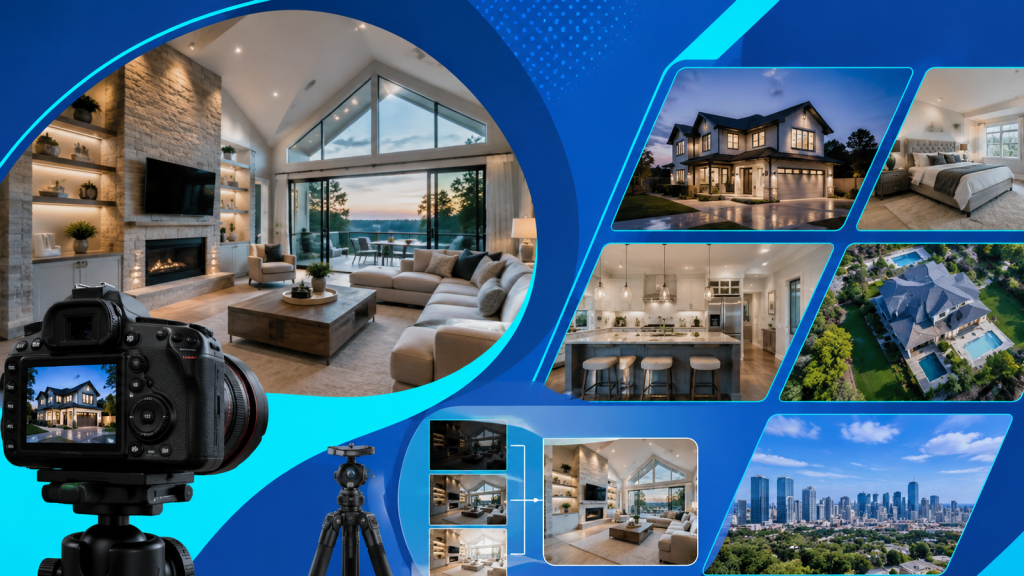
There are 7 types of photography used in real estate: interior, exterior, commercial, luxury, aerial/drone, twilight, and virtual staging photography. These photos transform flat listings into highly engaging, immersive digital storefronts that capture buyer attention, highlight unique selling points, and drive competitive offers.
- Interior Photography
Property interior photographs are shots of the main living spaces, room layouts, natural light flow, and premium finishes such as countertops and flooring. It shows a comfy feeling, forming an emotional connection with the buyers.
- Exterior Photography
Exterior photography is the shots that show the property’s curb appeal, front and back yards, architectural style, roofing, and immediate landscaping. These types of photos act as a hook, making buyers look into the listings.
- Commercial Photography
Commercial photography refers to images of office buildings, retail spaces, multi-family complexes, warehouses, etc. This type of photo emphasizes square footage, accessibility, business utility, and attracting corporate investors and business owners.
- Luxury Photography
Luxury photography shows architectural details, bespoke materials, premium custom amenities such as high-tech features and infinity pools, and stylized lighting. This type of photo shows lifestyle narrative and justifies a premium pricing, targeting affluent buyers.
- Aerial/Drone Photography
Aerial/drone photography refers to shots from above that show the entire lot boundary, roof conditions, the surrounding neighborhood, and proximity to local amenities or water bodies. Such photos offer a geographic context that ground-level shots cannot offer.
- Twilight Photography
Twilight photography is shooting a property exterior during the blue hour or golden hour. As the sky remains deep blue for a short time, photographers can capture warm, glowing interior landscape photos. Twilight photos create artistic and cozy images, stopping users’ scroll and increasing CTR (click-through rates).
- Virtual Staging Photography
Virtual staging photography is a technique where empty or outdated spaces are digitally decorated. It is equipped with photorealistic furniture, decor, and optimized lighting to show a space’s full potential. Such photos change empty rooms into warm, inviting spaces without costly physical staging.
Real Estate Photography Equipment & Tools
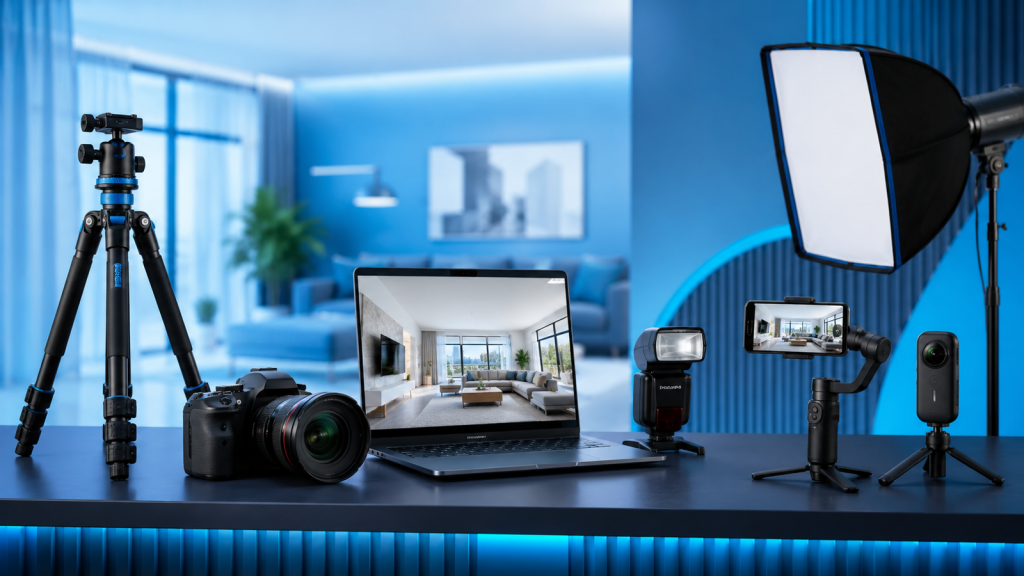
Common real estate photography equipment and tools include full-frame mirrorless or DSLR cameras, ultra-wide-angle zoom lenses, robust carbon-fiber tripods with geared heads, off-camera flash systems with wireless triggers, drones, polarizing filters, remote shutter releases, and specialized high-dynamic-range (HDR) blending and AI-driven virtual staging editing software.
Essential Real Estate Photography Equipment
- Camera
Use a full-frame mirrorless camera or a DSLR camera to shoot property. Full-frame sensors offer a wide dynamic range. You can capture both bright windows and dark indoor corners in a single shot.
Professional photographers recommend full-frame cameras are Sony A7 IV or Canon EOS R6 Mark II. DSLRs such as Nikon D850 or Canon 5D Mark IV are also highly powerful options.
The ideal camera settings for real-estate photography are aperture f/6 to f/11, ISO 200 (adjustable), and a low shutter speed. Shoot in manual mode and in raw format.
- Lens
Shoot with an ultra-wide-angle lens to capture property shots. Lens changes perspective, making tight indoor spaces open and inviting. You can shoot the entire room while retaining the natural scale and depth of the space.
- Tripod
Select a heavy-duty carbon-fiber or aluminum tripod to keep the camera steady for multi-exposure bracketed shots. Pair it with a geared head for micro-adjustments. It keeps your camera fixed and level to maintain straight vertical lines.
Must-Have Tools
- Drone
A compact, sub-250g drone, such as the DJI Mini 4 Pro, is a good option to shoot residential properties. It captures aerial views of lot boundaries and neighborhoods without requiring heavy regulatory permits. If you need to shoot large acreage or luxury estates, use a drone with a dual-lens system (like the DJI Air 3). It provides compressed telephoto perspectives that make properties look grand.
- Lighting
Use an off-camera flash like the Godox AD200 Pro or V1 speedlite. This tool is essential for the flambient technique. Bounce the flashlight directly off ceilings and walls to eliminate harsh window glare. It also keeps interior paint colors accurate instead of washed out.
- Remote Trigger
Use a wireless radio trigger or smartphone app control to fire the shutter without physically touching the camera. It helps prevent micro-vibrations and blur during long-exposure interior shoots.
Recommended Editing Software
Use the following real estate photo editing software.
- Adobe Lightroom: Best for organizing high-volume property shoots. It provides excellent lens distortion correction and fast global color adjustments.
- Adobe Photoshop: Best for advanced layers and masking. It is essential for manually blending ambient and flash shots to remove glare.
- Skylum Luminar Neo: Features powerful AI tools like Sky AI for instant exterior sky replacements and Relight AI to control harsh interior window lighting.
- AutoHDR: A suitable solution for a real-estate AI platform that instantly blends multi-exposure brackets and recovers blown-out window views in minutes.
- Capture One Pro: Known for its superior RAW processing and advanced color science, ensuring accurate interior paint colors and perfect tethering.
Real Estate Photography Tips
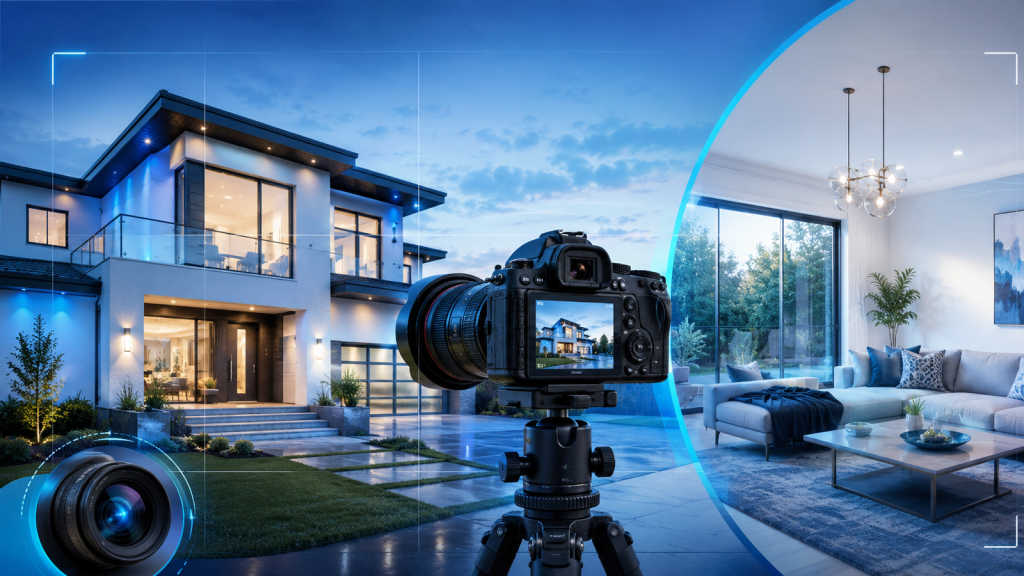
Beginner Tips
- Shoot during golden hour (early morning or late afternoon) to get warm, soft light.
- Clean the room, remove clutter, cords, and personal items. Messy surroundings or unnecessary objects distract buyers from the layout.
- Keep your camera steady on a tripod to get a consistent photo, and remove blur in dark rooms.
- Keep the camera perfectly level to achieve straight lines. This stops walls from leaning unnaturally.
Intermediate Tips
- Use symmetry and the rule of thirds to create a clear and balanced look.
- Shoot from different angles, corners, and doorways to display the flow of the house.
- Frame three walls in your shot to highlight space and depth. You can also shoot through open doors.
- Open all blinds and doors to let natural light pass through. Daylight warms up dark corners.
Advanced Tips
- Merge dark and bright photos. It keeps windows clear and interiors bright.
- Combine natural light with bounced flash to remove glare and bring out true colors.
- Take close-up shots of high-end details. It allows buyers to see clearly and visualize their own settings.
- Use the same editing style for every shoot to develop a recognizable brand.
Real Estate Photography Post-Production Guide
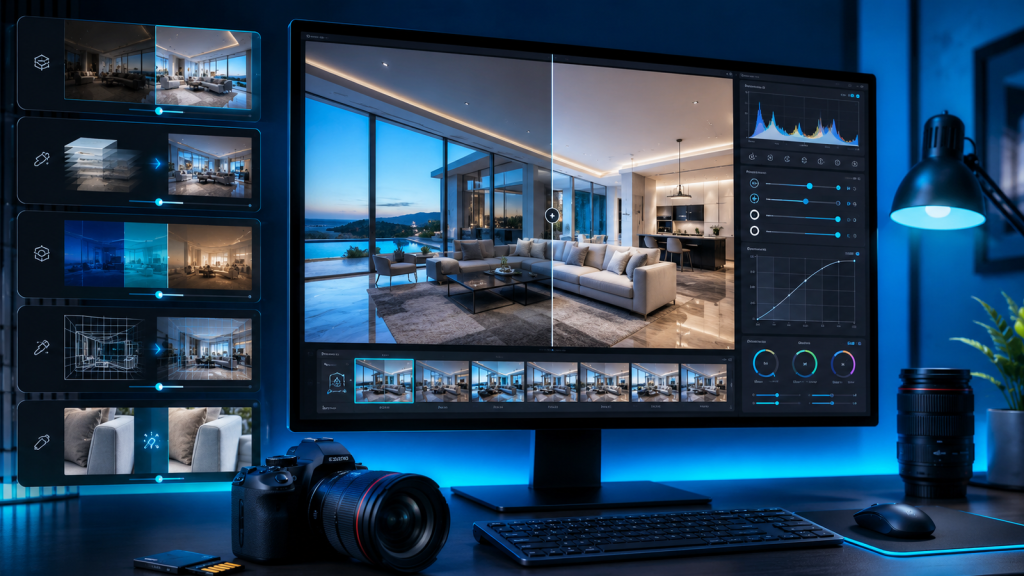
Real estate photo editing consists of organized sets of techniques that transform raw property files into clean, professional, and market-ready listing visuals. Some common real estate image editing techniques are as follows.
- Flambient Blending Technique
The flambient blending technique is a method of mixing ambient light with off-camera flash. By using Adobe Photoshop layers, brush tools, and blending modes, this editing is applied. It eliminates harsh glare and reflections, keeping the natural shadows. So the property details appear crisp and well-colored.
- Geometric Correction & Vertical Realignment
Geometric correction and vertical realignment fix perspective distortion caused by wide-angle lenses. To do it, use Lightroom Lens Corrections and Photoshop Transform/Guides tools. You will see leaning walls and door frames align well in images. This stabilizes the photo and creates a well-structured property look.
- Dynamic Window Pulls
Dynamic window pulls refer to blending multiple exposures. It adjusts bright outdoors with darker interiors. Use the Pen tool, Quick Masking, and layer opacity adjustments to apply this technique. It replaces white window glare with a clear view of the backyard.
- Mixed Light & Color Cast Neutralization
Mixed light and color cast neutralizing is cleaning up competing light colors like warm bulbs and cool daylight. To make this edit, use the white Balance eyedropper and selective HSL (Hue, Saturation, Luminance) sliders. You will see, it erases ugly yellow or green stains from walls and floors, ensuring a cohesive color palette.
- Digital De-cluttering
Digital decluttering means erasing distracting, messy objects from the property photo. Use Photoshop Content-Aware Fill, Clone Stamp, and Healing Brush. This process eliminates distracting power cords, trash cans, stains, etc., creating a pristine, high-value space.
- Sky Replacement and Grass Enhancement
Sky replacing and grass replacing refer to swapping out dull, gray weather and dying lawns for a lively space decoration. To do it, use Sky Replacement AI, color grading curves, and saturation brushes. It turns gloomy days into vibrant, sunny afternoons or luxurious twilights, making the photos relatable and believable.
Real Estate Photography Career Guide
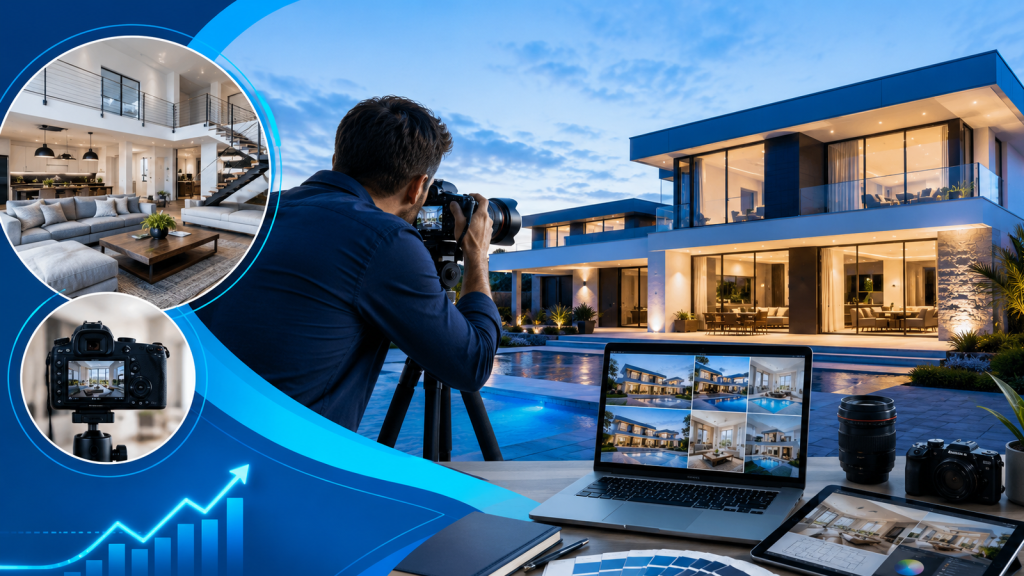
To start a career in real estate photography, your skills should combine technical execution and active B2B networking. As property listings depend on a digital storefront, your merged skills will remain relevant, demanded and consistent with this niche.
Here is a step-by-step guide on how you can start a career as a real estate photographer.
1. Analyze Niche and Local Demand
Do online research on local real estate listings to see the photo quality. High-volume markets need fast shoots, while luxury markets demand premium quality. Find the local gap to target your business.
2. Choose Your Path
Decide whether you want to be a freelancer or work with an agency. In freelancing, you keep the earnings and work with flexibility if your marketing goes right. Working with agencies has steady daily shoots and handles editing.
3. Build a Portfolio Locally
Capture photos of your surroundings, ask people to refer to you, join social communities, and tell you about your work. When you have some photos, create your online portfolio with 10-15 high-quality photos. Put these images in a clean digital gallery.
4. Offer Add-On Services
Add variations to your static photo services. Include drone media, Matterport 3D tours, and floor plans. Create short vertical video reels for social media to increase your average invoice value.
5. Pitch Agents and Open Houses
Reach out to local open houses and meet agents directly. Show your portfolio on a tablet. Offering a discounted price for the first shoot is a good tactic to confirm clients and secure a steady flow of income.
Real Estate Photography Pricing & Income Potential
Establishing a strategic pricing structure is the foundation of a highly profitable real estate media business. Unlike single-event photography, real estate relies on a high-volume, repeat-client model where standardized packages and scalable workflows dictate your long-term income potential.
- Industry Pricing Structures & Packages
Real estate photography is a high-volume, repeat-client industry. Successful photographers calculate pricing based on property size, shoot duration, and value delivered, rather than using a flat rate.
Below is standard industry pricing across various billing segments:
| Segment | Pricing (starting) | Best For |
|---|---|---|
| Per image | Around $20 | Custom photos beyond the standard package limit. |
| Per hour | Around $100 | Commercial properties, custom lifestyle shoots, or on-site delays. |
| Per day | Approximate $700 | Luxury estates, architectural portfolios, and multi-unit commercial shoots. |
| Per project | Around $200 per listing | Standard residential listings. |
| Add-On Packages | Approximate $150 per service | High-margin extras like Drone, Matterport 3D, and Video Reels. |
- Income Potential & Future of the Profession
Real estate photographers’ earnings depend on the business model and operational volume. Real estate photographers earn $23,000 to $75,500, according to a 2026 ZipRecruiter report titled Real Estate Photographer Salary.
As real estate photography is changing from simple images to visual media, realtors relying on professional media packages will continue to thrive. If you are a digital media creator, bundling traditional photography with short-form vertical video reels, aerial drone footage, and immersive 3D, you can expect to succeed in this photography niche.
How to Scale Your Photography Business?

Growing from a busy solo freelancer into a thriving media company requires shifting focus from manual labor to operational efficiency. To scale your photography business, upsell media bundles, automate booking and delivery, outsource photo editing, and then shift from an individual photographer to a business owner.
- Upsell Media Bundles: Combine standard photos with drone shots, floor plans, and video reels. Bundling instantly boosts a $150 shoot to $400+.
- Automate Booking & Delivery: Use updated software for booking and delivery automation. Agents can view your calendar, book add-ons, pay, and download images automatically
- Outsource Post-Production: Send RAW files to overnight editing teams or outsourcing photo editing firms. This frees your schedule to shoot four to five properties daily.
- Upgrade to a Business Owner: Hire junior photographers to shoot using your guidelines. This lets you cover multiple territories and focus on growth.
Frequently Asked Questions

What equipment is needed for real estate photography?
The essential kit includes a full-frame mirrorless or DSLR camera, an ultra-wide-angle zoom lens (such as a 16-35mm), and a heavy-duty tripod with additional tools (an off-camera flash for brightening dark spaces and a compact drone for aerial property views). Necessary equipment varies by space to shoot and the photographer’s expertise.
What is the best lens for real estate photography?
The best lens for real estate photography is a wide lens, such as a 16-35mm f/4 or 15-35mm f/2.8 wide-angle zoom lens. These lenses allow you to capture tight interior spaces, like bathrooms and bedrooms, without creating fish-eye distortion. Use a 24mm tilt-shift lens for shooting premium luxury or commercial properties.
How does HDR real estate photography work?
High Dynamic Range (HDR) photography works by capturing a bracketed sequence of three to five identical shots at different exposure levels. These shots range from very dark to very bright. In photography post-production, these files are merged, combining the best elements of each frame. The final output ensures that there is a bright window view and a deep indoor scene in a clean image.
How do you edit real estate photos professionally?
To edit real estate photos professionally, use renowned photo editing software such as Photoshop, Lightroom, etc. Editing is a structured, multi-step workflow. The process requires precise geometric correction to straighten leaning walls, meticulous exposure blending to balance dark interiors with bright windows, and detailed color correction to eliminate mixed-lighting color casts. During your busy time, you can hire professional photo editing services to get the photos edited and ready for delivery.
Is real estate photography a good career?
Yes, real estate photography is a good career due to the continuous volume of property listings entering the market. Being a repeat-business industry, a photographer can work steadily, generate a predictable income, and find long-term partnerships with realtors. They can also find jobs in local real estate brokerages and upselling digital add-ons like 3D tours and floor plans.