If you have already learned the basics of video editing, you may be wondering whether it is worth taking the skill seriously as a career. Can you earn well from it? Will there still be enough opportunities as AI becomes more capable? And more importantly, can video editing give you room to grow instead of keeping you stuck doing basic edits?
So, is video editing a good career? Yes. Video editing, as a career, can be rewarding for someone who enjoys creative problem-solving, storytelling, and working with digital media. You can grow from an entry-level editor into freelance work, in-house roles, post-production, motion graphics, color grading, or other specialized career paths as your skills improve.
And your earning potential and career growth will depend on your editing ability, portfolio, specialization, reliability, and how well you adapt to new tools and workflows.
In this guide, we will look at video editing salaries, career opportunities, essential skills, pros and cons, different career paths, and how AI may affect your future as an editor.
Need reliable post-production support for growing video projects? Explore our professional video editing services and test the quality with a free trial.
Is Video Editing a Good Career?
Yes, video editing can be a good long-term career, and current labor-market data shows that skilled editors still have meaningful earning and employment opportunities. In the U.S., the Bureau of Labor Statistics reports a median annual wage of $70,980 for film and video editors, compared with $49,500 across all occupations.
This sector is expected to grow rather than disappear. The BLS projects employment of film and video editors to increase 4% between 2024 and 2034, while O*NET projects around 3,600 job openings each year over the same period.
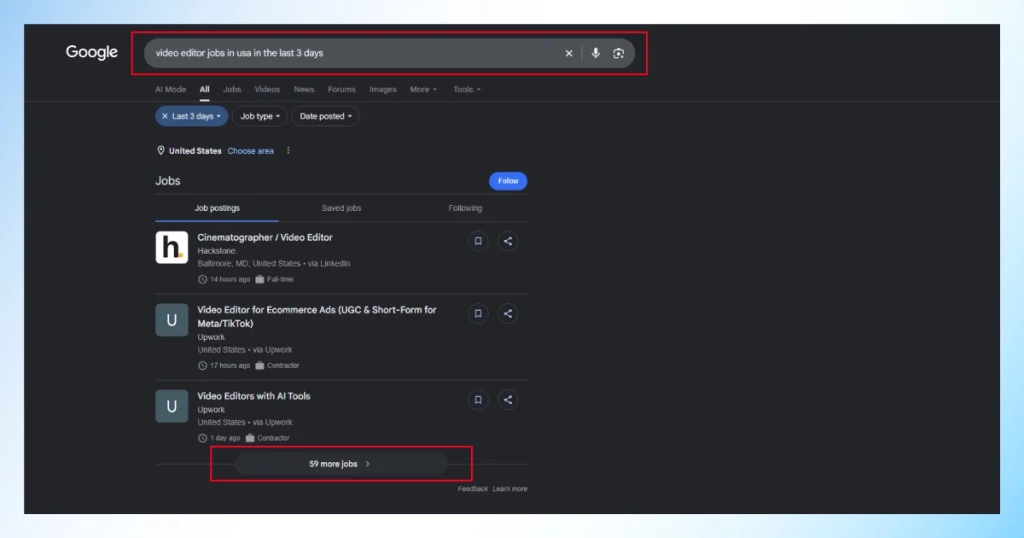
Demand for digital content and increasing use of visual effects are considered to be major factors to boom in video editing jobs.
That does not mean you will earn a high salary when you first start as a video editor intern. As you gain experience and move into senior video editor roles, your income can increase based on your editing skills, portfolio, specialization, experience, and ability to work professionally with clients or production teams.
But if you continue developing beyond basic cuts and transitions, video editing offers a real path into freelance, in-house, remote, and specialized post-production work.
Advantages of a Video Editing Career
- Creative work with a clear purpose: Editors decide how shots, sound, music, graphics, and pacing work together to guide the viewer.
- Several ways to earn: You may work for a production company , agency, brand, broadcaster, creator, or directly with freelance clients.
- Transferable skills: Storytelling, project management, sound editing, color correction, and motion graphics apply across many types of video work.
- Remote-work potential: Most editing happens on a computer, so many projects can be completed away from a traditional studio when the workflow allows it.
- Room to specialize: Editors can move into commercials, documentaries, social media, weddings, corporate video, film, color grading, sound, or visual effects.
Disadvantages of a Video Editing Career
- Tight deadlines: Campaign launches, broadcasts, events, and client approvals can create long or irregular working hours.
- Revision pressure: An edit may be technically correct but still miss the director’s or client’s intended tone.
- Income can vary: Freelancers may experience busy months followed by gaps between projects.
- High competition: Basic editing is easier to learn than before, so professional judgment and specialization matter more.
- Continuous learning: Software, formats, platforms, and audience expectations keep changing.
What Does a Video Editor Do?
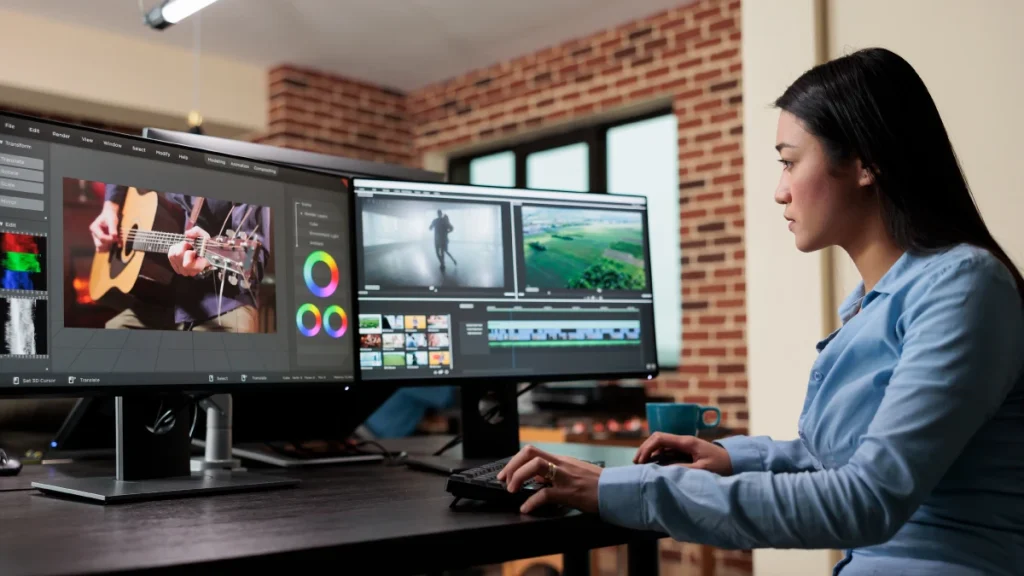
A video editor turns recorded material into a finished story or message. The job involves more than removing unwanted clips.
Editors organize footage, choose the strongest takes, control timing, improve sound, maintain visual continuity, add graphics, and prepare the final video for its delivery channel. A normal workflow may include:
- Reviewing the brief, script, brand guide, and technical requirements
- Importing, labeling, backing up, and organizing footage
- Synchronizing camera files and externally recorded audio
- Building a rough cut around the story or communication goal
- Refining pacing, transitions, continuity, and performance choices
- Cleaning dialogue and balancing music and sound effects
- Adding titles, captions, graphics, or visual effects
- Correcting color and creating a consistent visual finish
- Collecting feedback and managing revision rounds
- Exporting the correct resolution, aspect ratio, codec, and file type
One editor may handle all these tasks on a small project. But in the case of larger productions, divide the work among assistant editors, picture editors, motion designers, colorists, sound editors, and visual-effects artists.
Video Editor Salary and Job Outlook in the USA
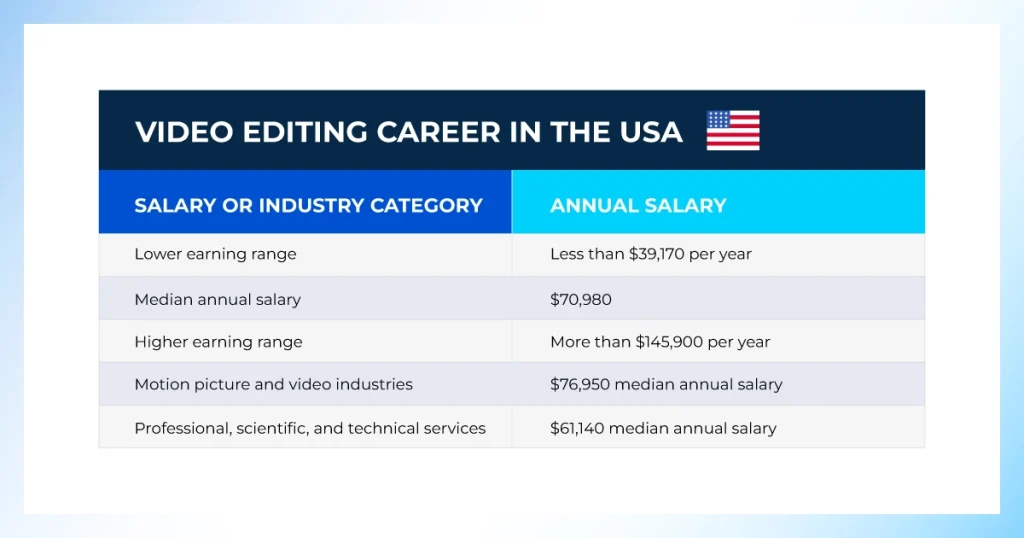
Video editor wages vary across the United States based on experience, industry, location, employment type, specialization, and level of responsibility. According to the BLS Occupational Outlook Handbook, the verified salary figures include:
- Lower earning range: Less than $39,170 per year
- Median annual salary: $70,980
- Higher earning range: More than $145,900 per year
- Motion picture and video industries: $76,950 median annual salary
- Professional, scientific, and technical services: $61,140 median annual salary
Disclaimer: These figures represent wage percentiles and industry medians, not official entry-level, mid-level, or senior-level salary ranges. The BLS wage data also exclude self-employed editors, so they should not be used to estimate freelance income.
What are the Factors Affecting Salary?
Several professional and market factors can influence how much a video editor earns:
- Experience and level of responsibility
- Portfolio quality and professional credits
- Geographic location and local market rates
- Industry and type of employer
- Full-time or contract employment
- Project complexity and turnaround time
- Specialization in motion graphics, color grading, sound, or visual effects
- Professional reputation and network
- Leadership or project-management duties
- Union status in eligible film and television productions
Why Video Editing Offers Growing Career Opportunities
Video production is expanding beyond film and television into advertising, social media, ecommerce, streaming, education, and creator-led businesses.
For someone searching for a vacancy for video editors, this matters because organizations now need editors for both one-off productions and continuous digital content. U.S. labor data also projects continued employment growth for film and video editors through 2034.
The Demand for Digital Video Continues to Grow
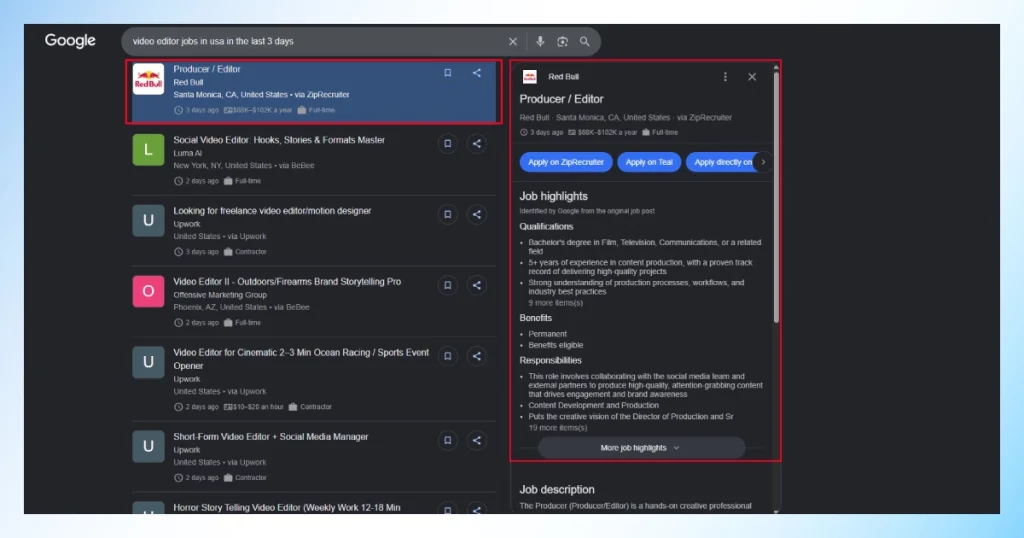
Brands are investing more money in video because audiences increasingly consume advertising and content through digital channels.
This supports more production across social video, online video, connected TV, product campaigns, and performance advertising. Each campaign needs footage selected, structured, polished, adapted, and delivered, which keeps professional editing tied to a growing digital-video market.
Businesses Are Producing Video More Consistently
Video is no longer limited to occasional brand campaigns. Companies now produce product videos, paid ads, tutorials, testimonials, webinars, social clips, training materials, and internal communications throughout the year.
This changes editing from an occasional production requirement into an ongoing workflow. An editor may also turn one source video into several channel-specific versions, creating more post-production work from the same shoot.
The Creator Economy Is Expanding the Editing Market
Creators are also becoming a larger commercial media channel. IAB reported that U.S. creator advertising spending reached $37 billion in 2025 after more than doubling from $13.9 billion in 2021 to $29.5 billion in 2024. It projects creator ad spending to reach $44 billion in 2026.
As creators publish podcasts, YouTube videos, Shorts, Reels, sponsored content, and other recurring formats, many need editing support to maintain publishing frequency. That creates opportunities beyond traditional film studios and production companies.
Freelance Work Creates Another Route Into the Profession
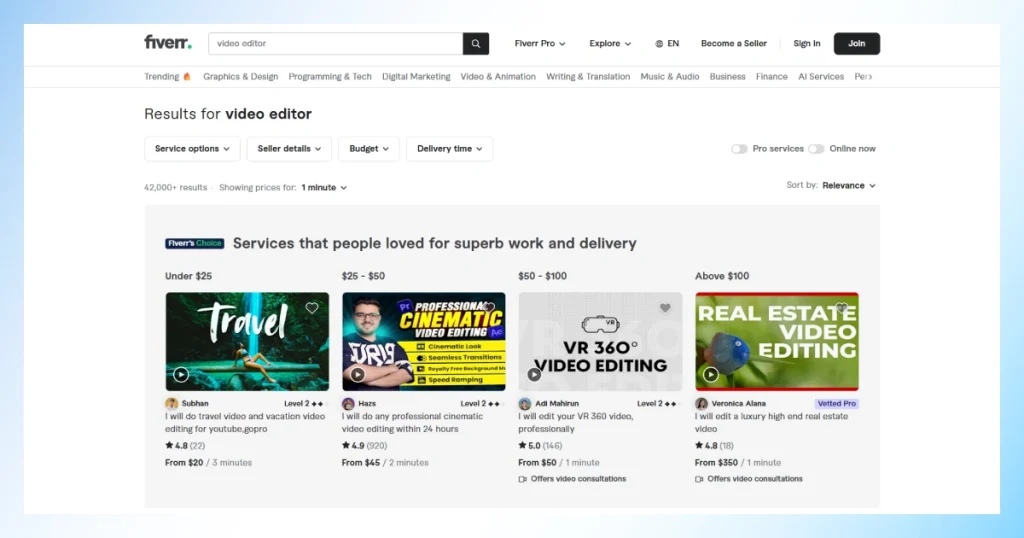
Editing opportunities are not limited to salaried vacancies. BLS data shows that 29% of film and video editors were self-employed in 2024, while 34% worked in motion picture and video industries.
That is important for beginners because the career does not depend entirely on securing a traditional full-time position. Editors can build experience through freelance projects, contract work, creator partnerships, agency assignments, and eventually longer-term client relationships.
Video Editing Career Paths
If you decide to continue video editing as a career, you do not have to stay a generalist forever. You can choose a niche based on the type of content you enjoy, the clients or companies you want to work with, and the editing skills you want to develop.
Here are some of the main video editing career paths you can choose from.
Film and Television Editor
This path is suited to editors who want to work on films, television series, documentaries, or scripted productions. You may begin as an assistant editor and gradually move into full editing roles as you gain experience with storytelling, pacing, continuity, and larger post-production workflows.
Advertising and Commercial Editor
Advertising editors work with brands, agencies, and production companies to create commercials, product videos, campaign content, and promotional videos. This niche can be a strong option if you enjoy short-form storytelling, fast-paced projects, and working closely with creative briefs and brand requirements.
Social Media and Creator Editor
This career path focuses on content for YouTube, TikTok, Instagram, podcasts, and other creator platforms. Editors in this niche often work with individual creators, influencer teams, agencies, or brands that publish frequently, making it suitable for editors who prefer fast-moving digital content.
Corporate Video Editor
Corporate editors create content for businesses, including interviews, company presentations, internal communication, case studies, training videos, and promotional content. This path can offer more structured in-house or agency opportunities compared with some entertainment-focused editing careers.
Educational Video Editor
Educational editors work on online courses, tutorials, webinars, training programs, and learning content. You may work with educational companies, universities, course creators, or corporate training teams. This niche suits editors who enjoy clear, structured storytelling rather than highly cinematic editing.
Wedding and Event Video Editor
Wedding and event editors specialize in turning recorded events into highlight films, ceremony edits, speeches, trailers, and longer-form videos. You can work with wedding studios, event production companies, or directly with clients, making this a common freelance video editing career path.
YouTube and Long-Form Content Editor
Editors in this niche specialize in longer digital content such as interviews, documentaries, commentary videos, podcasts, reviews, and educational channels. As channels grow, editors may develop ongoing relationships with creators and become part of a regular content production team.
Ecommerce and Product Video Editor
Ecommerce video editors create product demonstrations, promotional videos, marketplace content, social ads, and short product-focused videos. This niche is especially relevant for editors who want to work with ecommerce brands, agencies, product photographers, and online sellers.
Motion Graphics and Visual Effects Editor
If you enjoy combining editing with animation and visual design, you can specialize in motion graphics or visual effects. This path may involve animated titles, compositing, tracking, transitions, visual effects, and branded graphics for advertising, entertainment, or digital media.
What Video Editing Skills Do You Need?
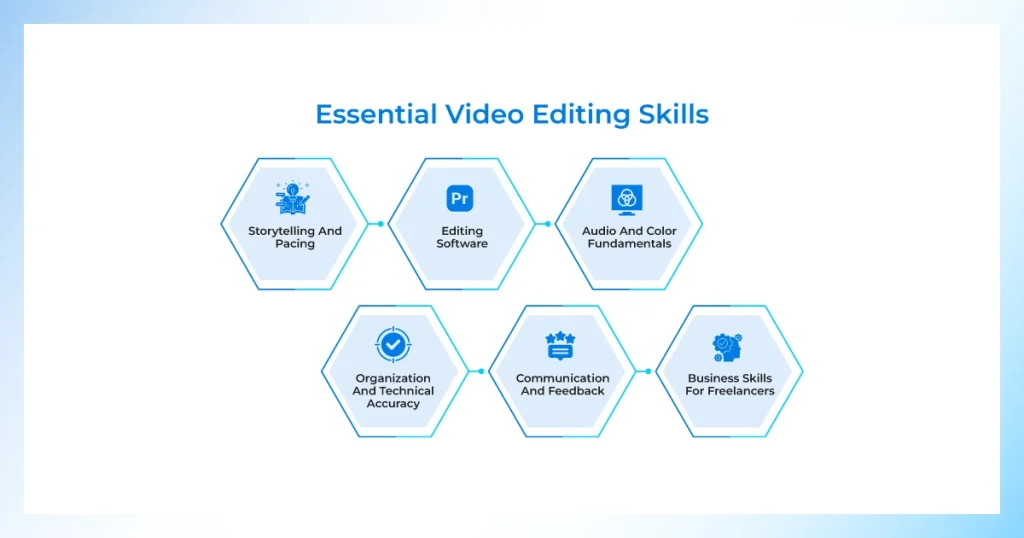
To work confidently on professional projects, you need practical skills that cover the complete editing process. These include shaping raw footage, using editing software, improving audio and color, managing media accurately, handling feedback, and preparing the correct files for delivery.
Storytelling and Pacing
Good editing starts with knowing what deserves to stay. You choose the strongest footage, arrange it clearly, and decide when the viewer needs more time or a quicker cut. B-roll, continuity editing, J-cuts, and L-cuts help everything flow without making the edit feel forced.
Editing Software
You do not need to master every editing program at once. Start with Premiere Pro, DaVinci Resolve, Avid Media Composer, or Final Cut Pro, depending on your intended market. Learn its timeline, keyframes, multicamera tools, proxy workflow, captions, media relinking, and export settings properly.
Audio and Color Fundamentals
Viewers may tolerate an imperfect shot, but poor audio quickly becomes distracting. Learn how to reduce noise, balance dialogue, use room tone, place music, and smooth out sound transitions. For color, focus on exposure, white balance, scopes, shot matching, natural skin tones, and consistent grading.
Organization and Technical Accuracy
File management may not be the exciting part of editing, but it can save an entire project. Clear folder structures, sensible file names, backups, organized sequences, and version control prevent avoidable mistakes. You also need practical knowledge of frame rates, codecs, bitrates, color spaces, and delivery specifications.
Communication and Feedback
Editing rarely happens without feedback. You need to understand the brief, confirm technical requirements, and ask questions before unclear details become revision requests. It is also important to explain what the budget and deadline allow while keeping your personal preferences separate from the project’s actual goals.
Business Skills for Freelancers
Once you start freelancing, editing becomes only one part of the job. You also have to define the scope, calculate rates, limit revisions, prepare agreements, invoice clients, and protect their files. Your pricing should cover software, equipment, storage, taxes, communication, and other unpaid working hours.
Remote vs In-House Video Editing Career: Which Is Better?
A video editor can work remotely or in-house since most of the job is done on a computer. In both setups, you have the same task: organize footage, build timelines, correct color, clean audio, add graphics, manage revisions, and prepare final exports.
The main difference is not the editing itself. It is how you collaborate, receive feedback, access files and equipment, manage your schedule, and communicate with the people involved in production. Understanding those differences can help you choose the work environment that fits your career goals.
| Factor | Remote Video Editing | In-House Video Editing |
|---|---|---|
| Workplace | Home or any suitable location | Office, studio, or company workspace |
| Equipment | Usually your own setup | Often provided by the employer |
| Communication | Online meetings, chat, review tools | Direct team communication |
| File handling | Cloud storage and file transfers | Internal servers or shared storage |
| Schedule | Often more flexible | Usually more fixed |
| Work style | More independent | More team-based |
| Career exposure | Access to clients from different locations | More direct mentorship and team learning |
| Job security | Depends on contract or employer | Often more stable in full-time roles |
| Best for | Editors who value flexibility | Editors who prefer structure and collaboration |
Final verdict: If you prefer independence, location flexibility, and the ability to work with clients from different markets, remote editing may suit you better. If you learn faster through direct collaboration and prefer a structured working environment, an in-house video editing career may be the stronger starting point.
How to Become a Video Editor?
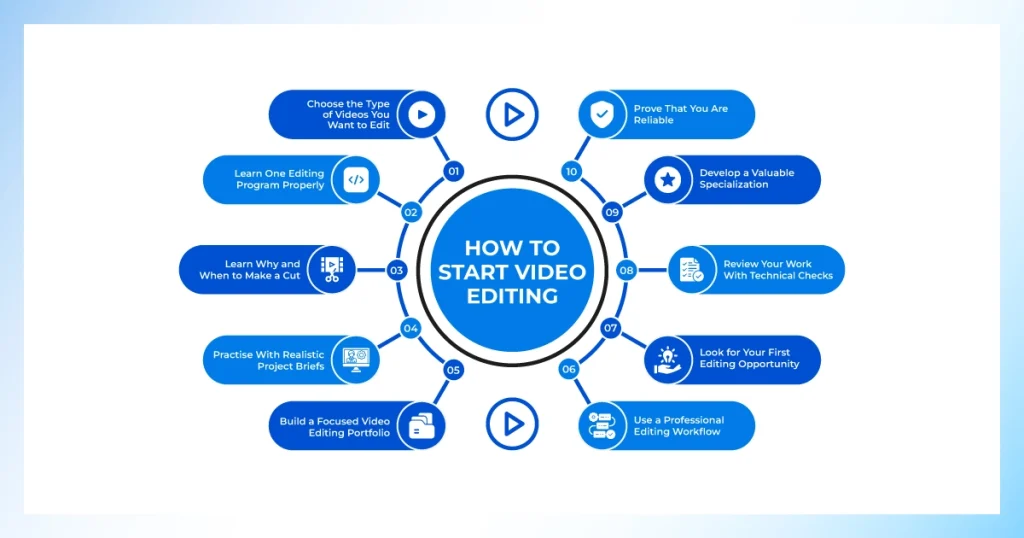
You do not need expensive equipment or a film-school background to begin. What you need is a clear learning plan, regular practice, and a few finished projects that reflect real client work. Follow these steps to build both your editing ability and professional credibility.
1. Choose the Type of Videos You Want to Edit
Start with one area, such as YouTube, film, commercials, weddings, corporate videos, or social media. Your choice will guide the software, editing style, practice footage, and delivery formats you need to learn. You can explore other markets once you understand the basics.
2. Learn One Editing Program Properly
Choose software commonly used in your target market, such as Premiere Pro, DaVinci Resolve, Final Cut Pro, or Avid Media Composer. Learn its timeline, trimming tools, keyboard shortcuts, keyframes, audio controls, color tools, captions, media relinking, and export settings before moving between programs.
3. Learn Why and When to Make a Cut
Knowing the software does not automatically make you an editor. Study continuity, pacing, shot selection, B-roll placement, J-cuts, and L-cuts. Try rebuilding a short scene or advertisement, then compare how each cut affects clarity, emotion, and the viewer’s attention.
4. Practise With Realistic Project Briefs
Create three to five projects that resemble the work you want to get. Give each one a goal, target audience, deadline, and delivery requirements. For example, turn the same footage into a 16:9 main video, a 9:16 social cut, and a captioned version.
5. Build a Focused Video Editing Portfolio
Show only your strongest and most relevant work. For each project, briefly explain the objective, your editing decisions, and any problems you solved, such as poor audio or mismatched footage. Clearly identify your contribution if other people handled filming, sound, animation, or color.
6. Use a Professional Editing Workflow
Practise organizing source media, creating backups, generating proxies, naming sequences, relinking files, and tracking versions. Before delivery, check the frame rate, resolution, aspect ratio, codec, bitrate, audio channels, and color space. A strong edit still fails if the wrong file reaches the client.
7. Look for Your First Editing Opportunity
Apply for assistant editor, junior editor, internship, agency, or in-house content roles. If you prefer freelance video editing, approach businesses and creators whose content matches your portfolio. Send a relevant example and explain the specific editing problem you can help them solve.
8. Review Your Work With Technical Checks
Do not judge an edit only by how it looks on your timeline. Watch the exported file on different screens and listen through headphones and speakers. Check video scopes, audio meters, captions, dropped frames, compression artifacts, spelling, and whether the main message remains clear.
9. Develop a Valuable Specialization
Once your foundation is reliable, add a skill that matches your chosen market. Motion graphics, color grading, sound editing, visual effects, multilingual captions, and content repurposing can increase your value. Specialization works best when it solves a recurring production problem for clients or employers.
10. Prove That You Are Reliable
Keep approved testimonials, repeat-client records, project results, and examples of meeting difficult deadlines. Reliability also means protecting files, responding clearly, following briefs, and delivering the correct versions. These signals show that you can manage professional video editing projects, not simply create attractive cuts.
Will AI Replace Video Editors?
No, AI is unlikely to replace video editors’ careers completely. However, it will reduce the need for editors who only handle basic, repetitive work.
AI can already generate captions, remove pauses, reframe footage, organize clips, clean simple audio, and create template-based videos. As these tasks become automated, clients may need fewer people to complete basic edits.
Skilled editors will still be needed to:
- Shape the story and control emotional pacing
- Select the strongest performances and shots
- Maintain visual and audio continuity
- Interpret brand goals and client feedback
- Check AI-generated frames for artifacts and synchronization errors
- Manage copyright, disclosure, and brand-safety risks
- Approve color, sound, codecs, and final delivery quality
Common Challenges in a Video Editing Career
Building a lasting career in video editing takes more than creative talent and software skills. New editors must also handle strong competition, changing technology, inconsistent workloads, and the ongoing pressure to prove their professional value. The main challenges include:
- Getting started: Employers or clients often expect experience. Build it through targeted portfolio projects, internships, or assistant editor roles.
- Standing out: Basic editing is highly competitive. Specializing in commercials, motion graphics, color grading, or sound can distinguish you.
- Keeping skills current: AI tools, editing software, codecs, and delivery standards keep changing, making ongoing technical training essential.
- Managing unstable income: Freelancers face project gaps and late payments. Deposits, retainers, and repeat clients can provide more stability.
- Handling irregular hours: Tight deadlines and late revisions can extend your schedule. Realistic timelines and revision limits protect your workload.
- Choosing a direction: A broad portfolio can weaken your positioning. A clear niche makes your expertise easier to recognize.
- Advancing professionally: Senior roles require creative leadership, workflow planning, quality control, client communication, and team management.
- Protecting your health: Long editing sessions can strain your eyes, wrists, posture, and concentration. Ergonomic equipment and regular breaks are essential.
Is Video Editing the Right Career for You?

Video editing may suit you if you enjoy turning raw footage into a clear story and have the patience to revise the same sequence several times. It can offer creative and flexible work, but it also involves long screen hours, detailed feedback, tight deadlines, and continuous learning.
Ask yourself:
- Do I enjoy shaping stories or emotions through images, dialogue, music, and pacing?
- Can I review the same footage repeatedly without losing attention to detail?
- Can I accept direct feedback and revise work without taking it personally?
- Am I willing to keep learning new software, AI tools, and post-production workflows?
- Can I manage footage, project files, versions, deadlines, and delivery formats?
- Am I comfortable working independently while collaborating with clients or production teams?
- Can I handle irregular workloads and build experience before earning higher rates?
If most answers are yes, video editing could be a strong career choice for you. If you prefer filming, performing, or developing ideas but dislike detailed revisions and long computer-based work, another production role may suit you better.
Frequently Asked Questions
Is video editing hard to learn?
Basic cutting is not difficult to learn, but professional editing takes time. You must develop storytelling, pacing, audio, color, file-management, and communication skills. Consistent project practice usually builds competence faster than watching software tutorials without completing real edits.
Can video editors work from home?
Yes. Many editing tasks can be completed remotely because the work is computer-based. However, large file transfers, data security, review workflows, hardware requirements, and employer policies may affect whether a specific video editing job can be done from home.
Can I become a video editor without a degree?
Yes. A strong portfolio, software ability, practical experience, and professional reliability can open freelance and some employed roles. However, BLS identifies a bachelor’s degree as typical entry-level education, and some film, broadcast, or corporate employers may require one.
What software should a beginner video editor learn?
Premiere Pro, DaVinci Resolve, Final Cut Pro, and Avid Media Composer are common choices. Select one that fits your target market, budget, and computer. Learn its complete editing workflow before dividing your attention among several applications.
Is video editing stressful?
It can be. Tight deadlines, large files, technical failures, subjective feedback, and repeated revisions create pressure. Clear project scopes, backups, organized timelines, approval stages, and realistic delivery estimates make the work more manageable.
Is freelance video editing a good career?
It can be rewarding for editors who want control over clients and schedules. However, income is less predictable, and freelancers must handle sales, contracts, revisions, invoicing, and taxes. Editing skill and business discipline are both necessary.
Conclusion
So, is video editing a good career? I hope you’ve gotten a strong career guideline on video editing.
Yes, it can be a creative and financially sustainable choice and offers steady employment growth. It also offers several career paths across film, advertising, corporate media, social content, education, and freelance post-production.
The opportunity comes with conditions. Software knowledge alone is not enough. You need visual storytelling, technical accuracy, communication, organization, a relevant portfolio, and the willingness to adapt as AI changes routine tasks.
Start by learning one editing platform well, completing realistic projects, and choosing a market you understand. If you enjoy detailed creative work and can turn feedback into a stronger final video, video editing can become more than an interest. It can become a career you continue developing for years.