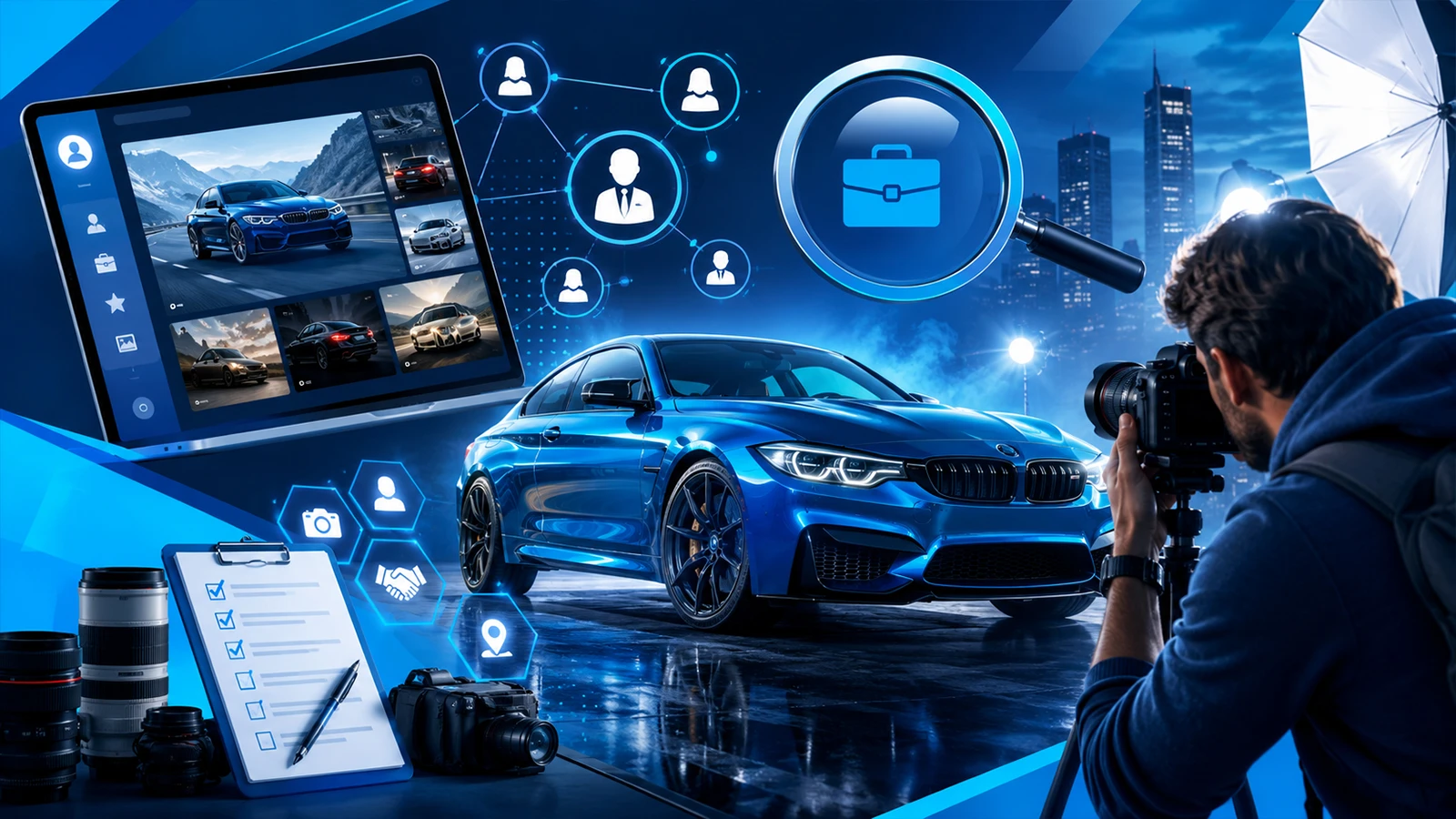
To get car photography jobs, create your portfolio, tell acquaintances about your work, search jobs on LinkedIn and job platforms, and reach out to local car dealers and local garages to take their product photos. Maintain your digital presence through regular posts, community building, and the use of hashtags to help viewers notice you.
A car photographer’s job is to take various types of car shots, check the environment, adjust gear, shoot, and have them edited to create high-quality, market-ready visuals. Car photography jobs cover dealership photographer, freelance automotive photographer, automotive marketing photographer, etc. The average car photographer earns $42,000 per year in the USA, according to Ziprecruiter.
What Is a Car Photography Job?
A car photography job is a set of roles a photographer performs to create impactful automotive visuals. Professional car photography includes shots of vehicle geometry, design, and gears, metallic textures, etc. Car manufacturers, dealers, or private collectors mostly search for car photography jobs.
Photographers work in unique setups, with specialized lighting and rigging, and apply post-production to deliver commercial-standard, convincing photographs that boost engagement and conversion.
Professional photographers perform several tasks when they take car photoshoot jobs, as follows.
- Scout environments to complement a vehicle’s design language before taking shots.
- Manage photography gear and equipment, work on light angles, and background distractions.
- Manage reflections to control highlights on highly reflective automotive paint and glass.
- Illuminate specific body lines manually to highlight the car’s silhouette in low-light settings.
- Mount specialized camera booms to the chassis to capture motion-blur sequences.
- Capture shots of interior, upholstery textures, dashboard tech, and intricate cabin stitching.
- Balance white point and saturation to ensure the digital output matches the manufacturer’s exact paint code and finish.
- Edit photos to create professional-quality and listing-worthy images by removing flaws and enhancing resolution and quality.
- Work with clients to turn their creative vision into a specific list of shots that meet marketing goals.
Types of Car Photography Jobs
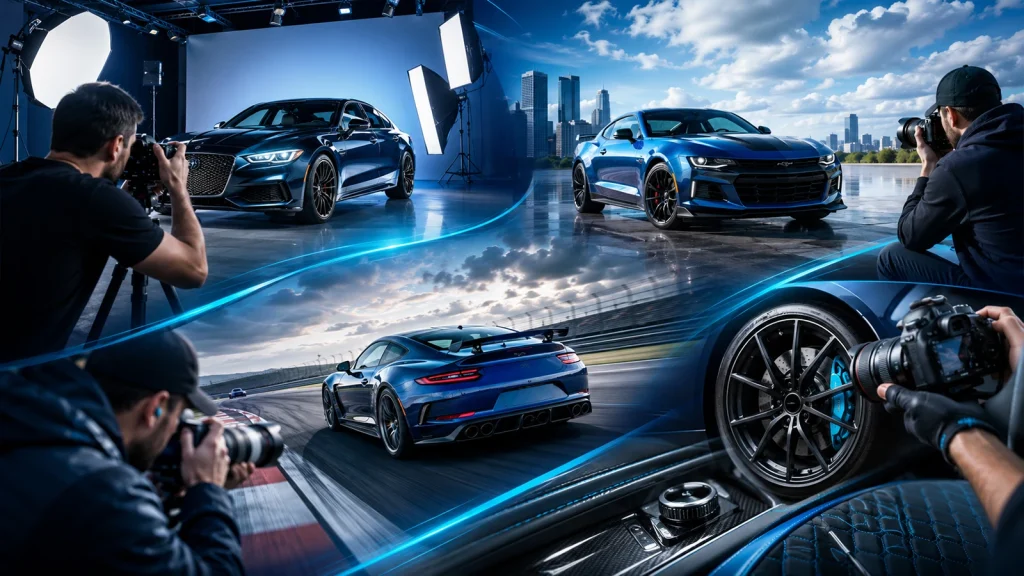
Car photographers mostly hire for specific roles, which include dealership photography, freelance automotive photography, automotive marketing photography, motorsport photography, magazine/editorial car photography, commercial/brand photography, and automotive event photography. These job categories hire photographers for high-volume logistical work to high-stakes artistic production for global manufacturers.
- Dealership Photographer (Inventory Photography)
A dealership or inventory photographer takes a shot of a large number of products in inventory. These scale-up type images are used for online listing. These types of photos cover walk-around photos, clear shots of the odometer, VIN, etc. Dealership photographers need to navigate crowded lots to retrieve vehicles, stage cars in a designated photo bay, and sync batches of files to inventory management software, among their job roles.
- Freelance Automotive Photographer
Freelance automotive photographers refer to independent visual creators that private car owners, car clubs, or local shops. These types of photographs are artistic and stylized, mostly including lifestyle shots. The job requires a photographer to scout unique locations, shoot during golden hour for optimal lighting, and capture the vehicle’s best lines.
- Automotive Marketing Photographer
An automotive marketing photographer takes feature-focused images optimized for web banners and ads. Aftermarket brands, tuning shops, or parts manufacturers use Car marketing photos. Photographers review brand mood boards and set up portable lighting in tight garage environments. So, they ensure tiny details such as wheels, exhaust tips, or suspension components are the focal point of every shot.
- Motorsport Photographer
A motorsport photographer takes fast-paced action shots of cars. Motorsport photography shots include live racing, high-speed motion shots, pit lane candids, and battles between cars, etc. This job requires mapping out track vantage points, hiking between corners with heavy gear, and monitoring race communications.
- Magazine / Editorial Car Photographer
A magazine or editorial car photographer displays car reviews and features for print or digital publications. They work with journalists, shooting engine bay shots and interior ergonomics images. Photographers have to identify specific mechanical or design details mentioned in the text. They also capture dynamic tracking shots of the vehicle in motion on public roads.
- Commercial & Brand Photographer
Commercial and brand photographers work with brands to launch assets or promote automobiles for car manufacturers. They capture flawless, studio-quality “hero” images to use for billboards and global launches. Brand photographers lead a multi-person production crew, coordinate with precision drivers, and monitor on-site digital techs. It ensures every pixel is perfect for large-scale billboard use.
- Automotive Event Photographer
An event photographer documents the elegance and social atmosphere of elite car shows. Automotive event images include wide-angle shots of the show field and detailed decor. Event photographers navigate dense crowds to find clean angles. Captures real-time award presentations and networking with high-net-worth owners for future private commissions.
How to Find Car Photography Jobs?
To find car photography jobs, explore job platforms, work with car dealers, network at car events, use social media to build a portfolio, pitch to local garages, target auction sites, and contact marketing agencies. Merging cold outreach, professional network, and maintaining a continuous digital presence will lead you to land a job across various automotive sectors.
- Exploring Job Platforms
Prepare your CV in job platforms such as Indeed, LinkedIn, ZipRecruiter, and Glassdoor. Focus on your positive attributes and photography-related skills that clients value. When working in a job platform, set up automatic notifications for automotive/car photographers, digital media lead, etc. Search for job roles of large dealer groups or media companies. Keep your options open for contractual, part-time, to fulltime.
- Working with Car Dealerships
Create a car photo set with 15 to 20 standard images. Demonstrate that you can deliver consistent and professional images for a website. Visit local independent lots or mid-sized franchises. Request to talk directly with the Inventory Manager or the Marketing Director for clear communication.
- Networking at Car Events & Shows
Print high-quality business cards; better if they include a QR code linking to your best “hero” shots. Attend local automotive events or regional Concours shows. Bring a camera, but focus more on building relationships than shooting the whole time. Approach owners of unique builds and offer a quick mini-session or a business card for a future shoot.
- Using Social Media to Portfolio Websites
Use social media to build a niche-based portfolio. Organize an Instagram feed, create Pinterest boards, and use niche-specific hashtags. Cover rolling shots, interiors, and details to display your photography perspective. Also, make sure those images are fast-loading and mobile-responsive. Try connecting with car influencers. It may lead you to private commissions or brand collaborations.
- Pitching to Local Garages & Detailers
Search for those local garages and detailers with poor social media presence. Show portfolio and offer a “trial shoot”. Meaning, you complete their project in exchange for them sharing your work and tagging you. Also, look out for detailing studios or performance tuning shops. Oftentimes, they need professional “before and after” content for their marketing.
- Targeting Online Auction Sites
Get familiarized with the auction photography style. These are generally clean, honest, and highly detailed. Join authorized photographers’ lists for major auction platforms. Reach out to sellers currently listing high-value vehicles. Also, keep an eye on local sellers who have great cars but amateur photos. Watch out for opportunities to offer your service.
- Contacting Marketing & Creative Agencies
Create a professional portfolio to showcase your knowledge, skills, and creativity. Make sure images contain complex lighting, equipment setups, and advanced editing. Research the market and shortlist agencies promoting automotive parts and tire brands. Start with any work from busy agencies during big campaigns or specialized “behind-the-scenes” shots for social media updates.
Skills Required for Car Photography Jobs
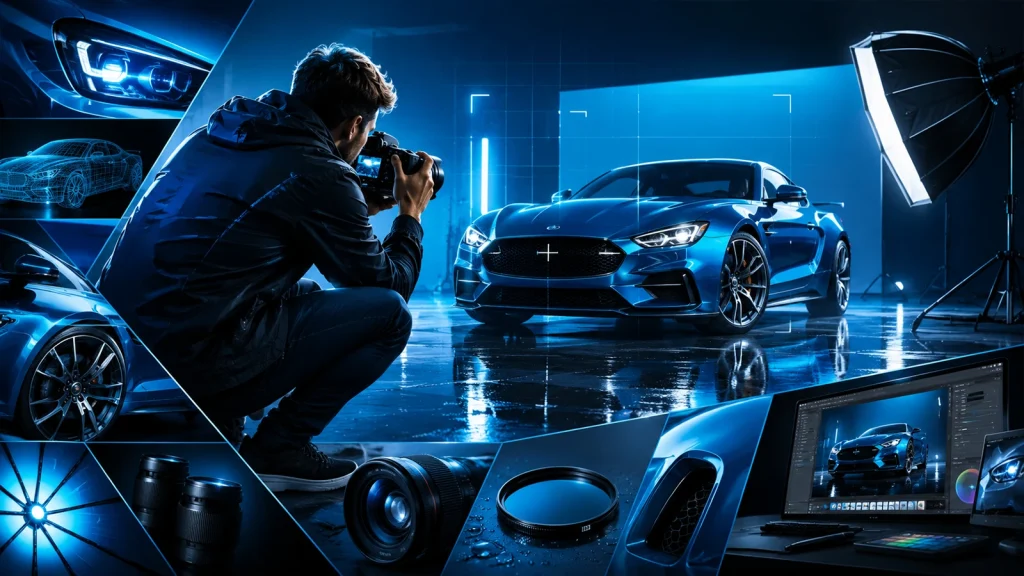
You need technical mastery, knowledge of lighting and controlling reflection, photography post-production, networking and outreach, and maintaining client relations skills to carry out car photography jobs. These skills make a photography service more reliable and approachable to the clients.
- Technical mastery of photography
Practice to master your gear, understand how each setting works, and what composition looks best, and ways to take still and motion photos. Technical understanding is precise and takes time. This skill helps you outline a vehicle’s design lines. Creating a balanced and powerful image that increases the car’s perceived value.
- Dynamic lighting and reflection control
Research online and a photographer’s gallery to understand the lighting perspective. Check stock photos to generate an idea of the use of light, reflection, shadow, etc. Proper lighting accentuates the subject and guides viewers, ensuring the paint texture looks professional.
- Photography post-processing
Spend time cleaning up your shots in editing to fix colors, removing clutters, adjusting the background, and polishing the vehicles. You need to balance the visual so that it looks classy and premium but not unrealistic. Or, you can partner with professional photo editors to get high-end images ready for clients faster.
- Networking and outreach
Work beyond your comfort zone, and start reaching out to people you don’t know. Contact with different professionals, such as art directors, car dealers, or private owners. Pitch your services, show your portfolio, and keep an opening. Let them know your work, but do not force them to hire you. Building a career depends on how you explain your vision and build a network within the car community.
- Client Relations & Project Management
Prepare to collaborate with multiple client accounts simultaneously. Systematize your process for clear communication and to follow their creative briefs. Client satisfaction rate improves when you set realistic expectations and provide a seamless experience.
Equipment Needed for Car Photography
The most common and essential car photography equipment covers cameras, lenses, lights, tripods, polarizing filters, etc. A professional-grade photoshoot setup is equipped with many pieces of gear; however, having the essentials will get you started for capturing the complex surfaces and high-speed motion of vehicles.
- Camera
Use a professional full-frame mirrorless camera to capture dynamic car photos. Mirrorless cameras are lightweight and offer real-time exposure previews through the viewfinder, so you see the exact scene before taking shots. DSLR cameras are also popular choices due to longevity, optical viewfinder, etc. Some popular cameras for car photography are Canon EOS R5 Mark II, Sony A1 II, and Nikon Z9 for high-end performance.
- Lenses
Use wide-angle lenses, such as a 16-35mm, to capture the entire car in tight spaces and create a sense of scale. Prime lenses, such as a 35mm or 50mm, are also a good option for hero shots, as you can capture sharp photos in a blurred background. The camera lens helps you switch from dramatic, sweeping exterior views to close shots of the interior and badging.
- Light
Learn artificial lighting techniques because it essentially shapes the car’s body lines, even if you are shooting outside. Automotive photographers use large LED sticks (like the Godox LC500) for light painting or powerful strobes with oversized softboxes to eliminate harsh hotspots on the paint. Proper light placement highlights the car’s geometry.
- Tripod
Choose a sturdy tripod for consistency and stable images. A high-quality tripod with stable footing ensures still images in long exposures and keeps your framing identical across shots. Also, removing distracting reflections becomes easy.
- Polarizing Filters (CPL)
Having a Circular Polarizer (CPL) benefits you in creating artistic shots. It works like sunglasses for the camera lens; you can rotate the filter to physically remove reflections from the glass and body panels. Moreover, it allows you to see through the windshield and reveals the true color of the paint by cutting through unwanted glare.
- Drone
A drone is a trendy choice due to artistic shots and a high-budget feel to convince viewers. Drones are popular to shoot bird’s eye view, rotating, and 360-degree views. Shoot cars driving through scenic landscapes or for large-scale dealership lot overviews.
Car Photography Jobs Salary in the USA
The average annual pay for a car photography job is $42,000 per year, which equals over $3,500 per month (ZipRecruiter 2026 report). Beginner photography job salary starts around $20,000, while experienced photographers get paid over $76,000, depending on location, skills, years of experience, employment type, etc.
Some of the best-paying car photographer-related jobs in the US are Automotive Consultant, Automotive Sales Professional, Car Sales Consultant, etc.
How to Start Car Photography as a Career?
To start car photography as a career, first learn photography basics, know the equipment, ways to shoot, types of gear, etc. Practice shooting different sizes and types of vehicles. Gather your best shots and build a portfolio. Reach out to acquaintances, platforms, and connections to get the first client. Lastly, continue to marketize your work of offering freelance services.
Step 1: Learn Photography Basics
Start by understanding the exposure triangle: ISO, aperture, and shutter speed. Knowing these inside and out lets you control adjust views, background blur, and motion. Technical proficiency takes time, and knowing helps you differentiate plain to vibrant images. Spend time watching how light hits different paint types. Follow how professionals take care of reflections on curvy, shiny metal. All these tiny details will upgrade your skills from amateur to professional photographer.
Step 2: Practice Shooting Cars
Take shots as much as you can, as many vehicles as possible, from a motorbike, private car, to a truck or a cargo van. Check out from different events, from quiet parking garages to play around with different angles. Instead of sticking to capturing fixed shots, get along with our idea. You can start with hero shots, take the front three-quarter view, and low rear angles that make a car look more grounded. Test the light painting at night with a handheld LED to manually highlight the car’s lines; this is a great way to start developing a look that’s all your own.
Step 3: Build a Portfolio
Pick only your best 10 to create a portfolio. To create a professional portfolio, you can use a dedicated website or use social media as a starter. Include variations in images, such as close shots, wide shots, rolling shots, interior details, design and materials, lifestyle images, and even behind-the-scenes shots, etc. Show potential clients that you can deliver high-quality work in any lighting or setting.
Step 4: Find Your First Clients
Talk to local businesses, reach out to smaller car dealers who don’t have quality photos. Offer quick, affordable sessions to owners at car shows. Use LinkedIn to connect with marketing agencies and car brands. Ask acquaintances and the online community for referrals and build a network. Team up with local detail shops or wrap installers. If your net is cast wide, you will land your first gig sooner than expected.
Step 5: Offer Freelance Services
Organize all your shots into clear service packages with a simple price list. Let perspectives see your skills along with the efforts behind the scenes. You can categorize services from basic photos to premium prices for high-end shoots targeting brands. Edit your images before delivering to ensure quality and attractive visuals.
Car Photography Portfolio Tips
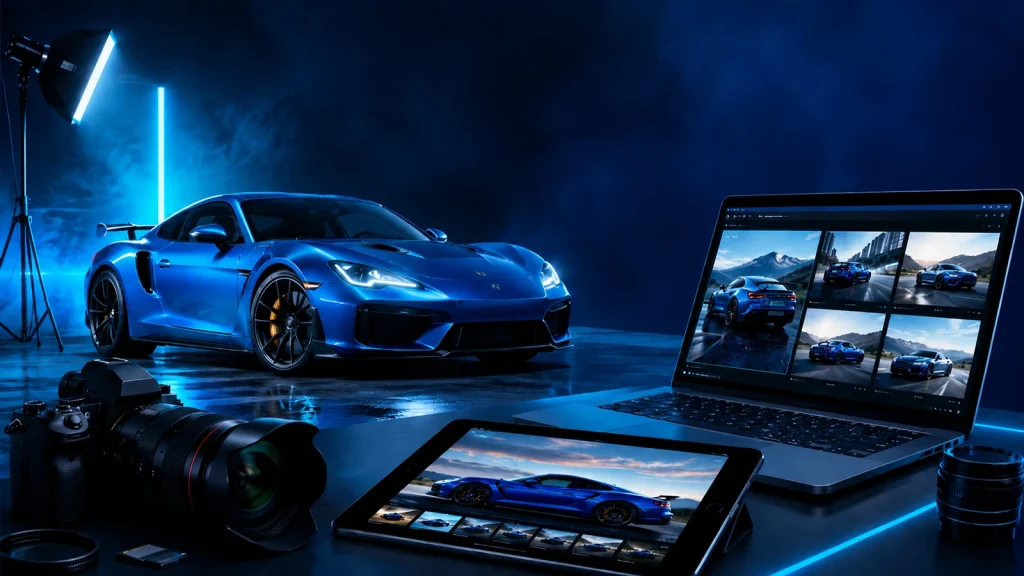
You can improve your car photography portfolio by making tweaks while practicing shooting. Some common portfolio tips professional photographers share are as follows.
- Highlight different car types to prove you can shoot every type of product.
- Include a mix of different types of car product shots, such as static hero images, interior details, gears, and dynamic action rollers.
- Refrain from using all images, select and feature your top 10–15 images to retain viewers’ focus and skill.
- Demonstrate lighting mastery, shooting in various conditions, from sunny days to nightlight shots.
- Maintain a consistent style so viewers can recognize your specific artistic skill instantly.
- Focus on technical accuracy by ensuring your vertical lines and the car’s accurate colors.
- Add before and after shots to showcase your advanced retouching skills and ability to clean up reflections.
- Use a fast-loading website to promote your work to potential clients.
- Add clear contact information so that interested agencies or private owners can reach you with just one click.
- Update your work regularly to reflect your current skill level.
Car Photography Editing
Professional editing turns raw files into a polished commercial asset by creating visual balance, eliminating distractions, and maintaining publishing platforms’ guidelines. By applying this technique, you control the viewer’s focus, refine the vehicle’s body lines, and ensure the final image meets professional marketing standards.
Car Photo Editing Tools
Popular photo editing tools you can use for processing car images include Adobe Photoshop, Adobe Lightroom, Luminar Neo, Capture One, Affinity Photo, GIMPDXO PHotolab, etc.
- Adobe Photoshop is a professional-grade photo editing software that you can use for applying retouching and removing distracting background elements.
- Adobe Lightroom is both a beginner-friendly and expert-level tool, best for organizing files and color grading.
- Capture One offers superior tethered shooting and color science.
- Affinity Photo is a powerful, budget-friendly software used for high-end editing.
- Luminar Neo is also beginner-friendly software; its AI features have simplified editing tasks for new learners.
- GIMP is an open-source photo editing platform that has both basic and intricate-level tools to support complex retouching and layer work.
- DXO PhotoLab is a professional tool that performs lens corrections, and Darktable serves as a robust open-source RAW processor for those just starting.
Car Photo Editing Techniques
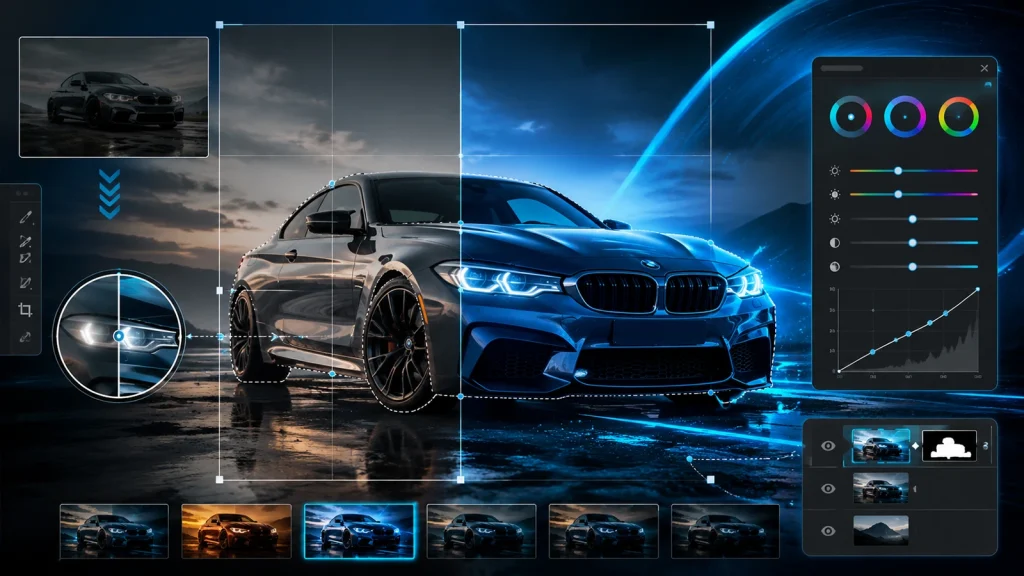
Common car photo editing techniques that are applied to enhance photos are as follows.
- Basic Editing Workflow: Basic editing covers several simple, essential tasks to create a foundation for applying advanced editing. It includes cropping, straightening, exposure, and contrast correction, white balance adjustment, etc.
- Color Correction & Reflection Control: Color correction is applied to fix color mismatch or color casts, and remove distracting glares/reflections from the car’s body panels. Color correcting refers to a clean, showroom-quality finish for the vehicle.
- Advanced Editing (HDR & Retouching): Advanced editing creates high-end photos by presenting artistic colors, merging several exposures to balance highlights and shadows, and offering client or platform-specific output. This technique creates incredible dynamic range and visually pops the car.
- Background Cleanup & Replacement: Background editing includes resizing, swapping, merging, cleaning, white background, etc. Professionally edited background keeps viewers focused on the car product.
- Component Retouching & Detailing: Component retouching and detailing work creates sharpness in gears, such as wheels and headlights, to create a showroom-like look. Detailing creates refined images, making the car appear expensive and polished.
- Motion Blur & Panning Effects: Motion blur occurs when the subject moves and the camera stays still. The panning effect is when the camera moves with the subject, making the background move. Both effects are directional and used to simulate speed. It adds a vibrant and dynamic scene in photos.
- Composite Image Blending: Composite image blending is the process of combining several photos with different lighting to highlight the vehicles to create a blended, well-illuminated, high-end car shot.
Final Thoughts
To start your car photography job, learn technical skills and build a network. Continue refining your shooting and editing techniques to build your portfolio. Keep posting on social media to reach the target audience and inform your service. your social presence through continuous posting. Reach out to local dealerships or agencies. This is how you find your first job in car photography.
FAQs
How do I become a car photographer?
To become a car photographer, start by learning about cameras and taking shots. Learn manual camera settings, lighting, and composition, etc. Shoot local cars, and compile the images to build a portfolio. Build a network by joining an online photographers’ community. Reach out to local car dealers and owners to land small gigs.
Do I need a degree for car photography jobs?
No, you don’t need a degree for car photography jobs or becoming a photographer. However, having a degree adds an extra advantage to your learning, though. But practicing and mastering give you a better edge. You understand technical sides, learn photography skills, and build a portfolio that builds trust.
How much do car photographers make in the USA?
Car Photographers make $20,000 to over $76,000 per year, which is equivalent to $20.36 an hour or $814/week. Payment varies by a photographer’s skill, experience, and location, employment type, etc.
Can I start car photography with a phone?
Yes, you can start ar photography with a phone as an easy and cost-effective solution. Modern smartphones are more updated, allowing good settings for shooting car shots. Use them to shoot small projects or personal promotions. It’s better to work with professional cameras for better depth and commercial-standard output.
Where can I find car photography clients?
You can find car photography clients in 2 methods, offline and online. Offline methods cover local car meets, high-end dealerships, and automotive detailing shops. Extend service around your locality as well. Search social media, job finding platforms, networking platforms like LinkedIn, and specialized auction sites to connect with private collectors and marketing agencies.