
Getting photography clients is a big challenge for beginner and professional photographers. No matter how skilled you are behind the camera, growing a successful photography business depends on your ability to attract consistent clients and turn inquiries into paid bookings. If you are wondering how to get photography clients, the right combination of portfolio building, social media marketing, SEO, networking, and pricing strategies can help you stand out in a competitive market.
In this guide, you will learn 10 proven tips to get photography clients faster, build trust with potential customers, and increase your photography bookings. Whether you specialize in portrait photography, wedding photography, product photography, or event photography, these practical marketing strategies will help you grow your brand and book more clients consistently.
How To Get Photography Clients?
To get photography clients, define your niche, build your photography portfolio, create a strong website, use social media to promote your works and build a community, secure first clients, establish a network, advertise and market your photography services, build a lead funnel, start a newsletter, and use smart pricing. These steps attract targeted prospects, build trust, and convert interest into paid bookings.
Step 1: Define Your Photography Niche

Choose a niche that helps target specific clients, clarify marketing, and position expertise. Having a niche addresses the client’s pain point well. It also assures them of the photographer’s skill, driving quality leads, and conversion. A specific niche also helps you simplify creating a portfolio, SEO visibility, and referral growth, with consistency and reducing competition.
- Choose a Profitable Photography Niche
Look for niches with consistent demand, such as those who specialize in e-commerce product photography, headshot or portrait photography, weddings, real-estate photography, events that you prefer shooting, and have high demand. Check local listings, freelancer platforms, and business directories.
- Why Niching Helps You Get More Clients Faster?
Nicheing helps you get more clients faster because it assures them of your specialty. A niche portfolio signals expertise, builds trust quickly, improves search rankings, contributing to more conversions.
- Action Steps to Find Your Niche
To find the right niche, review your best photos, analyze demand, test your preferences, gather feedback, and focus on the niche that generates consistent interest.
Step 2: Build a Demonstrative Photography Portfolio

Make your portfolio aiming to convert visitors into clients. A converting portfolio looks consistent, solves problems, and is verified by real clients. Include only your best work, align the niche, organize galleries, use clear captions, and leave ample white space to process the context. Prioritize storytelling and professional presentation that evokes the client’s queries.
- What Makes a High-Converting Photography Portfolio?
A high-converting photography portfolio is made by consistency in appearance, a focused niche, clean editing, varied compositions, and real use-cases. You can apply creativity, but this should not feel scattered. Include before-and-after samples, client work, and captions explaining purpose.
- How Many Photos Do You Need to Build a Photography Portfolio?
To build a portfolio, start with 15 to 25 powerful images per niche. Though there are no requirements on how many images you have to display, quality matters more than quantity.
- How to Use Styled or Model Shoots to Build a Portfolio Fast?
To use styled or model shots to build a portfolio fast, collaborate with local models, small brands, or venues. Recreate real client scenarios, define a concept, coordinate wardrobe and props, and capture deliverables matching paid work to quickly build a credible portfolio.
Step 3: Create a Photography Website That Converts

Develop a website that centralizes portfolio, pricing cues, testimonials, and contact options. Make sure it is fast loading, mobile optimized, and clearly navigable for the users. A structured website improves search visibility and turns visitors into leads through strategic placement of contact buttons.
- Must-Have Website Pages
Your website must include essential pages: home, portfolio, about, services, pricing guide, testimonials, blog, and contact. These pages establish credibility, explain offerings, improve SEO visibility, and guide visitors toward inquiries and bookings.
- How to Structure Your Portfolio Gallery?
To structure your portfolio gallery, organize and sort out images by niche or service category. Start with the strongest photos, limit repetition, maintain a consistent editing style, and arrange images to tell a clear visual story aligned with client expectations.
- How to Add Strong Calls-to-Action?
To add strong call to actions (CTAs) in your website, use verbs, place them in places where viewers mostly rest their eyes, such as above the fold, after galleries, and on service pages. Use contrasting colors to create visual hierarchy. Keep text concise and focused on benefits. Some common CTAs or photography websites include “Book Now,” “Check Availability,” or “Request Quote,” which encourage viewers to take action.
Step 4: Use Social Media to Promote Your Services

Take advantage of social platforms such as image-based social platforms, such as Instagram and Pinterest, along with Facebook, Twitter, etc. Track the timeline when people mostly search for photographers on those platforms, and their activity time. By consistently posting behind-the-scenes content, reels, and client stories, you can build engagement. Use location tags, niche hashtags, and community interaction to increase discovery and direct inquiries.
- Best Platforms for Photographers
Best platforms for photographers include Instagram, Pinterest, Facebook, and Twitter for a portfolio. Use LinkedIn for corporate clients. YouTube and TikTok for service description. Choose platforms where your target audience spends time and consistently post niche-specific content to attract inquiries.
- Content Ideas That Attract Clients
Share behind-the-scenes clips, before-and-after edits, client testimonials, educational tips, reels, and completed shoots. Mix promotional and helpful content to demonstrate expertise, build trust, and encourage potential clients to inquire.
- How to Use Location Tags and Hashtags?
Use city names, venue tags, niche-specific keywords, and service hashtags. Combine broad and local hashtags to improve discovery, attract nearby clients, and increase visibility in location-based searches.
Step 5: Apply Measures to Get Your First Photography Clients
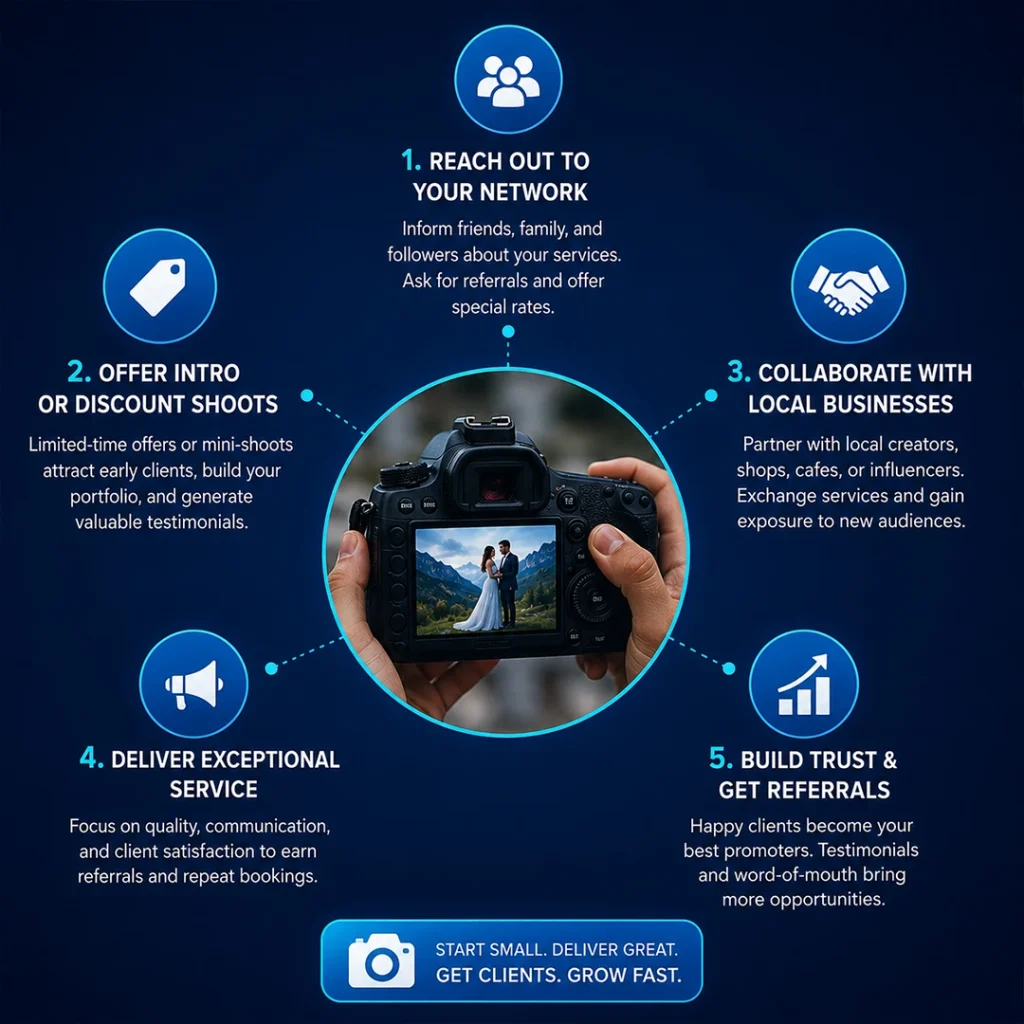
Ask acquaintances, contact people, and local communities who require photography services. First clients often come from personal circles and low-barrier offers, and the first client boosts confidence. Introductory shoots build experience and testimonials. Outreach and collaborations create visibility. Focus on delivering exceptional service to generate referrals and repeat bookings early in your photography business.
- Offer Intro or Discount Shoots
Provide limited-time discounted sessions or mini-shoots to attract early clients. These offers help build portfolio images, collect testimonials, generate referrals, and gain real-world experience quickly.
- Reach Out to Your Personal Network
Inform friends, colleagues, and social media followers about your services. Share sample work, ask for referrals, and offer special rates to connections who can help spread awareness.
- Collaborate With Local Creators & Businesses
Partner with boutiques, cafes, influencers, or small brands needing visuals. Offer mutual promotion, exchange services, and gain exposure to their audience, generating leads without spending on advertising.
Step 6: Build Network Among Enthusiasts and Photographers
Establish networking with enthusiastic photographers, like-minded learners, and professional photographers to build a referral pipeline. Connect with vendors such as real estate agents, event planners, makeup artists, and agencies as they recommend photographers. Relationships often generate consistent bookings without paid marketing, especially in service-based photography niches.
- Best People to Network With
Best people to network with include e-commerce sellers, photography studios, fashion houses, event planners, wedding vendors, realtors, makeup artists, agencies, marketers, and designers. These professionals regularly need photographers and often recommend trusted partners to their clients.
- How to Get Referrals?
To get referrals, build relationships, share your portfolio, provide excellent service, and follow up. Offer referral incentives, collaborate on projects, and stay visible so partners remember to recommend you.
- Collaboration Strategies That Bring Clients
Among many collaboration strategies that bring clients, organize joint shoots, cross-promote services, create bundled packages, and share social content. This process expands audience reach and creates opportunities for consistent client referrals.
Step 7: Marketize and Advertise Your Works

Marketing and advertising for photographers accelerate visibility. Start with free marketing, then test paid ads. Ads work best after building a portfolio and testimonials. Targeted campaigns for local searches, event seasons, or niche services increase inquiries efficiently. Track results to optimize spending.
- Free Marketing Methods
Use SEO blogging, consistent social posting, Google Business profile, online directories, and referrals. These organic methods build long-term visibility and attract clients without immediate advertising costs.
- Paid Ads for Photography Clients
Run targeted campaigns using Google Ads, Facebook, or Instagram. It may cost you, but worth it for revenue and long-term goals. Focus on location-based keywords, niche services, and seasonal demand to attract high-intent clients actively searching.
- When to Start Running Ads?
Start advertising after building a strong portfolio, testimonials, and clear pricing. Ads convert better when credibility exists, improving return on investment and reducing wasted spending.
Step 8: Build a Lead Funnel to Grow Your Photography Business

Have a lead funnel guide to visitors from discovery to booking. It should offer valuable content, capture contact details, and nurture leads. Consistent follow-up improves conversion rates. Funnels automate communication, saving time and increasing booking consistency.
- How a Photography Funnel Works?
A funnel guides prospects from discovery to booking: traffic reaches landing pages, visitors submit inquiries, you follow up, build trust, and convert them into paying clients.
- How to Turn Visitors into Leads?
To turn visitors into leads, offer pricing guides, availability check forms, free consultations, or downloadable tips. These incentives encourage visitors to share contact details and start conversations.
- Follow-Up Systems That Convert Leads into Clients
Send automated emails, reminders, testimonials, and limited-time offers. Consistent follow-ups keep your services top-of-mind and increase the chances of converting inquiries into bookings.
Step 9: Start a Newsletter to Get Repeat Clients

Start newsletters to keep your brand visible, reminding past clients and informing new clients about sessions, seasonal offers, and updates. Repeat clients often convert faster and cost less to acquire. Consistent communication builds long-term relationships and referral opportunities.
- Why Email Marketing Works for Photographers?
Email marketing works for photographers because it feels active and updated, assuring the clients that they can trust your work. It keeps you visible, encourages repeat bookings, and generates referrals without relying solely on social media algorithms.
- What to Send in Your Newsletter?
In your newsletter, share seasonal offers, recent shoots, photography tips, availability updates, and behind-the-scenes content.
- How to Build Your Email List?
To build your email list, add signup forms to your website, offer freebies, collect emails during shoots, and promote subscriptions on social media to steadily grow your list.
Step 10: Set a Pricing Strategy for Photography Clients

Set a transparent pricing structure to influence perceived value and client quality. Underpricing attracts bargain clients, while structured packages improve profitability. Transparent pricing with tiered options helps clients choose. Gradually increase rates as demand and experience grow.
- Beginner Pricing Mistakes
Some beginner pricing mistakes include avoiding charging too low, offering unclear deliverables, or lacking packages. These mistakes attract bargain clients, reduce profitability, and make scaling your photography business difficult.
- Smart Pricing Structure
Create packages to categorize a wide range of paying clients, for example: basic, standard, and premium. Include different deliverables, session lengths, and add-ons to help clients choose while increasing average booking value.
- How to Increase Your Rates?
To increase your rate, gradually raise prices after consistent bookings, improved portfolio quality, and strong testimonials. Communicate added value clearly to justify higher rates and attract serious clients.
8 Marketing Ideas for Photographers
8 common marketing ideas for photographers are applying creativity to get clients, applying creativity to get clients, collaboration of marketing strategies, taking advantage of seasonal promotions, and applying limited availability options. Professional photographers often ask to start small, target local clients first, while promoting their photography services.
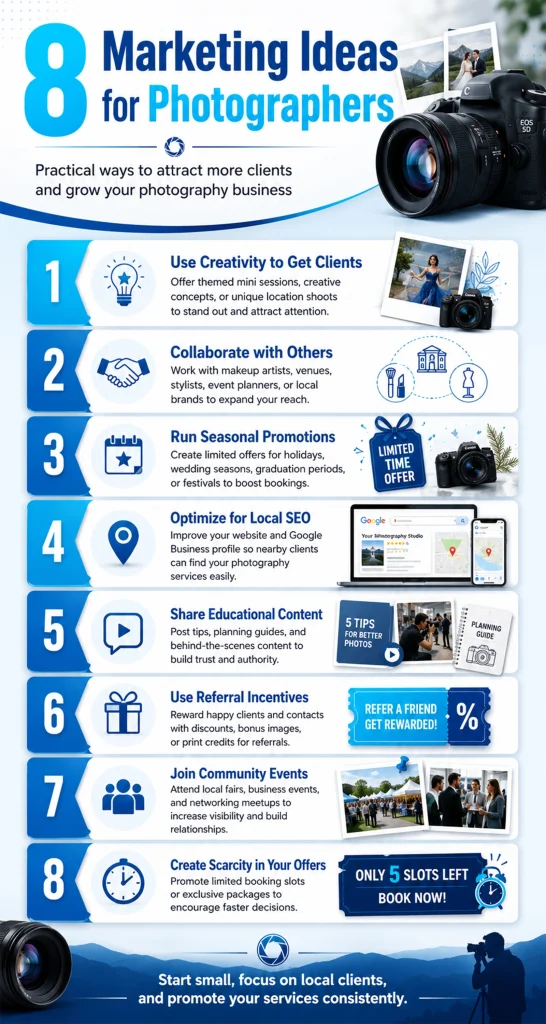
The details of marketing tips for photographers are as follows.
1. Application of creativity to get clients
Use your photography services in theme-based mini sessions, creative concepts, or unique location shoots. It helps your work stand out, encourages sharing, and brings new audiences to engage.
2. Collaboration of marketing strategies
Keep an eye on collaboration opportunities with makeup artists, venues, stylists, event planners, or local brands. Joint shoots and cross-promotion expand audience reach and create referral opportunities through trusted partner networks.
3. Taking advantage of seasonal promotion
Offer special service prices or client-oriented benefits during holidays, wedding seasons, graduation periods, or festivals. Seasonal campaigns create urgency, increase early bookings, and help photographers fill slower months with targeted promotions.
4. Optimizing website for local SEO and Google Business
Create a webpage and optimize your Google Business profile with accurate details, service areas, photos, and reviews. Use location-based keywords to improve visibility in local searches so that you reach nearby clients actively seeking photography services.
5. Using educational content marketing
Publish photography tips, planning guides, and behind-the-scenes insights through blogs or any short visual content on social platforms. It builds authority, improves search rankings, and makes you trustworthy for your expertise and professional guidance.
6. Using referral incentive programs
Ask acquaintances and satisfied clients to refer others, and you can offer them small rewards such as discounts, bonus images, or print credits. Incentives motivate word-of-mouth (WOM) promotion and bring highly qualified leads.
7. Participation in community event
Attend local business events, fairs, or networking meetups of photographers. These programs build community with activities that help increase visibility and establish relationships among people familiar with photography.
8. Applying limited availability marketing
Use limited booking slots or exclusive packages in your campaigns. Highlighting scarcity prompts viewers to decide faster, contributing to more bookings.
Common Mistakes That Stop Photographers From Getting Clients

Common mistakes that stop photographers from getting clients include starting without a niche, weak online presence, no follow-up system, inconsistent branding, poor portfolio quality, unclear pricing, limited networking, slow responses, and relying only on social media.
The details of the mistakes and ways to solve them are as follows.
Start without a niche
Shooting everything for learning is good, but posting every shot in a portfolio is bad. It makes marketing unclear and confuses potential clients. Without a specific niche or specialization, portfolios look inconsistent, and SEO efforts weaken. People trust specific expertise.
Step to solve this: Choose one primary niche and refine your portfolio. Or you can show relevant niches together and categorize them, such as headshot and portrait photography. Tailor messaging to attract clients seeking specialized photography services.
Weak online presence
Many photographers use multiple social platforms, but are not consistent or rarely update any of them. Other photographers rely only on social media without a website, which reduces credibility. Incomplete profiles, outdated portfolios, and missing contact information make it difficult for potential clients to trust or inquire.
Step to solve this: Instead of using several unused social accounts, use platforms that are best for photo displaying, and you can keep up. Create a simple website, update profiles regularly, and ensure clear contact details across platforms.
No follow-up system
Clients want a fast reply and information when asking questions, and many photographers lag here just because they respond late or forget to follow up. Prospects often contact multiple photographers, and delayed responses are one factor for them to shortlist photographers for booking.
Step to solve this: Use templates, reminders, and quick replies to respond within 24 hours and follow up consistently.
Poor portfolio quality
Building a portfolio without a plan, including many average photos, and no specific niches, all these weaken the overall impression. Portfolios having mixed editing styles, irrelevant work, and repetition don’t deliver a clear message to the client and lack professionalism.
Step to solve this: Be specific with a niche, build a niche-based portfolio, or categorize inside one portfolio. Publish your best images only, and use a consistent style.
No standard pricing structure
Many photographers don’t share prices or packages, which causes confusion and discourages client queries. Clients feel vague or unsure of services, work, and pricing, which leads them to choose competitors with transparent pricing.
Step to solve this: Create simple tiered packages and share starting prices to set expectations clearly.
Limiting networking opportunities
When working alone, you need to build a network and referrals to let people know about getting clients. Otherwise, you might miss the opportunity for potential partnerships with planners, businesses, or agencies that regularly recommend photographers to their clients.
Step to solve this: Connect with vendors, collaborate on shoots, and maintain relationships for consistent referrals.
Slow responding to client questions
When providing services, late replies signal unprofessionalism. Paying customers often book the first responsive photographer.
Step to solve this: Use auto-replies, enable notifications, and respond quickly to all inquiries.
Depending only on social media platforms to get clients isn’t sufficient, as you will face inconsistent lead flow. Algorithm changes affect visibility, inquiries, and long-term growth.Step to solve this: Use other offline search engines and crowdsourcing platforms to gain website traffic. Develop an email list and referrals to diversify lead sources.
FAQs
How do I get clients as a photographer?
To get a client as a photographer, ask your acquaintances to refer you. The first client often comes through a referral. Build your portfolio and advertise your work consistently on social media. Use location-based keywords and relevant hashtags so that it reaches the precise audience category. Collaborate with creators and connect with industry-specific photographers and enthusiasts for future opportunities.
Where do photographers find clients?
Photographers find clients through referrals, working under photography studios, social media such as Instagram or Facebook groups, Google searches, networking events, vendor partnerships, freelancing platforms, local businesses, and community listings. If you are working solo, keep consistent posting, collaborate with creators, and maintain community relationships to help generate ongoing inquiries and repeat clients.
What is a fair price for a beginner photographer?
The fair price for a beginner photographer starts around $30 for an hour and $60 per session. The pricing highly varies depending on the photographer’s skill, niche, location, deliverables, etc. Start with simple pricing packages with clear inclusions and gradually increase the price after building your portfolio with testimonials and ensuring consistent demand.
How do I get my photography noticed?
You can get your photography works noticed by consistently posting them where the target audience spends most of their time or looks for work, such as social platforms or stock photo platforms. While using social media, use niche hashtags, tag locations, share behind-the-scenes content, collaborate with creators, optimize your website for SEO, submit work to directories, and engage with local communities. Publish your works on stock photography platforms such as Pixabay, Unsplash, etc. Use hashtags, post high-quality images, as many enthusiasts and clients look to hire photographers from there.
How to get more leads as a photographer?
To get more leads as a photographer, create a landing page, display your capture shots, offer pricing guides, use lead magnets, run targeted ads, optimize Google Business profiles, post valuable content, and build an email list. Add automated responses to follow up quickly with inquiries. Alongside, stay active with your social posts to increase qualified leads.
How to deliver high-quality photos to clients faster?
To save time and maintain premium quality, many professional photographers outsource their post-processing. Partnering with a reliable service provider like OffshoreClipping.com allows you to deliver flawlessly edited images, clipping paths, and high-end retouching to your clients on time, without burning out.
Ready to Scale Your Photography Business?
Client paowar porer shobcheye boro challenge holo thik somoye high-quality delivery dewa. Editing-er jhamela amader upor chere diye apni monojog din marketing ebong shooting-e.
OffshoreClipping.com-er professional photo editing ebong retouching services apnar portfolio-ke korbe aro attractive, ja client-der drop-down menu theke apnakei chuse korte baddho korbe.
- ⚡ Fast Turnaround Time
- 📸 Pixel-Perfect Retouching & Clipping Path
- 💰 Affordable Pricing for Photographers