Car photography can become more than a hobby. You can turn it into a side income, freelance service, or full photography business.
Today, people do not pay only for “nice car pictures.” They pay for photos that help them sell, promote, remember, or show a vehicle more effectively.
That is why car photography has many income paths. A private owner may want clean photos of a sports car. A dealership may need consistent images for online listings. A detailer may need before-and-after content. A car brand may need campaign visuals. A seller may need strong photos to make a listing look more trustworthy.
So, how do you make money with car photography? You make money by connecting your photography skills to a clear business need.
This guide explains the main ways to earn, how to price your work, how to find clients, and how to build a simple workflow that protects your time and profit.
Key Takeaway
You can make money with car photography by working with different types of clients who need car images for selling, marketing, or personal use.
- Private car owners
- Car dealerships
- Used car sellers
- Car detailers
- Car events
- Car brands
- Online listings
- Digital product buyers
The fastest beginner path is usually private owner shoots and local dealership work. The most profitable long-term path often includes commercial projects, repeat clients, licensing, and a strong editing workflow.
Can You Really Make Money With Car Photography?
Yes, you can make money with car photography. But the income depends on your skill, location, portfolio, client type, editing quality, and how well you package your service.
The reason this niche works is simple. Cars are visual products. Buyers want to see condition, paint, interior, wheels, features, and details before they take the next step. Owners want photos that make their car look special. Businesses want images that help them build trust and sell faster.
A car photo can serve many purposes:
- A dealership listing
- A private sale listing
- A social media post
- A car club feature
- A detailer’s before-and-after proof
- A brand campaign
- A magazine-style feature
- A print for the owner
- A website or landing page image
That gives photographers several ways to earn instead of depending on one type of client.
Best Ways To Make Money With Car Photography

There is no single best way for everyone. A beginner with a small portfolio may start with local car owners. A more experienced photographer may target dealers, car brands, auctions, or commercial campaigns. The right path depends on your current skill, gear, editing speed, and network.
1. Private Car Owner Photoshoots
This is one of the easiest ways to start. Many car owners love their vehicles and want professional photos for Instagram, framed prints, dating profiles, online communities, or personal memories.
Private owner shoots work well because the client already has emotional value attached to the car. They are not always looking for the cheapest option. They want the car to look clean, powerful, stylish, or personal.
A simple private car shoot package can include:
- 1 location
- 45–90 minutes of shooting
- 15–30 edited images
- Exterior shots
- Interior shots
- Detail shots
- Social media-ready files
This is a good starting point for beginners because you can practice posing the car, finding angles, handling reflections, and editing different paint colors.
2. Dealership Car Photography
Dealership photography is more business-focused. Dealers need clean, consistent, fast images for online inventory. This is less about dramatic art and more about trust, clarity, and speed.
Dealerships may need photos for:
- New car listings
- Used car listings
- Certified pre-owned vehicles
- Website inventory pages
- Google Business Profile updates
- Social media posts
- Paid ads
- Promotional campaigns
This work can become repeat income because dealerships always receive new vehicles. If you create a reliable system, a dealer may hire you weekly or monthly.
The challenge is that dealerships often care about speed and consistency more than artistic style. You need a clean shooting sequence, a fast editing process, and a clear delivery timeline.
3. Used Car Listing Photography
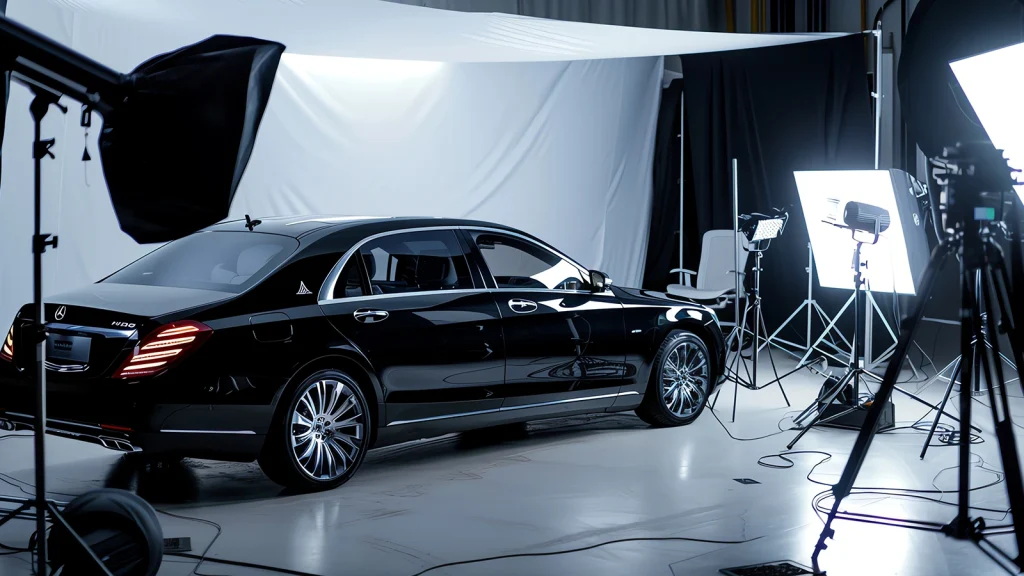
Private sellers and small used car dealers often need better photos to make listings look more trustworthy. A poor listing with dark images, bad angles, and messy backgrounds can make buyers doubt the car.
You can offer a “sell your car faster” photography package for people listing vehicles on online marketplaces. This type of service should focus on clarity, honesty, and complete coverage.
A good listing package may include:
- Front, rear, and side angles
- Interior dashboard
- Seats and trunk
- Wheels and tires
- Engine bay
- Odometer
- VIN area if appropriate
- Defects or wear areas
- Clean background
- Bright, realistic editing
Do not over-edit listing images in a way that hides flaws. For resale photography, trust matters more than dramatic style.
4. Work With Car Detailers
Car detailers are excellent potential clients. Their business depends on visual proof. They need clean before-and-after photos to show paint correction, ceramic coating, interior cleaning, wheel cleaning, and full detailing work.
You can offer content packages for detailers, such as:
- Before-and-after photo sets
- Short social media clips
- Website gallery images
- Monthly content shoots
- Ads-ready images
- Customer handover photos
This niche can be profitable because detailers need regular content. A monthly package can give you a more stable income than random one-time shoots.
5. Work With Wrap Shops and Tint Shops
Car wrap, paint protection film, and window tint businesses also need strong visuals. Their work is visual, premium, and detail-heavy. They often serve clients who care about appearance.
You can photograph:
- Full vehicle wraps
- Color change wraps
- Paint protection film installs
- Window tint results
- Chrome deletes
- Decal work
- Custom branding on vehicles
These businesses need images for Instagram, Google Business Profile, websites, and ads. If your photos help them show quality, they may hire you again.
6. Shoot Automotive Events
Car meets, track days, launches, rallies, and club events can help you earn and build your name in the car community.
There are a few ways to make money from events:
- Charge the organizer for event coverage
- Sell photo packages to car owners after the event
- Offer same-day highlight edits
- Sell prints or digital downloads
- Build relationships with clubs and sponsors
The key is to plan before the event. If you only show up, shoot random photos, and hope people buy later, the income may be weak. It works better when the organizer promotes you in advance or when you collect owner contacts during the event.
7. Shoot for Automotive Brands
Automotive brand work can include campaigns for car care products, accessories, wheels, tires, tools, car audio, performance parts, and lifestyle brands.
This is usually harder to get as a beginner, but it can pay better because brands use the photos for marketing.
Brand clients may need:
- Product-in-use photos
- Lifestyle car images
- Social media campaigns
- Website banners
- Ad creatives
- Launch visuals
- Influencer collaboration content
For brand work, you need to understand usage rights. A photo used for a small Instagram post is different from a photo used in paid ads, packaging, or a national campaign.
8. Sell Prints and Wall Art
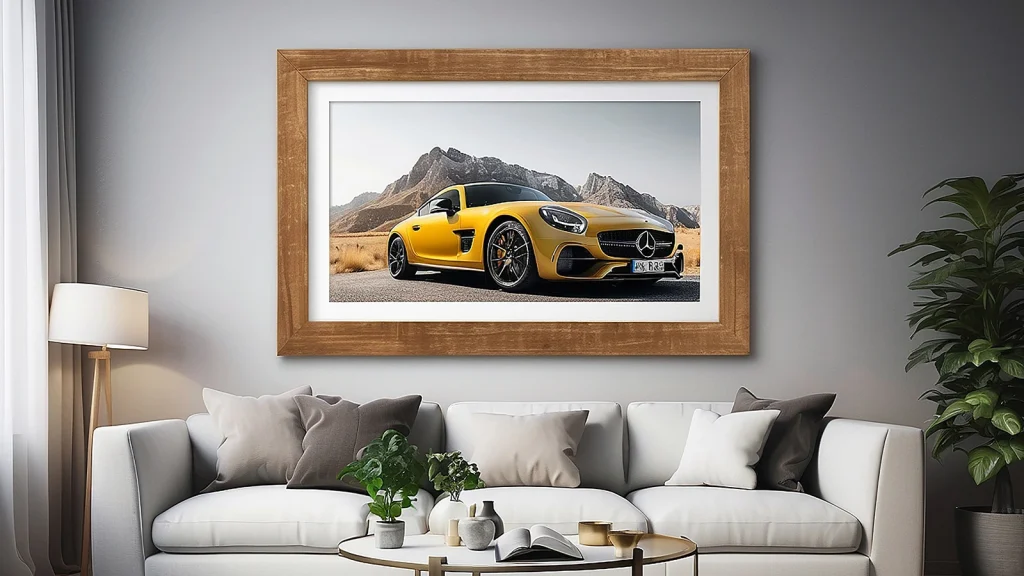
Some car photos work well as prints, especially classic cars, motorsport images, exotic cars, and artistic detail shots. You can sell prints through your own website, local events, Etsy-style marketplaces, or print-on-demand services.
Prints are not always easy money. You need strong images, a clear style, and the right audience. But prints can become a useful extra income stream if you build a following.
Before selling prints, make sure you understand permission and licensing. Some vehicles, logos, event rules, and private property situations may create legal or usage issues.
9. Sell Digital Products
If you develop a strong editing style, you can sell digital products to other photographers.
Possible digital products include:
- Lightroom presets
- Car photo editing tutorials
- Location scouting guides
- Shot lists
- Posing guides for vehicles
- Car photography business templates
- Client proposal templates
This income path works best after you already have trust, a portfolio, or an audience. Beginners should focus first on real shoots and real results.
10. Create Social Media Content Packages
Many automotive businesses need regular content but do not have time to create it. This includes dealers, detailers, mechanics, wrap shops, performance shops, car rental companies, and luxury car services.
You can offer a monthly content package with:
- 20 edited photos
- 5 short reels
- 10 story-ready vertical images
- Before-and-after visuals
- Seasonal campaign images
- Google Business Profile photos
This model is powerful because it changes your service from “one photoshoot” to “monthly visual support.”
11. License Images
Licensing means a client pays for permission to use your images in a specific way. This can apply to magazines, brands, websites, ads, and campaigns.
A license can define:
- Where the image can be used
- How long it can be used
- Whether it is exclusive
- Whether it can be used in paid ads
- Whether it can be edited
- Whether the client can resell or transfer it
Licensing can protect your work and increase your income. Do not treat every photo delivery as unlimited usage unless that is clearly included in your price.
12. Offer Editing as an Add-On
Car photography is not finished when the shoot ends. Editing is where the final look becomes clean, consistent, and ready for use.
You can charge extra for:
- Advanced retouching
- Background cleanup
- Reflection control
- Paint enhancement
- Color correction
- Shadow correction
- Window cleanup
- Number plate blur
- Marketplace-ready resizing
- Batch editing
This is also where many photographers lose profit. If you spend too many hours editing without charging for that time, your hourly income drops fast.
Car Photographer Income Paths by Client Type
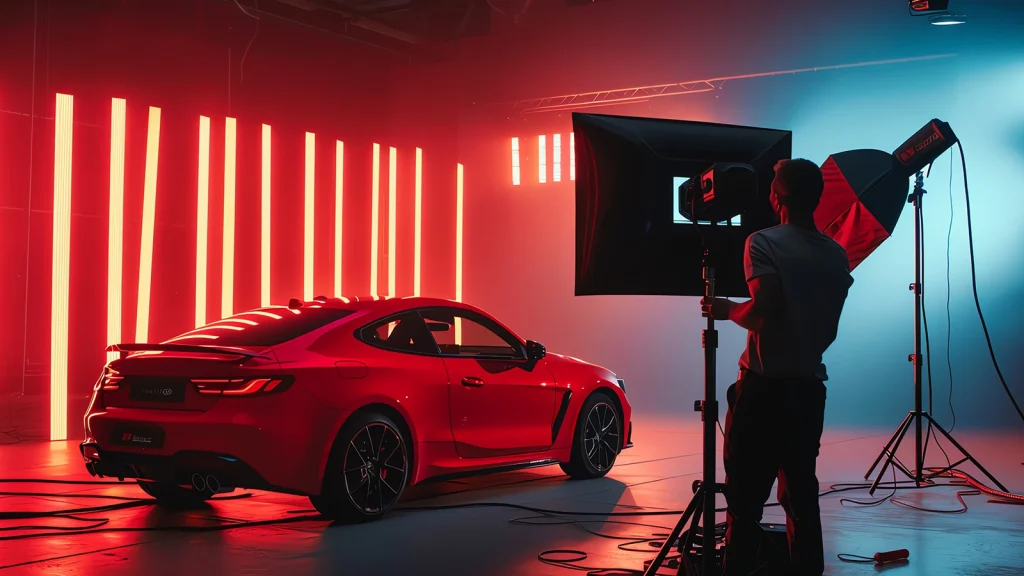
Car photography offers multiple ways to earn, depending on who you work with. Each client type has different needs, budgets, and expectations, which lead to varying income levels and repeat opportunities. Understanding these paths helps you choose where to start and how to grow over time.
Below are the different types of clients you can work with:
| Client Type | Best For | Income Potential | Difficulty | Repeat Work Potential |
|---|---|---|---|---|
| Private car owners | Beginners and portfolio building | Low to medium | Easy to medium | Medium |
| Used car sellers | Fast local jobs | Low to medium | Easy | Medium |
| Dealerships | Consistent income | Medium | Medium | High |
| Detailers and wrap shops | Monthly content | Medium | Medium | High |
| Car events | Networking and bulk sales | Low to medium | Medium | Medium |
| Automotive brands | Commercial income | High | Hard | Medium to high |
| Prints and digital products | Passive-style income | Low to high | Hard | Medium |
| Licensing | Experienced photographers | Medium to high | Hard | Medium |
How Much Can You Charge for Car Photography?
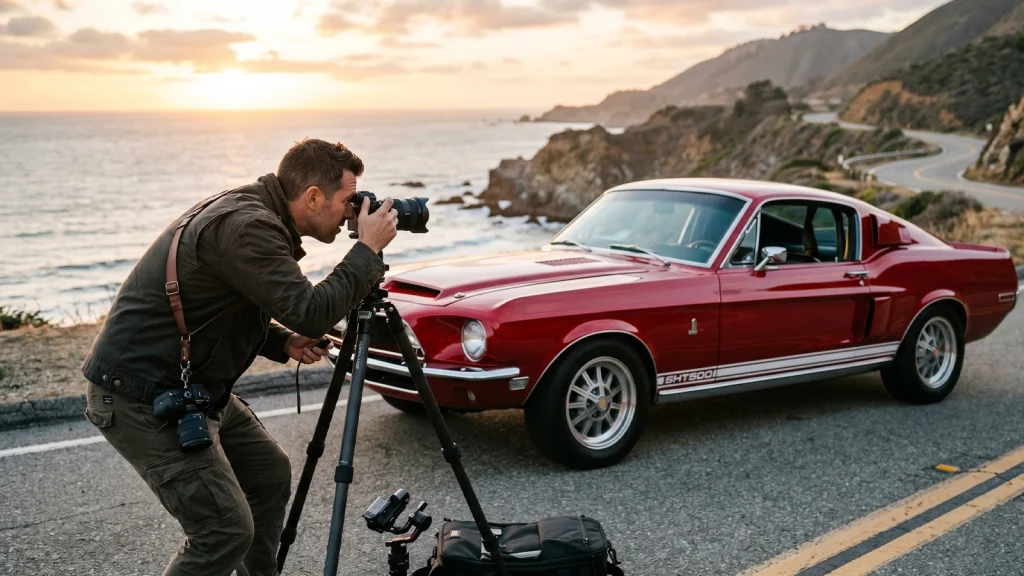
Car photography pricing depends on your market, experience, client type, editing time, usage rights, and delivery speed. A beginner may charge a small package fee for private owners. A commercial photographer may charge much more because the images are used for business, advertising, or sales.
A simple pricing structure can look like this:
| Service Type | Common Pricing Logic |
|---|---|
| Beginner private shoot | Small fixed package with limited edited images |
| Standard owner shoot | Higher package with more time, more edits, and location planning |
| Dealership inventory | Per car, per batch, or monthly retainer |
| Detailed content package | Monthly package with photos and short-form content |
| Commercial brand shoot | Day rate plus licensing and production costs |
| Advanced editing | Per image, per batch, or hourly/project fee |
Do not price only based on the time you spend shooting. Include:
- Travel time
- Planning time
- Editing time
- Gear cost
- Software cost
- Revision time
- Delivery time
- Business expenses
- Image usage rights
If a client will use your images to sell cars, promote services, or run ads, the images have business value. Your price should reflect that.
Beginner Roadmap: How To Start Earning From Car Photography
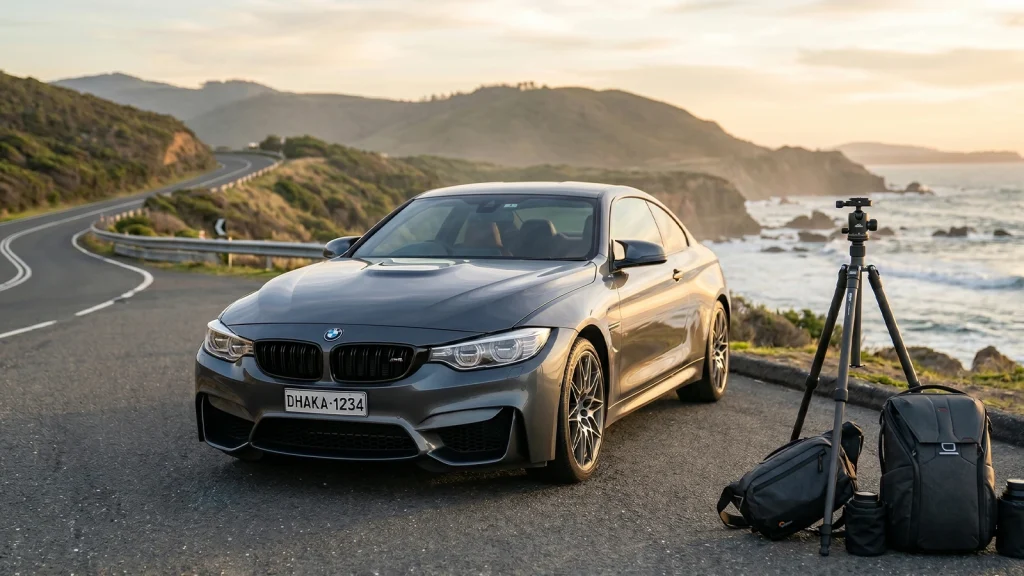
If you are starting from zero, do not overcomplicate the process. You do not need a huge studio, the most expensive camera, or a famous client. You need proof that you can make cars look clean, clear, and valuable.
Step 1: Learn the Basics of Car Photography
Before charging serious money, focus on building strong fundamentals. Understand how light affects a car’s appearance and how angles can highlight or hide its design.
Learn the core skills:
- How to shoot cars at the right height
- How to avoid harsh reflections
- How to frame the car cleanly
- How to use natural light
- How to shoot interiors
- How to capture wheels, badges, lights, and details
- How to keep backgrounds clean
- How to edit paint color realistically
Car photography is not only about sharpness. Reflections, lines, background, color, and angle matter a lot.
Step 2: Build a Small Portfolio
Start with cars you can access. Ask friends, family, local owners, or car club members. Offer a small free or discounted shoot only when it helps you build a real portfolio.
Your first portfolio should show variety:
- Front three-quarter angle
- Rear three-quarter angle
- Side profile
- Interior
- Steering wheel and dashboard
- Wheels
- Badge
- Headlights
- Detail shots
- One lifestyle image
A portfolio with 5 strong car shoots is better than 100 random photos.
Step 3: Create Simple Packages
Do not make clients guess what they are buying. Create 2 or 3 simple packages. Each one should clearly show what is included, such as the number of photos, shoot time, and editing level. This removes confusion and makes your service feel more professional and easy to choose.
Example:
| Package | Best For | Includes |
|---|---|---|
| Starter Shoot | Private owners | 1 location, 10 edited images |
| Standard Shoot | Enthusiasts and sellers | 1–2 locations, 20 edited images |
| Premium Shoot | Owners, brands, detailers | Full shoot, detail shots, advanced edits |
Keep the names simple. Make the deliverables clear. Mention what is not included, such as travel outside your area, extra revisions, or commercial usage.
Step 4: Post Before-and-After Work
Before-and-after images are powerful because they show the value of your editing. A raw photo may look flat, but the edited image can show clean paint, better contrast, balanced light, and stronger detail.
Post examples on:
- TikTok
- Facebook groups
- Your website
- Google Business Profile
- Behance
- Local car communities
Show the result, but do not make the editing look fake. Realistic editing builds more trust than overdone effects.
Step 5: Pitch Local Clients
Once you have samples, start pitching. The goal is to make them see your service as a way to increase sales, not just take pictures. Good first targets include:
- Used car dealers
- Car detailers
- Wrap shops
- Tint shops
- Performance garages
- Car rental companies
- Private sellers
- Car clubs
Keep your message short and specific. Do not say, “I am a photographer. Let me know if you need photos.” Say what problem you solve.
Example pitch:
“Hi, I’m a local automotive photographer. I noticed your recent vehicle photos have different lighting and backgrounds. I help car businesses create cleaner, more consistent images for listings, social media, and Google Business Profile. I can send a few sample packages if you are open to it.”
Step 6: Build a Repeatable Workflow
A repeatable workflow helps you earn more because you waste less time. When your process is organized, you move faster and make fewer mistakes. It also makes your work feel consistent, so clients know what to expect and trust you more.
Your workflow should include:
- Client brief
- Location plan
- Shot list
- Shoot
- Backup
- Culling
- Editing
- Quality check
- Delivery
- Follow-up
How To Find Car Photography Clients
Finding clients is often harder than taking photos. Many talented photographers struggle because they wait for clients to come to them. You need a simple outreach and visibility system.
Here is the following platform where you can find car photography, clients:
Instagram is a powerful platform for growing a car photography business. It allows you to showcase your portfolio, reach car enthusiasts, and connect with potential clients. Post your best photos, short videos, and recent projects regularly, but also use it for networking.
Use Instagram to:
- Tag local car owners
- Follow car clubs
- Connect with detailers
- Show before-and-after edits
- Post reels from shoots
- Share behind-the-scenes clips
- Message businesses with a helpful pitch
Your profile should clearly say what you do and where you work.
Example bio:
“Automotive photographer in [City]. Car shoots, dealership inventory, and content for detailers. DM for bookings.”
Facebook Car Groups
Local Facebook car groups can bring early clients. Do not spam groups with sales posts. Instead, share helpful content and portfolio examples.
Good post idea:
“Shot this Mustang last weekend in natural light. I’m building more automotive work in [City], so I’m opening a few discounted owner shoots this month.”
This feels more natural than a hard sales pitch.
Car Meets
Car meets are great for networking. Bring business cards or a simple QR code to your portfolio. Talk to owners. Offer to send a few sample photos. Build relationships before selling.
After the meet, post a gallery and tag owners when possible. This can help your work spread inside the local car community.
Dealerships
Dealerships are one of the best client types for repeat work. But they need reliability. Before pitching, study their current photos.
Look for problems such as:
- Inconsistent backgrounds
- Dark interiors
- Harsh shadows
- Dirty reflections
- Crooked framing
- Too few detail shots
- Low-quality uploads
Then pitch the solution.
Example:
“I noticed some of your used car listing photos have mixed backgrounds and lighting. I help dealerships create clean, consistent vehicle images that look better across inventory pages and marketplace listings. I can handle batch shoots weekly or monthly.”
Detailers and Wrap Shops
These businesses understand visuals. They often post on social media already, but their photos may not show the quality of their work.
Offer a small trial package:
- 1 completed car
- 15 edited images
- 3 vertical story images
- Before-and-after set
- 48-hour delivery
If they like the result, offer a monthly plan.
Google Business Profile
If you want local clients, create and maintain a Google Business Profile. Add photos, services, location area, business hours, and contact details. Google allows businesses to personalize profiles with photos, posts, offers, and more. This can help local clients understand what you do before contacting you.
Use your profile to show:
- Car photoshoots
- Dealership inventory examples
- Before-and-after editing
- Behind-the-scenes work
- Client testimonials
- Service areas
How Editing Affects Your Profit
Editing can make or break your car photography business. Good editing makes the car look clean, accurate, and valuable. But bad editing can make paint look fake, hide important details, or make the image look cheap.
Car photo editing often includes:
- Exposure correction
- Color correction
- Paint enhancement
- Reflection cleanup
- Background cleanup
- Interior brightening
- Window and glass correction
- Shadow balance
- Number plate blur
- Cropping and resizing
But editing takes time. If you shoot for one hour and edit for five hours, you need to charge for that. Otherwise, your real hourly income becomes very low.
This is why many growing photographers build an editing system. Some use presets for basic consistency. Some create a checklist. Some outsource part of the editing when the volume grows.
For example, if you are shooting dealership inventory, editing 200 images yourself may slow delivery and limit how many clients you can handle. In that situation, a reliable editing partner can help you keep the final images consistent while you focus on shooting, client communication, and business growth.
What is the Simple Car Photography Business Framework
Many photographers enjoy shooting cars but struggle to turn that passion into a reliable source of income. The good news is that building a car photography business does not need to be complicated. Use this simple framework to turn car photography from a hobby into a service.
1. Portfolio
Your portfolio proves your style and skill. It should show clean images, not just random photos. Include different car types, angles, and lighting conditions.
2. Package
Your package makes buying easy. Clients should know what they get, how many images are included, and how long delivery takes.
3. Proof
Proof builds trust. Use testimonials, before-and-after examples, client results, and repeat work.
4. Pitch
Your pitch should focus on the client’s problem. Dealerships need better listing photos. Detailers need proof of work. Owners want their car to look special.
5. Process
A clear process makes you look professional. Explain how booking, shooting, editing, revisions, and delivery work.
6. Post-Production
Editing protects the quality of your final work. It also affects your profit, delivery speed, and client satisfaction.
Common Mistakes That Stop Car Photographers From Making Money
Many photographers have strong technical skills yet struggle to attract clients and generate consistent income.
The reason is often a few avoidable business mistakes. Understanding these challenges can help you build a more profitable and sustainable car photography business.
Here are some of the most common mistakes that hold photographers back.
Charging Only for Shoot Time
Do not charge only for the time you hold the camera. Your real work includes planning, travel, editing, communication, file delivery, and revisions.
Ignoring Usage Rights
A private owner using images on Instagram is different from a brand using images in paid ads. Commercial usage should usually cost more.
Editing Too Much
Cars should look polished, not fake. Do not make paint colors unrealistic, remove important defects from sale listings, or create misleading images.
Not Having a Niche
“Photographer for everyone” is harder to sell. “Automotive photographer for dealerships, detailers, and car owners in [City]” is much clearer.
No Delivery System
Sending random files through messages looks unprofessional. Use a proper gallery, cloud folder, or delivery platform.
Not Following Up
Many clients need photos again. Follow up with dealers, detailers, and owners. Ask if they need more content next month.
Practical Examples of Car Photography Offers
Well-defined packages make it easier for clients to understand the value of your service and choose the option that fits their goals and budget.
Here are some practical examples of car photography offers that can help you attract different types of clients and generate consistent business.
Offer for Private Owners
Professional car photoshoot for owners who want clean, stylish images of their vehicle. Includes one location, 20 edited images, exterior and detail shots, and social media-ready files.
Offer for Dealerships
Consistent vehicle photography for online listings. Includes exterior, interior, wheel, dashboard, and detail images with fast delivery and clean editing.
Offer for Detailers
Monthly visual content package for car detailers. Includes before-and-after photos, final beauty shots, vertical images for stories, and website-ready images.
Offer for Car Sellers
Car listing photo package for private sellers. Includes clean, realistic images that show the vehicle clearly and help buyers understand the condition before visiting.
How to Make Your First $500 With Car Photography
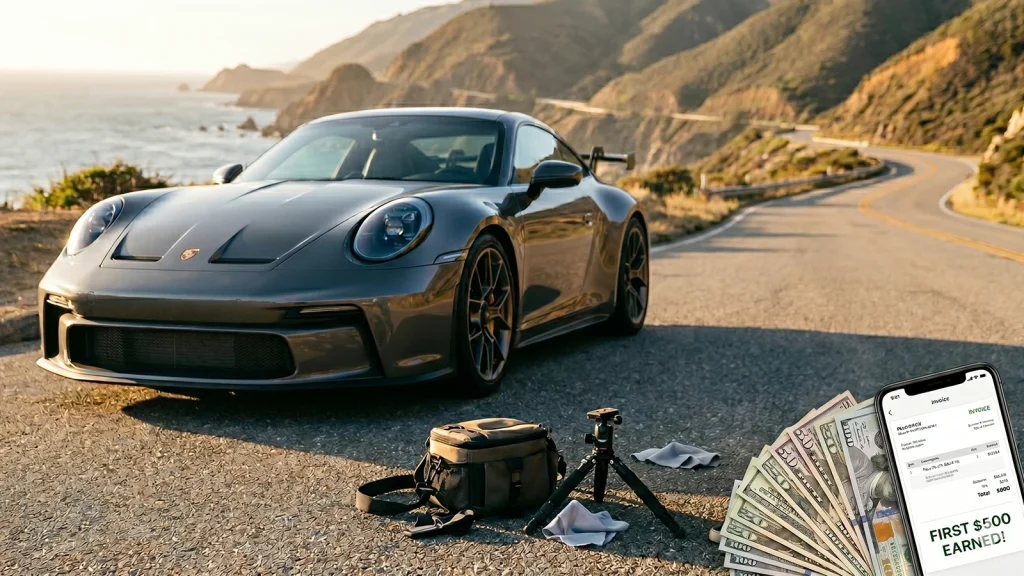
A beginner can aim for a simple first milestone: $500. Focus on offering affordable shoots to private car owners, small dealerships, or local listings. Keep your service clear and easy to understand so people can say yes quickly.
Here is a practical path:
- Shoot 3 cars for portfolio examples.
- Create a basic package with 15 edited images.
- Offer the package to local owners at a fair beginner rate.
- Post before-and-after examples.
- Message local detailers and small dealers.
- Book 3–5 small paid shoots.
- Ask each client for a testimonial and referral.
The goal is not only the first $500. The goal is proof. Once you have proof, you can raise prices, pitch better clients, and build repeat income.
How To Grow From Side Hustle to Serious Business
After you start getting paid, your next step is to improve your business model. Start tracking your income, improving your portfolio, and building repeat clients. Over time, this helps you move from random gigs to a reliable photography business with steady demand.
Focus on:
- Better clients
- Better packages
- Faster editing
- Clear contracts
- Usage rights
- Repeat retainers
- Stronger portfolio
- Local SEO
- Referral relationships
You can also create different service levels:
| Level | Service | Best Client |
|---|---|---|
| Basic | Simple owner shoot | Private owners |
| Standard | Listing or portfolio package | Sellers and enthusiasts |
| Business | Monthly content package | Detailers and shops |
| Commercial | Campaign shoot with licensing | Brands and agencies |
Final Thoughts
Car photography can make money when you treat it like a business, not only a creative hobby. The highest income comes from solving problems for clients.
Start small. Build a clean portfolio. Create simple packages. Learn how to pitch. Track your editing time. Protect your usage rights. Then build repeat work with clients who need photos every month.
If your shoot volume grows, do not let editing slow down your business. A consistent post-production workflow can help you deliver polished images faster and keep clients happy.
For photographers who want support with car photo editing, background cleanup, clipping path, retouching, and batch post-production, Offshore Clipping can be a helpful editing partner while you focus on shooting and client growth.
FAQ

Can beginners make money with car photography?
Yes. Beginners can make money with car photography by starting with private owner shoots, small used car sellers, local car clubs, and detailers. The key is to build a small portfolio first and offer a clear package.
Do I need expensive gear to make money with car photography?
No. Expensive gear helps, but it is not the first requirement. Good lighting, clean angles, strong composition, and realistic editing matter more when you are starting. Many beginners can build a portfolio with an entry-level camera and a good lens.
How much should I charge for car photography?
Your price should depend on your experience, location, client type, editing time, number of images, and usage rights. Private owner shoots are usually priced differently from dealership inventory or commercial brand campaigns.
Is dealership photography profitable?
Dealership photography can be profitable because it can create repeat work. Dealers often need new photos every week or month. The profit depends on your shooting speed, editing workflow, travel time, and package structure.
How do I find car photography clients?
Start with local car owners, Facebook groups, Instagram, car meets, detailers, wrap shops, used car dealers, and local dealerships. Show your best work, post before-and-after examples, and pitch specific problems you can solve.
Can I sell car photos online?
Yes, but selling car photos online is usually harder than client work. You can sell prints, digital downloads, stock-style images, presets, or tutorials. Always consider permissions, trademarks, event rules, and licensing before selling images.
What is the best way to make money with car photography?
The best beginner path is private owner shoots and local business clients. The best long-term path is repeat work with dealerships, detailers, wrap shops, brands, and monthly content clients.
How can photo editing help car photographers earn more?
Good editing improves image quality, consistency, and delivery value. It can also help photographers handle more work. If editing takes too much time, outsourcing part of the workflow can protect profit and speed up delivery.