Learn how to start a real estate photography business with this complete guide. Covers gear, pricing, marketing, and client tips to grow fast and profitably.
Today, most home buyers search online first, so good property photos are more important than ever. New trends like 3D virtual tours, video content, and AI editing are creating even more opportunities for photographers to earn money in this industry.
Whether you love photography or want to start a new business, real estate photography can be a great way to make income. But success takes more than just owning a camera. You also need the right skills, a simple workflow, and a plan for finding clients.
In this guide, you’ll learn how to start a real estate photography business step by step. We’ll cover the equipment you need, how to build your portfolio, and how to get your first clients. Let’s get started!
What does a real estate photographer do, and why does it matter to get it right?
A real estate photographer captures high-quality images, videos, and virtual tours that present a property in its best light. They use proper lighting, angles, and editing to highlight space, detail, brightness, and flow.
This helps listings stand out online, where most buyers form first impressions. Strong visuals can increase interest, shorten selling time, and even influence price by making the property feel more valuable and move-in ready.
Here’s why hiring a real estate photographer makes a real difference:
- Better first impressions that grab attention instantly
- Higher chances of faster property sales
- More buyer interest and inquiries
- Stronger listing performance on property sites
- Professional editing that enhances space and light
- Helps agents build trust and win more clients
Why Real Estate Photography Is a Smart Business in 2026
Real estate photography is a smart business in 2026 because property marketing now depends on more than just photos. Listings need full visual packages that grab attention and tell a clear story. Demand keeps rising, while tools make the work faster and more scalable. This creates strong income potential for photographers who deliver quality and adapt to what modern buyers expect.

Here’s what makes it especially smart business right now:
- Higher demand for full media packages: Listings now need video, drone, and 3D tours to stay competitive, letting you offer higher-priced bundled services.
- More income with repeat clients: Agents list properties regularly, so one good relationship can turn into steady, repeat monthly income.
- AI speeds up work, not replaces it: AI speeds up editing and workflow, helping you deliver faster and take on more projects without extra effort.
- Focus on story-driven visuals: Buyers respond to visuals that show lifestyle and emotion, not just rooms, making your work more valuable.
- Growth in high-paying niches: Luxury, commercial, and rental properties pay more for premium visuals, increasing your income per project.
- Low competition in many local markets: Many areas still lack skilled photographers, so it’s easier to stand out and get clients quickly.
- A fast turnaround equals a competitive advantage: Agents value speed. Delivering next-day photos can win you more repeat work than cheaper competitors.
- Simple upsells increase profit per shoot: Add-ons like twilight edits, virtual staging, or floor plans can boost each job’s value without much extra effort.
- Flexible entry and skill growth: You can start basic and upgrade gear and skills over time, without needing a huge upfront investment.
- Strong word-of-mouth referrals: Good work spreads fast in real estate circles, bringing new clients without heavy marketing.
How To Start a Real Estate Photography Business
Starting a real estate photography business means turning simple property shoots into a steady source of income. It begins with choosing the right gear, learning basic shooting and editing skills, and building a clean portfolio.
Finding clients, setting clear pricing, and delivering fast, high-quality work help you grow and stand out in a competitive market.
Here’s how to start a real estate photography business step by step:
Step 1: Understand the Real Estate Photography Market

Before jumping in, get a clear sense of how the market works in your area. Study local listings to see which photos agents use, what quality stands out, and where gaps exist. Pay attention to pricing, services offered, and turnaround times. Knowing who your competitors are and what clients expect helps you position your services better and avoid underpricing or overpromising.
Before jumping to the main real estate photography market need to understand this point:
What Real Estate Photographers Actually Do
Real estate photographers create visual content that helps properties sell faster and at a better price. They don’t just take photos; they shape how a home is seen online. Their work includes capturing interiors, exteriors, and details in a way that feels bright, spacious, and appealing. Good visuals build interest, trust, and stronger buyer engagement for listings.
Responsibilities of a real estate photographer:
- Capture high-quality interior and exterior property photos
- Use lighting and angles to make spaces look attractive and balanced
- Edit and retouch images for clarity and consistency
- Provide drone shots, video walkthroughs, or virtual tours when needed
- Ensure fast delivery to meet real estate listing deadlines
- Communicate with agents or clients to understand property goals
Types of Services You Can Offer
Real estate photography businesses can offer more than just basic property photos. Services range from standard interior and exterior shoots to advanced visual packages that help listings stand out online. Each service adds value for agents by making properties more appealing, increasing engagement, and improving the chances of a faster sale.
Here is a list of services:
- Interior and exterior photography
- Drone photography for aerial views
- Video walkthroughs of properties
- Twilight or sunset photography
- Virtual staging to enhance empty spaces
- Floor plans and property layouts
- 3D virtual tours for immersive viewing
Choose Your Ideal Clients Are
In the real estate business are best when you focus on specific clients instead of trying to serve everyone. Different clients have different needs, budgets, and expectations. Picking your ideal clients helps you set the right pricing, style, and service packages.
Here is a list of ideal clients for a real estate photographer:
- Real estate agents handling regular property listings
- Property developers promoting new housing projects
- Airbnb and short-term rental hosts
- Luxury home sellers needing premium visuals
- Commercial property owners and real estate firms
Step 2: Learn the Skills You Actually Need for Real Photography
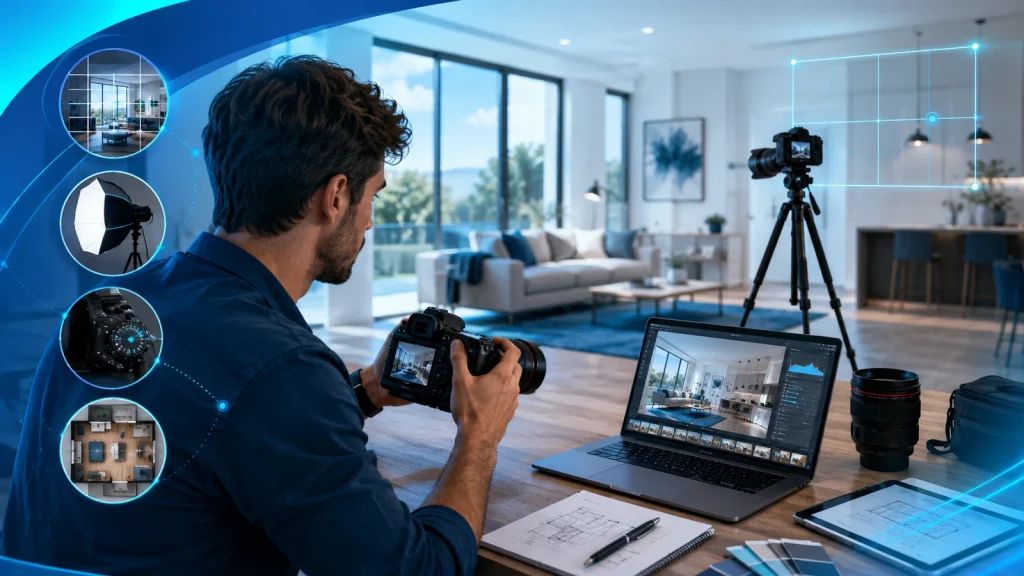
The skills you need to learn for real photography are a mix of technical skill and visual sense, not just a good camera. You must understand lighting, composition, and how to make spaces look balanced and inviting. Editing is just as important as shooting because it fixes color, brightness, and clarity. Strong communication with clients also helps you deliver exactly what they expect.
Here is a list of skills you need to learn for real estate photography:
- Camera handling and manual settings control
- Understanding natural and artificial lighting
- Composition and wide-angle framing techniques
- Photo editing and retouching skills
- Basic drone operation (optional but valuable)
- Communication and client management skills
- Understanding exposure (ISO, shutter speed, aperture)
- HDR blending to balance bright windows and dark interiors
- Color correction for accurate and natural tones
- Sky replacement for dull outdoor shots
- Removing minor distractions or imperfections
Step 3: Get the Right Equipment for real estate photography
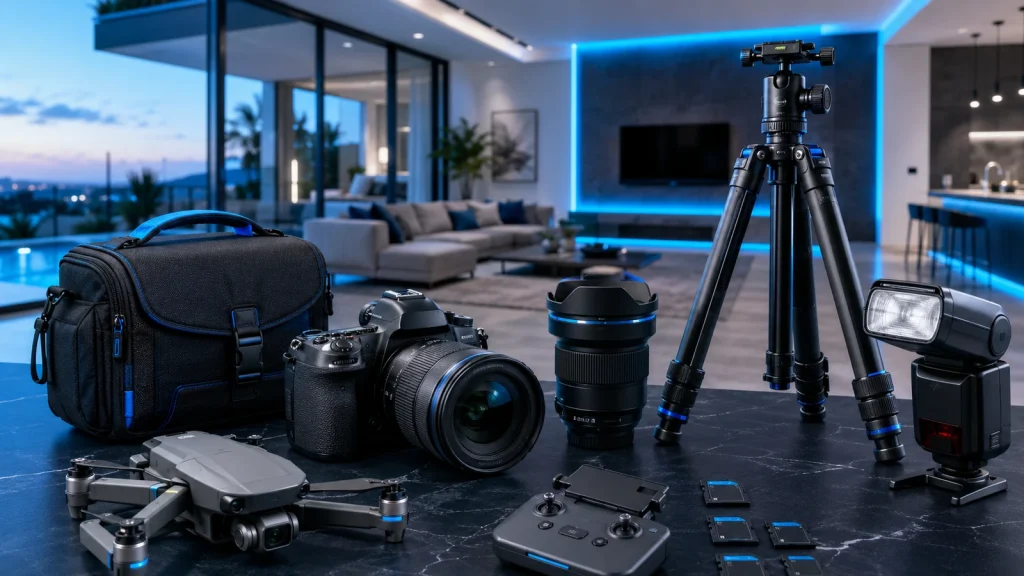
The right equipment for real estate photography makes the entire task easy and consistent. Initially, you might need the most expensive gear, but you do need tools that handle wide spaces, low light, and sharp details. The right setup helps you shoot faster, reduce editing time, and deliver professional results that clients expect.
Here is a list of technical equipment required for real estate photography:
- DSLR or mirrorless camera with good dynamic range
- Wide-angle lens (around 14mm–24mm) for full room shots
- Sturdy tripod for sharp, steady images
- External flash or speedlight for balanced lighting
- Drone (optional) for aerial property shots
- Editing software like Lightroom or Photoshop
- Remote shutter release to avoid camera shake
- Tilt-shift lens for better perspective control (advanced)
- Light stands and softboxes for controlled indoor lighting
- Reflectors to bounce and soften light naturally
- Color checker for accurate white balance
- Extra batteries and memory cards for long shoots
- Camera level or built-in grid to keep lines straight
- Laptop or tablet for on-site preview and backup
Step 4: Build a Real Estate Photography Portfolio

Building a real estate photography portfolio is essential as it shows the best work. Include bright interiors, sharp exterior shots, and a few detail images. Keep editing naturally and consistently. Add before and after samples if possible. Make navigation simple. This helps clients quickly trust your style and see how you can present their property in the best way.
How to Get Your First Property Shoots (Even Without Clients)
To get your first property shoot, you need to gain trust even with little experience. Start by showing effort, not perfection. Offer value, stay consistent, and focus on people who need photos right now. Small jobs lead to bigger ones. Once you prove you can deliver clean, bright images on time, word spreads, and more opportunities start coming in naturally.
Here is a way to get the first property shoot:
- Reach out to local agents: Find agents on Facebook or LinkedIn. Send a short message with a few sample shots. Keep it simple.
- Shoot for friends or family: Ask around. Someone always knows a person selling or renting a place. Do it for free or cheap. Focus on quality.
- Partner with property managers: Property managers handle many listings. They often need regular photos. Offer a package deal.
- List your service online: Use platforms like Facebook Marketplace and Fiverr. Post clear samples and pricing. Keep your offer simple and easy to understand.
- Visit open houses: Walk into open houses and introduce yourself. Be polite and quick. Share your contact.
- Offer a trial shoot: Give one free or low-cost shoot to a serious agent. If your work is good, they will likely hire you again.
- Stay consistent with follow-ups: Most people don’t reply the first time. Send a polite follow-up after a few days; this may double the chances.
- Shoot Your Own Space: Use your home or a friend’s place. Stage it well and focus on clean, bright, well-composed shots.
- Offer a Free or Discounted Trial: Give one low-cost shoot to an agent. Deliver fast, high-quality work to build trust and repeat jobs.
- Focus on Local Boutique Brokerages: Reach out to small agencies. Build personal connections that can lead to steady, ongoing work.
What Makes a High-Converting Portfolio
To make a high-converting portfolio, you need to ensure your focus is on clarity, quality, and trust, as it acts as a 24/ 7 sales tool. Make sure you highlight your best work, keep everything clean and easy to view, and make it simple for clients to contact you.
The portfolio is proof that you have the experience to make any property look bright, sharp, and worth booking.
Key strategies to follow for a high-converting portfolio:
- Show Only Your Best Work: Avoid too many photos. Use clean, bright images that clearly show space, lighting, and detail.
- Keep Editing Naturally: Do not over-edit. Real colors and balanced light help clients trust what they see.
- Add Before-and-After Shots: Show simple comparisons. This proves the value you bring to each property.
- Make It Easy to Navigate: Keep the layout simple. Visitors should find your work and contact info in seconds.
- Include Different Property Types: Show apartments, houses, and small spaces. This shows flexibility and experience.
- Add Contact Info Clearly: Make your phone, email, or social links easy to find without searching.
- Keep It Updated: Remove weak images. Replace them with better, recent work over time.
- Social Proof and Trust Signals: Add client reviews, testimonials, or agent names. This builds confidence quickly.
- Fast and Mobile-Friendly: Ensure your site loads quickly and works smoothly on phones. Most clients will check on mobile.
- Strategic CTAs: Use clear calls to action like “Book a Shoot” or “Get a Quote.” Guide visitors on what to do next.
How Many Photos Should You Showcase in Your Portfolio
A Real estate photography portfolio must showcase 10 to 20 remarkable images that strongly highlight the best work. A highly edited, strong set of images works far better for targeting a specific audience than a huge gallery. Your portfolio must have images of different categories.
Here are some key principles to follow when creating a portfolio:
- Ideal Range: 15–25 Photos: This is enough to show quality and variety without overwhelming the viewer.
- Focus on Quality Over Quantity: Every photo should feel strong. If one looks average, remove it. Weak images lower trust.
- Show Different Angles and Spaces: Include living rooms, bedrooms, kitchens, and exteriors. Show you can cover a full property.
- Tell a Simple Visual Story: Arrange photos in a natural flow, like walking through a home. This keeps viewers engaged.
- Update as You Improve: As you get better shots, replace older ones. Your portfolio should always reflect your current level.
- Avoid Repetition: Do not show similar shots of the same space. One strong image is better than three similar ones.
- Targeted Culling: Be strict when selecting photos. Only keep images that clearly add value to your portfolio.
- Consistency: Keep lighting, editing, and style similar across all images. This makes your work look professional.
- Update as You Improve: Replace older photos with better ones over time. Keep your portfolio fresh and relevant.
Step 5: Set Your Pricing Strategy for Your Photography Business

To set the right pricing for your photography business, start by researching what others in your area charge. Then calculate your fixed and variable costs. Finally, set your price based on your experience, the value you provide, and how complex the project is. The goal is to stay competitive while still making a profit.
Here are the key pricing strategies to follow:
- Start with Market Research: Check what other local photographers charge. Stay within a similar range when you’re new.
- Use Simple Package Pricing: Offer clear packages like basic, standard, and premium. This makes decisions easy for clients.
- Price Based on Property Size: Charge more for larger homes. Bigger spaces take more time to shoot and edit.
- Factor in Your Time and Costs: Include travel, editing, and equipment costs. Do not underprice your work.
- Offer Introductory Rates: Start slightly lower to attract your first clients. Increase prices as you gain experience.
- Add Optional Extras: Offer add-ons like twilight shots, drone photos, or faster delivery for extra fees.
- Be Clear and Transparent: List your prices clearly. Avoid hidden costs. Clients prefer simple, honest pricing.
- Adjust as You Grow: As your portfolio improves and demand increases, slowly raise your rates.
Step 6: Register and Set Up Your Real Estate Photography Business
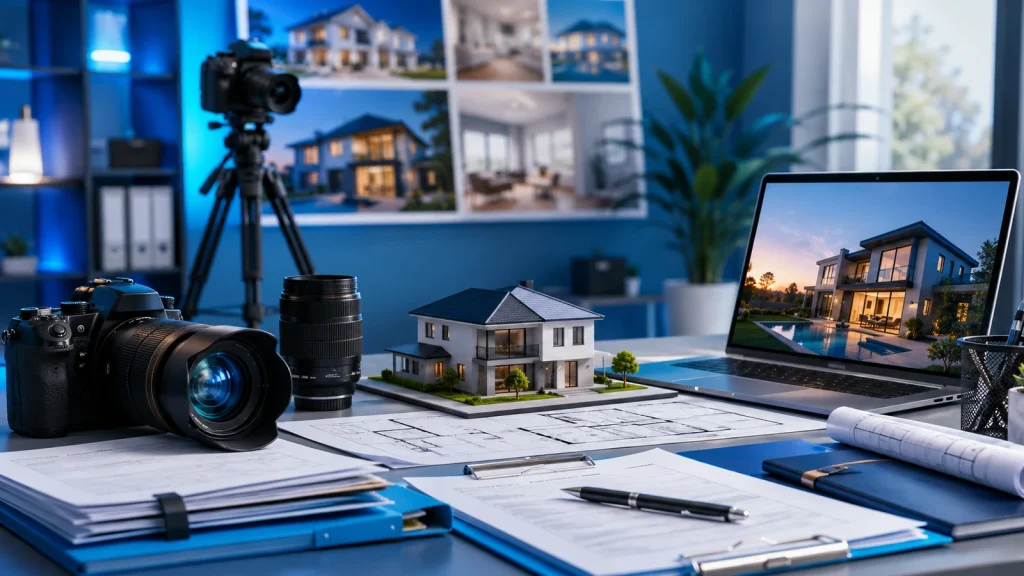
When setting up and registering your real estate photography business, start by making it legal and organized. Choose a business name, register it, and set up basic systems for payments and communication. Keep things simple at first. The goal is to look professional, stay compliant, and be ready to take clients without confusion.
Here are the key points to consider when registering and setting up a real estate photography business:
- Choose and Register Your Business Name: Pick a simple, professional name. Register it based on your local rules so you can operate legally.
- Get Necessary Licenses or Permits: Check local requirements. Some areas need basic business registration or permits.
- Open a Business Bank Account: Keep your business money separate. This helps with tracking income and expenses.
- Set Up Payment Methods: Use easy options like bank transfer or mobile payments. Make it simple for clients to pay you.
- Create a Simple Brand Identity: Design a basic logo and choose consistent colors. This helps you look more professional.
- Set Up Communication Channels: Create a business email and maybe a phone number. Keep all client communication clear and organized.
- Prepare Basic Contracts and Invoices: Use simple agreements for your shoots. This protects both you and your clients.
Step 7: Create a Website That Brings You and Clients

Your real estate photography website should show your work, build trust, and guide visitors to contact you. Keep it simple, fast, and clear. A good website does not just look nice; it helps turn visitors into paying clients.
Here are some key principles to follow when creating a website for the photography business:
- Include a homepage, portfolio, pricing page, and contact page
- Add a short about section to build trust
- Keep navigation simple and easy to follow
- Use your city or area in website text, titles, and image names
- Create and update your Google Business Profile
- Focus on keywords people search for in your local area
- Use clear buttons like “Book a Shoot” or “Contact Now.”
- Place CTAs across your website, not just one spot
- Make it obvious what visitors should do next
Step 8: How To Get Your First Real Estate Photography Clients

The tricks to get your first real estate photography client are simple but require focus, consistency, and smart outreach. You need a clear portfolio, direct contact with agents, and strong follow-up. This step helps you move from practice work into paid gigs by building trust, showing value, and making it easy for clients to say yes quickly and steadily.
Here is following strategies to get your first client:
- Build a simple portfolio: You don’t need paid work to start. Shoot your own space or a friend’s home. Pick 8 to 12 of your strongest photos that look bright, sharp, and natural.
- Reach out to local agents: Find active agents on social media or property sites. Send a short, friendly message with 2 to 3 of your best shots.
- Offer a first shoot deal: Give a small discount or add a bonus like extra edited photos. This removes hesitation for someone trying you for the first time.
- Follow up without overdoing it: Most people won’t reply the first time. That’s normal. Wait a few days, then send a quick check-in message.
- Leverage networking: Tell people around you what you do. Friends, family, builders, and even small business owners can connect you to agents.
Step 9: Marketing Strategies to Grow Your Photography Business

The marketing strategies that are applied to grow your photography business focus on visibility, trust, and consistent lead flow. When doing digital marketing, it’s best to use SEO on your website, optimize your Google Business Profile, post high-quality content, and run targeted ads.
Track metrics like reach, clicks, and conversion rate to understand what works and improve results over time. This approach helps you move from occasional bookings to a steady flow of clients and long-term growth.
Here are some suggested marketing strategies you can use to grow your photography business:
- Use social media consistently: Post your best photos on platforms like Instagram and Facebook where agents are active. Stay consistent and show before-and-after edits, reels, and real projects to build trust over time.
- Optimize your online presence: Create a simple website and a Google Business Profile so people can find you easily. Add your portfolio, contact info, and location so local clients can reach out fast.
- Ask for reviews and referrals: After a good shoot, ask happy clients for a quick review or referral. Positive feedback builds trust and brings in new clients without extra effort.
- Collaborate with local professionals: Connect with agents, interior designers, and builders in your area. These relationships can lead to repeat work and long-term partnerships.
- Run small targeted ads: Use ads on Instagram or Facebook to reach local agents. Start small, test what works, and focus only on your local area to avoid wasting money.
- Stay consistent and improve quality: Keep learning and improving your editing and shooting style. Better quality and consistency make clients come back and recommend you.
- Collect testimonials: After each shoot, ask clients for a short written review and permission to use their photos. Hence can add these to your website and Google Business Profile to build trust and improve local search visibility.
- Deliver a polished experience: Use fast turnaround times, clean editing, and organized file delivery through tools like Dropbox or Google Drive.
- Use video content: Video increases reach, keeps viewers engaged longer, and helps you stand out from photographers who only post images.
Step: 10 Scale Your Real Estate Photography Business

Scaling your real estate photography business involves moving beyond one-time shoots and building a system that supports steady growth. However, it can increase pricing, improve workflow efficiency, and use automation tools to save time. Hence, focus on outsourcing, expanding your reach, and building repeat clients so your business grows in a stable, predictable, and professional way over time.
Here is some key strategies you can follow to scale a real estate photography business:
- Increase your pricing strategically: Track your average cost per shoot, then gradually raise rates as demand increases. You can also package your services as basic, standard, or premium, and you can increase your revenue per booking.
- Automate your workflow: Use tools like Google Calendar for bookings and reminders. Automate invoices and contracts with systems like HoneyBook or similar CRM tools to reduce manual work and save time.
- Hire or outsource editing: When bookings increase, outsource photo editing to maintain speed and consistency. This lets you focus on shooting and client acquisition instead of spending hours in post-production.
- Build repeat client systems: Create follow-up emails or messages that remind agents after 30 to 60 days. Stay top of mind so they rebook you for new listings without needing to search for another photographer.
- Expand your service area: Target nearby cities and real estate markets once your local area is stable. Use location-based SEO and ads to test new zones without losing your core client base.
- Create long-term partnerships: Focus on high-volume agents and agencies instead of one-time clients. Offer priority scheduling or bundled pricing to lock in recurring monthly work.
Common Mistakes to Avoid When Starting A Real Estate Photography Business
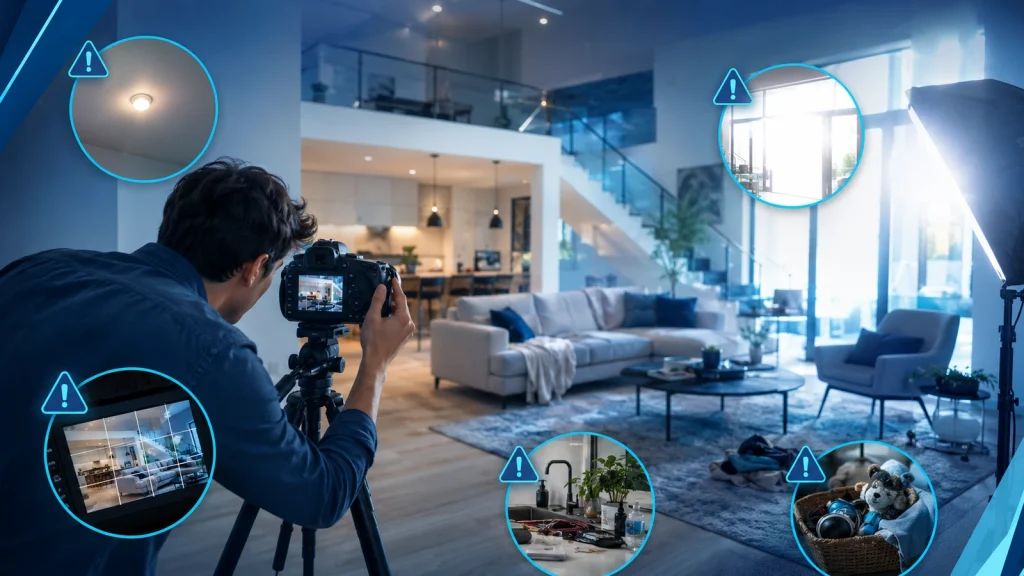
The common mistakes to avoid when starting a real estate photography business are poor planning, weak pricing, and rushing into paid work without preparation. These mistakes can slow your growth and make it harder to get consistent clients.
Once you understand them clearly, you can build a stronger foundation and avoid problems that most beginners face in the early stage.
Here are the key common mistakes to avoid when starting a photography business:
- No clear portfolio: Starting without a solid set of images makes it hard for clients to trust your skill. Even simple practice shoots should be polished and consistent.
- Underpricing your work: Charging too low attracts difficult clients and reduces perceived value. Set fair prices based on time, effort, and market rates.
- Poor communication: Slow replies or unclear messages can lose potential clients. Always respond quickly and keep instructions simple and professional.
- Ignoring editing quality: Bad editing can ruin good photos. Use consistent color, lighting, and sharpness to maintain a professional look.
- No follow-up system: Many beginners stop after the first message. Following up politely can turn missed leads into actual bookings.
- Start work without any written agreement: Always use a simple written agreement that covers price, delivery time, usage rights, and cancellation terms so both you and the client are protected.
- Chasing the wrong clients: Focus on agents and clients who value quality, pay fairly, and bring repeat business rather than one-time low-value jobs.
Tips To Build A Successful Real Estate Photography Business

Tips for building a successful real estate photography business focus on creating strong systems, improving client relationships, and delivering consistently high-quality work. It’s not just about taking good photos, but also about how you manage clients, pricing, and workflow. With the right habits and strategy, you can turn a small start into a stable and growing photography business over time.
These tips will help you move in the right direction and build a business that lasts:
- Focus on consistency: Deliver the same high quality in every shoot. Consistency builds trust and makes clients come back without hesitation.
- Build strong client relationships: Communicate clearly, respond fast, and be reliable. Good relationships often lead to repeat work and referrals.
- Improve your workflow: Use presets, templates, and organized file systems to save time. A smooth workflow helps you handle more clients without stress.
- Invest in better equipment slowly: Start with what you have and upgrade based on real needs. Don’t overspend before your business is stable.
- Market yourself regularly: Post your work online, update your portfolio, and stay active on platforms where agents are present. Visibility brings opportunities.
- Offer bundled packages: Bundles help clients understand value easily and increase your average booking value by encouraging them to choose higher packages with more deliverables.
- Deliver high-quality photos: Use consistent editing styles so your portfolio looks professional and reliable, which builds trust and helps you stand out in a competitive market.
Frequently Asked Questions (FAQs)

How much does it cost to start a real estate photography business?
The cost to start a real estate photography business might cost between $1,000 to $5,000. This includes a camera, a wide-angle lens, a tripod, and basic editing software. Costs increase if you add lighting, drone services, or higher-end gear. You can start small and upgrade gradually.
Is real estate photography profitable?
Yes, real estate photography is a profitable business when managed well. It offers steady income from agents, repeat clients, and property listings. Profit depends on pricing, consistency, and marketing. With skill and good networking, earnings can grow quickly over time.
How do I find real estate photography clients?
You can find real estate photography clients by reaching out to local real estate agents, building a strong portfolio, and posting your work online. Networking with brokers, using social media, and asking for referrals also helps. Consistent follow-up and good service turn first clients into repeat bookings.
Do I need a license to start?
No, you do not need a special license to start a real estate photography business in most places. However, you may need a basic business registration or tax ID, depending on your country and local regulations, before working professionally there.
What equipment do I need to start?
To start real estate photography, you need a DSLR or mirrorless camera, a wide-angle lens (around 16–35mm), and a sturdy tripod. Basic editing software is also essential. Optional gear like a drone, flash, or gimbal can improve results, but isn’t required at the beginning.