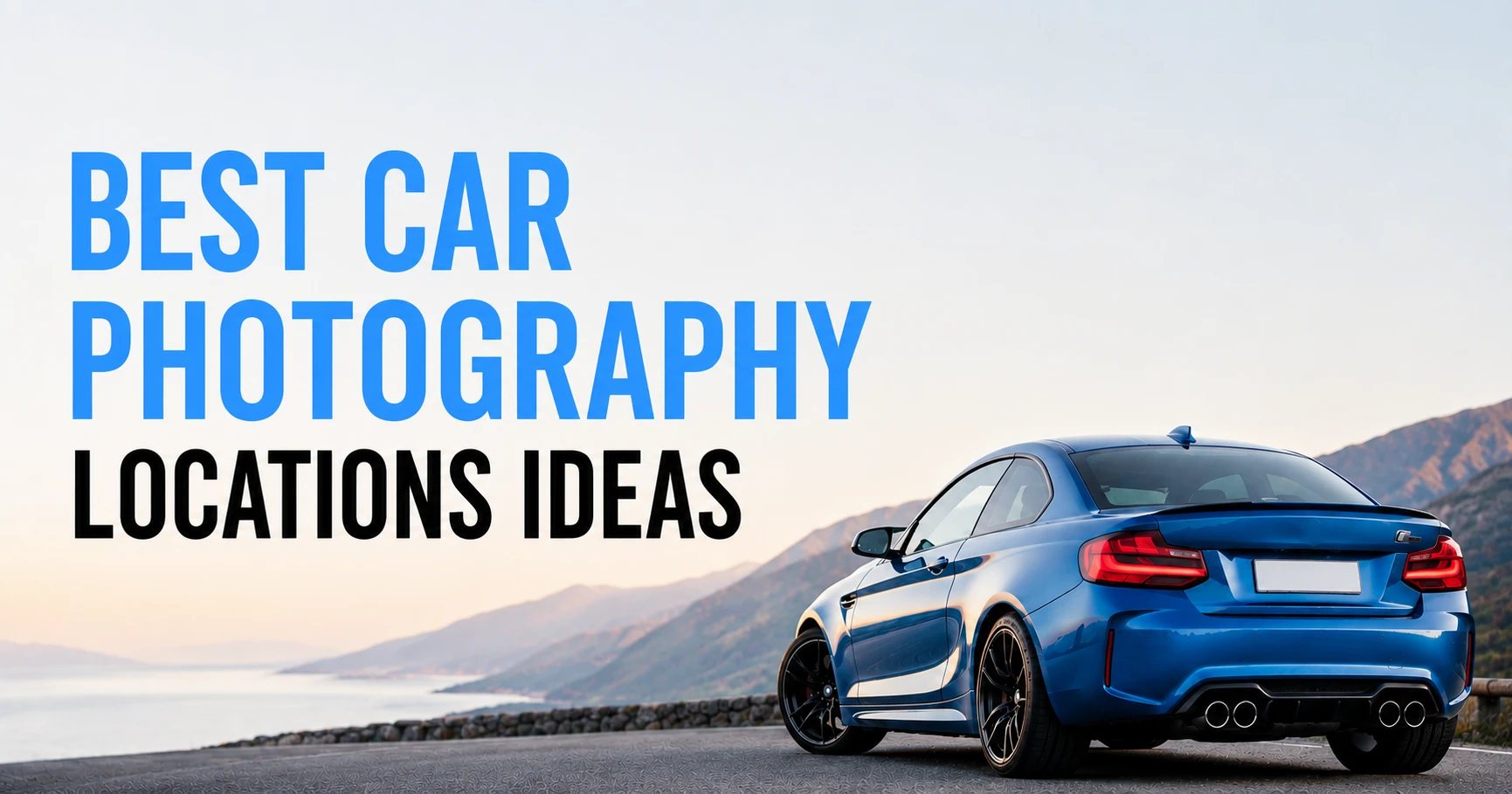
If you’re looking for Car Photography Locations Ideas, start with this mindset: a location with the setting should make the car “Star of the photo”.
Locations like urban streets, parking garages, mountain roads, coastal highways, industrial areas, or retro spots can all work only if they complement the vehicle.
So, choosing a car photoshoot location means looking at more than scenery. You just need a location that has suitable light, highlights the subject, enough working space, and a backdrop that matches the car’s personality.
Below, you’ll find location ideas, technical shooting considerations, and real-world inspiration from the USA, Australia, Europe and many more.
Great location, imperfect shot? Our photo retouching service can remove distractions and refines every detail.
What Makes a Good Car Photography Location?
A good car photography location gives you enough control to position the vehicle safely, move around it freely, and capture the required angles without traffic, crowds, clutter, or physical obstacles constantly interfering with the shoot.
It should provide sufficient working space, a clean and stable surface, usable light, and surroundings that produce manageable reflections across the paint and glass. The background should also complement the car and support the purpose of the shoot, rather than offering only one visually appealing angle.
To judge whether a location can deliver that, focus on three things: how clearly it presents the car, how practical the shooting conditions are, and how naturally the setting complements the vehicle’s character.
Best Car Photography Locations at a Glance
The best places for car photos range from urban parking garages to natural landscapes. Use this table to compare car photography locations by vehicle type, light, visual style, and access difficulty.
| Car Photography Location Type | Best for | Best light | Alternative Real-World Location Inspiration |
|---|---|---|---|
| Rooftop parking garage | Sports, luxury, EV | Blue hour | Chicago, Illinois, USA |
| Underground parking garage | Modified, sports | Day or night | Madrid, Spain |
| Downtown street | Luxury, performance | Blue hour | Brisbane CBD, Australia |
| Modern architecture | Luxury, EV | Blue hour | Zuidas, Amsterdam, Netherlands |
| Graffiti wall | Tuner, compact | Overcast | Shoreditch, London, UK |
| Bridge or underpass | Muscle, modified | Overcast | Brisbane, Australia |
| Mountain road | Sports, SUV | Sunrise | Stelvio Pass, Italy |
| Coastal road or beach | Convertible, luxury, SUV | Sunset | Amalfi Coast, Italy |
| Desert road | Sports, SUV | Golden hour | Valley of Fire region, Nevada, USA |
| Forest road | SUV, classic | Soft daylight | New Forest, England, UK |
| Lake or marina | Luxury, classic | Sunrise | Lake Lucerne, Switzerland |
| Open country road | Classic, everyday | Golden hour | Cotswolds, England, UK |
| Warehouse district | Muscle, tuner | Overcast | Red Hook, Brooklyn, USA |
| Historic brick district | Classic, luxury | Soft light | Distillery District area, Toronto, Canada |
| Vintage gas station | Classic, muscle | Golden hour | Historic roadside stations in Arizona, USA |
| Car wash | Modified, lifestyle | Night | Self-service wash bays in Sydney, Australia |
| Racetrack | Performance cars | Daylight | Silverstone Circuit, UK |
| Neon-lit district | Sports, tuner, EV | Night | Piccadilly Circus surroundings, London, UK |
| Tunnel | Muscle, modified | Night | Controlled tunnel locations around Madrid, Spain |
| City skyline | Luxury, EV | Blue hour | Perth skyline viewpoints, Australia |
Difficulty estimates vehicle positioning and access requirements. It does not confirm that photography or parking is permitted.
Let’s jump to the location idea that matches your car.
Best Urban and Architectural Car Photography Locations
Urban locations can give modern cars strong lines, interesting reflections, and a sense of energy. The challenge is finding enough space to position the vehicle safely without signs, traffic, pedestrians, and other city clutter taking attention away from it.
1. Rooftop Parking Garages
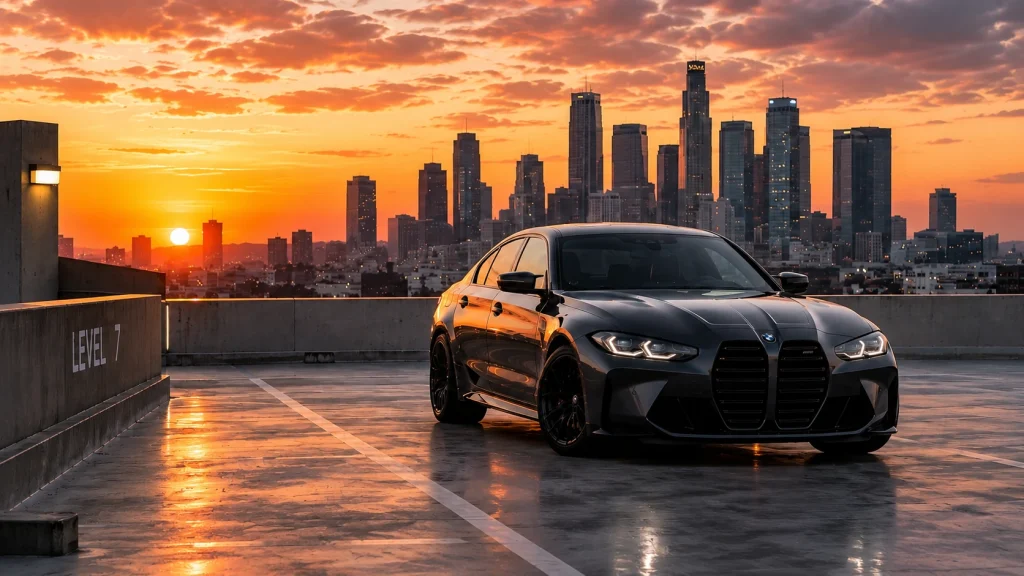
Shooting at rooftop garages gives you open light, strong leading lines, and enough distance to control perspective. As you are near sunset, the sky will create smooth reflections across glossy paint, while a moderate telephoto lens can compress the skyline and keep the car’s proportions natural.
Real-world location inspiration:
- Downtown Los Angeles, USA: Multi-level parking structures surrounded by city architecture.
- Melbourne CBD, Australia: Rooftop settings with contemporary skyline backgrounds.
- Central London, UK: Elevated urban surroundings for modern and premium vehicles.
2. Underground Parking Garages
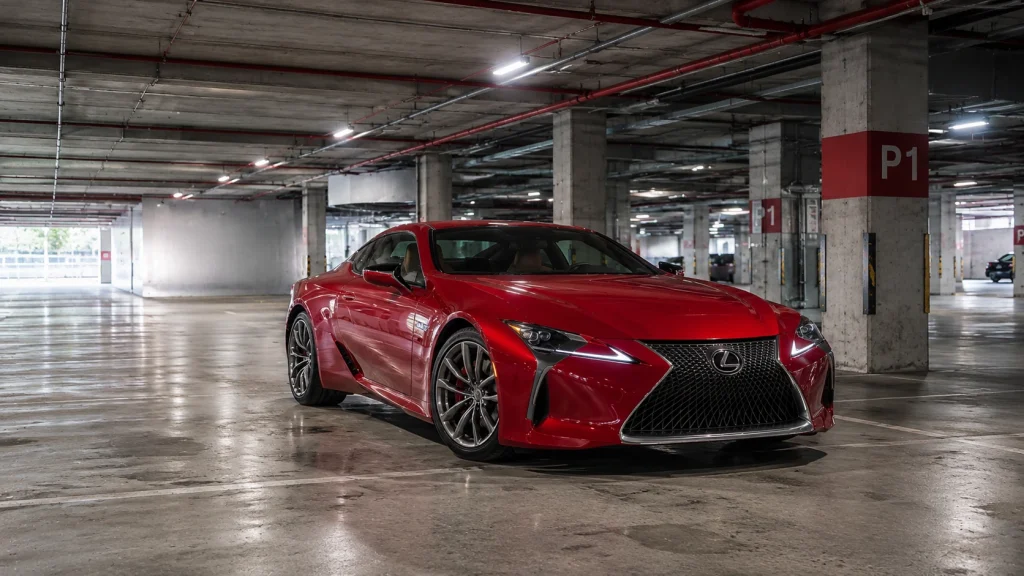
Underground garages work well when you want harder shadows, repeating columns, and a more cinematic mood. Position the car between pools of light rather than directly beneath fixtures to shape the panels without creating bright hotspots across the hood, roof, or windshield.
Real-world location inspiration:
- Los Angeles, USA: Large concrete commercial parking structures.
- Melbourne CBD, Australia: Garages with repeating columns and mixed artificial light.
- Berlin, Germany: Modern underground parking environments with minimalist architecture.
3. Downtown Streets and City Skylines
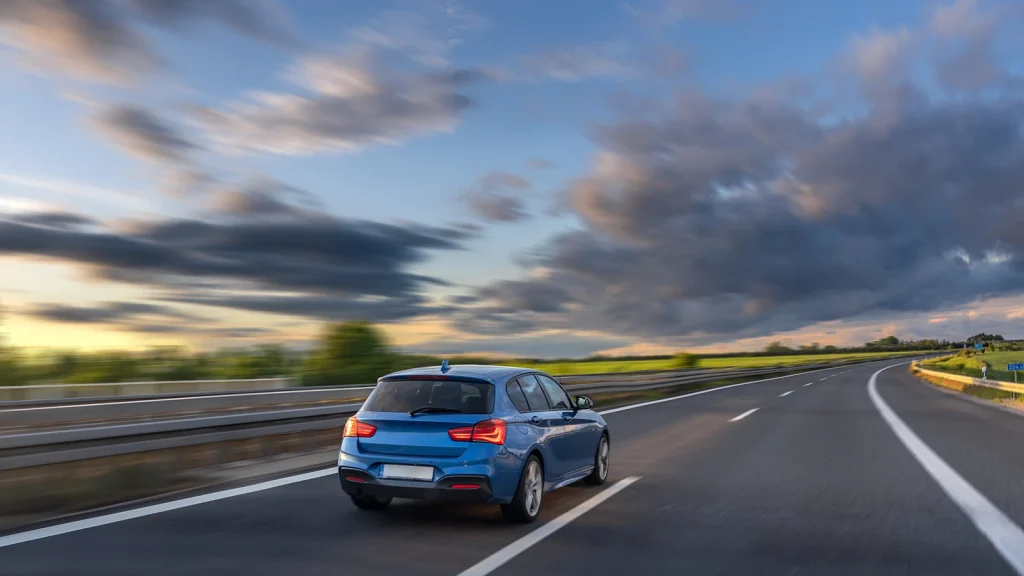
Downtown streets add energy through architecture, glass, traffic lights, and long perspective lines. A moderate telephoto lens helps simplify visual clutter, while blue hour provides enough ambient light to retain car detail without losing illuminated windows and surrounding city lights.
Real-world location inspiration:
- Downtown Los Angeles, USA: High-rise architecture and varied city streets.
- Melbourne CBD, Australia: Modern and historic urban backgrounds.
- Frankfurt, Germany: Contemporary skyline environments suited to premium cars.
4. Modern Office Districts
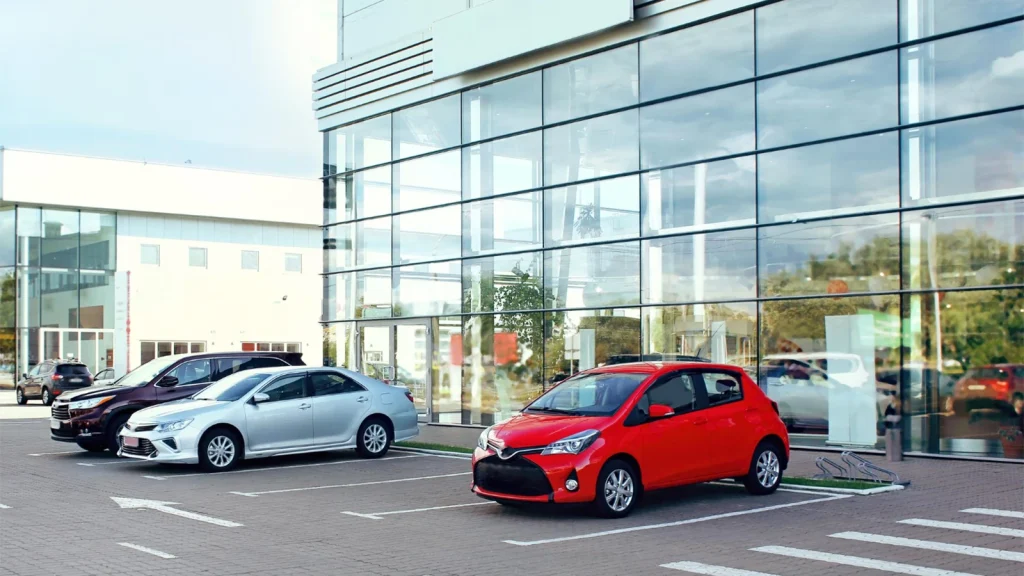
Modern office districts like EVs, supercars, and luxury cars because glass, steel, and concrete echo contemporary vehicle design. Watch reflective facades carefully, though. Large windows can create unwanted bright bands across body panels, so small changes in vehicle angle matter.
Real-world location inspiration:
- Canary Wharf, London, UK: Glass towers and contemporary architecture.
- La Défense, Paris, France: Large geometric structures and modern city design.
- Docklands, Melbourne, Australia: Modern architecture mixed with waterfront space.
5. Graffiti Walls and Street Art
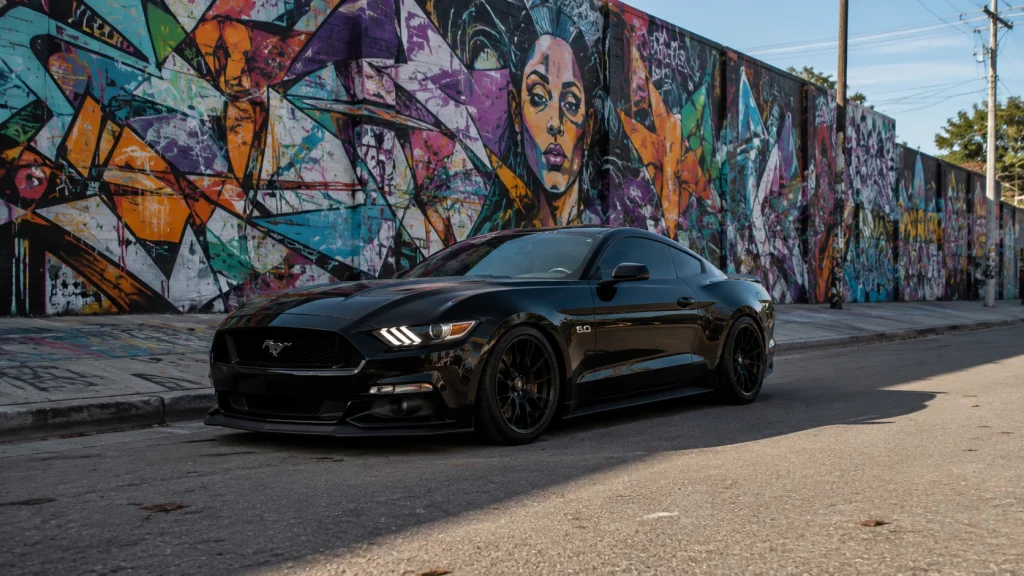
Street art itself adds color and attitude, so can quickly overpower the car. It’s better to leave enough distance between the vehicle and wall, then use focal length and aperture to simplify the artwork. Look for colors that separate from the paint rather than competing with it.
Real-world location inspiration:
- Wynwood, Miami, USA: Large murals and colorful urban surroundings.
- Melbourne laneways, Australia: Dense street-art environments with varied textures.
- Berlin, Germany: Urban art districts suited to tuner and modified-car styling.
6. Bridges and Underpasses
Bridges and underpasses naturally create leading lines through pillars, beams, road markings, and repeating structures. So centralize the compositions to emphasize symmetry, while low three-quarter angles make the car feel wider. Open shade also helps control highlights on chrome, glass, and glossy paint.
Real-world location inspiration:
- Los Angeles River bridge areas, USA: Concrete structures and strong road geometry.
- Melbourne bridge approaches, Australia: Steel and concrete urban environments.
- Rotterdam, Netherlands: Modern bridges and bold architectural forms.
Best Scenic and Natural Car Photography Locations
Natural locations give the vehicle more visual space and connect it with travel, freedom, or outdoor capability. Use established overlooks, designated parking areas, legal roadside bays, or private land where vehicle access has already been approved.
7. Mountain Roads
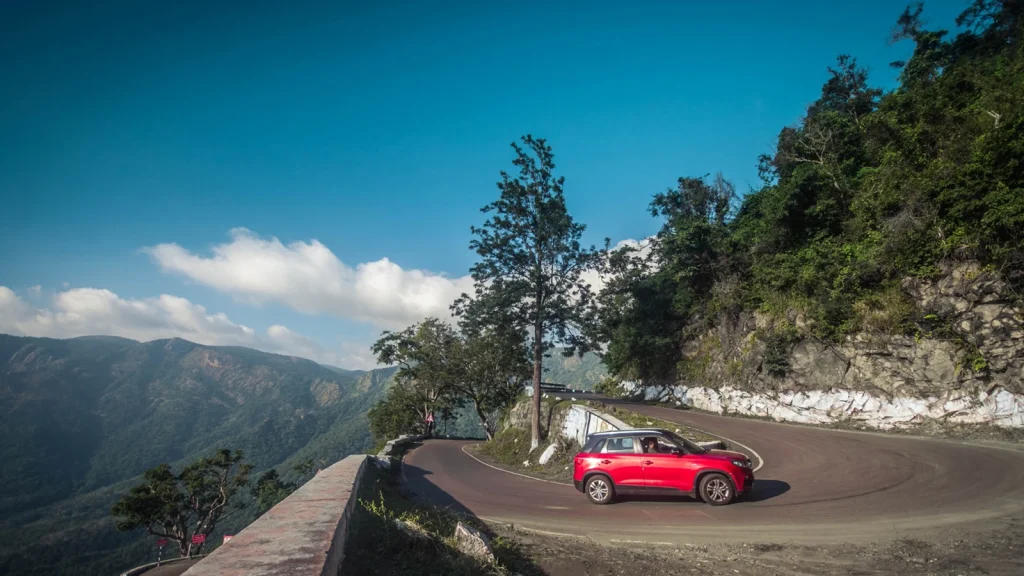
Mountain roads work best for adventurous shoots. The mountain road’s curves, elevation, and layered scenery create depth. A lower shooting angle can emphasize the vehicle’s stance, while longer focal lengths help compress distant peaks without letting the landscape overpower the car.
Real-world location inspiration:
- Black Forest High Road, Germany: Forest-covered roads, valleys, and winding scenery.
- Santa Monica Mountains, California, USA: Curving roads and elevated viewpoints.
- Great Alpine Road, Victoria, Australia: Mountain scenery, forests, and changing elevations.
8. Coastal Highways
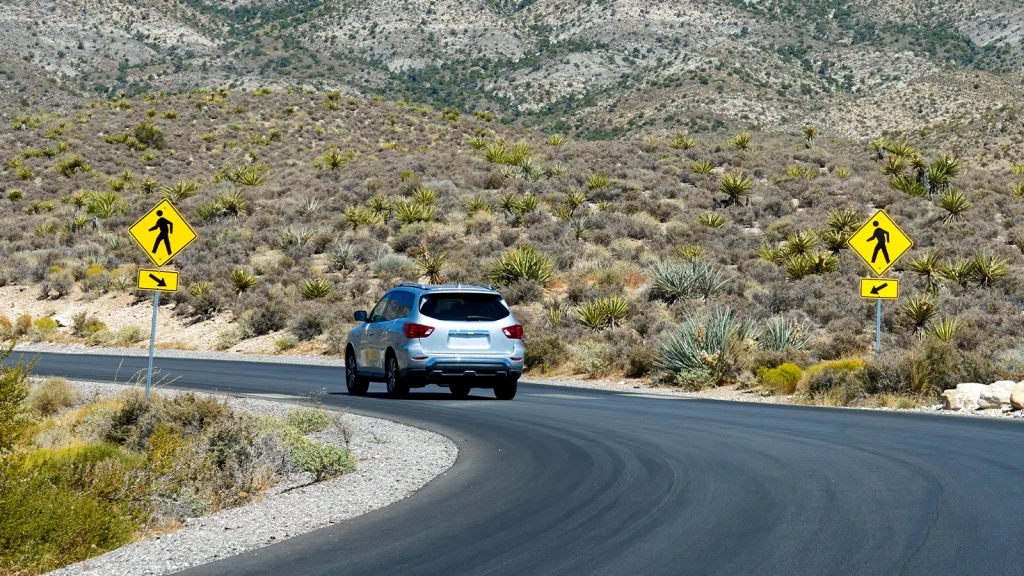
Coastal highways create a strong sense of movement because the open horizon and winding road naturally lead through the frame. Keep the horizon away from the roofline, and use low side light to reveal the shoulder line without flattening the car’s body shape.
Real-world location inspiration:
- Great Ocean Road, Victoria, Australia: Dramatic coastline and winding scenic roads.
- Pacific Coast Highway, California, USA: Ocean views, cliffs, and open-road scenery.
- Atlantic Road, Norway: Coastal landscapes combined with distinctive road structures.
9. Beaches
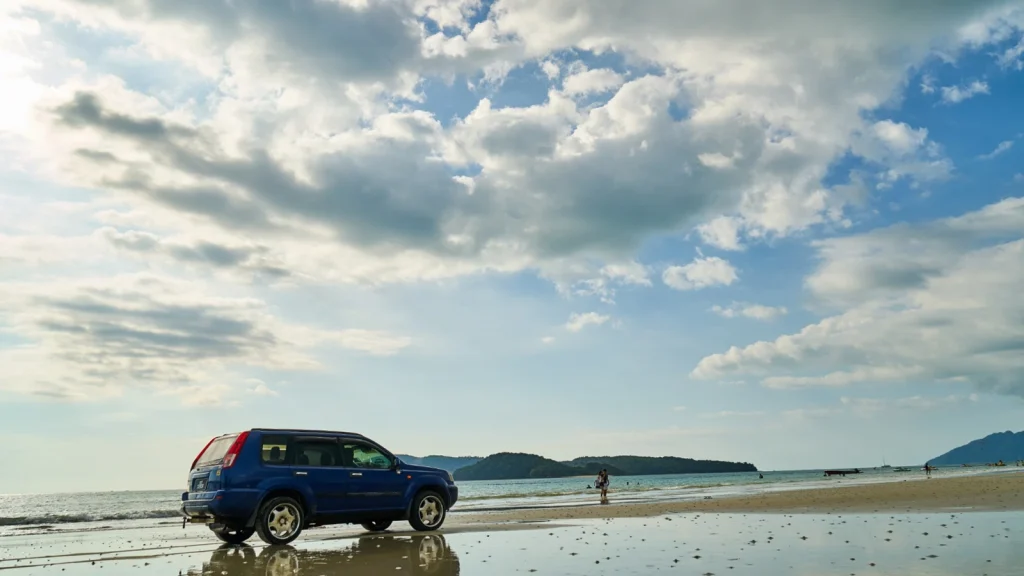
Beaches offer soft colors, open space, and limited background clutter, making them suitable for convertibles, luxury cars, and lifestyle shoots. Wet sand can create attractive reflections, but pale ground and bright sky can increase dynamic range, so watch highlights carefully.
Real-world location inspiration:
- Gold Coast, Australia: Long beaches and bright coastal surroundings.
- California coast, USA: Open sand, ocean horizons, and sunset light.
- Algarve, Portugal: Cliffs, beaches, and warm coastal scenery.
10. Desert Roads and Open Landscapes
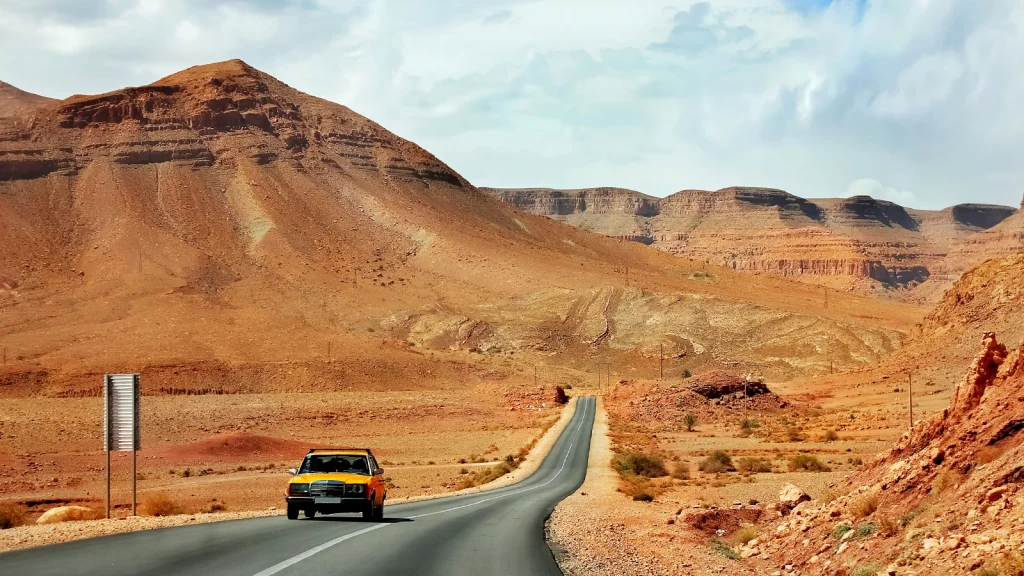
Desert settings remove clutter and let the shape of the vehicle dominate. Warm earth tones also separate nicely from black, white, blue, and metallic cars. Golden-hour side light is particularly useful because it reveals body contours without harsh overhead reflections.
Real-world location inspiration:
- Mojave Desert, California, USA: Sparse terrain and open desert roads.
- South Australian outback: Long roads and minimal landscapes.
- Almería, Spain: Dry terrain with a cinematic, high-contrast character.
11. Forest Roads
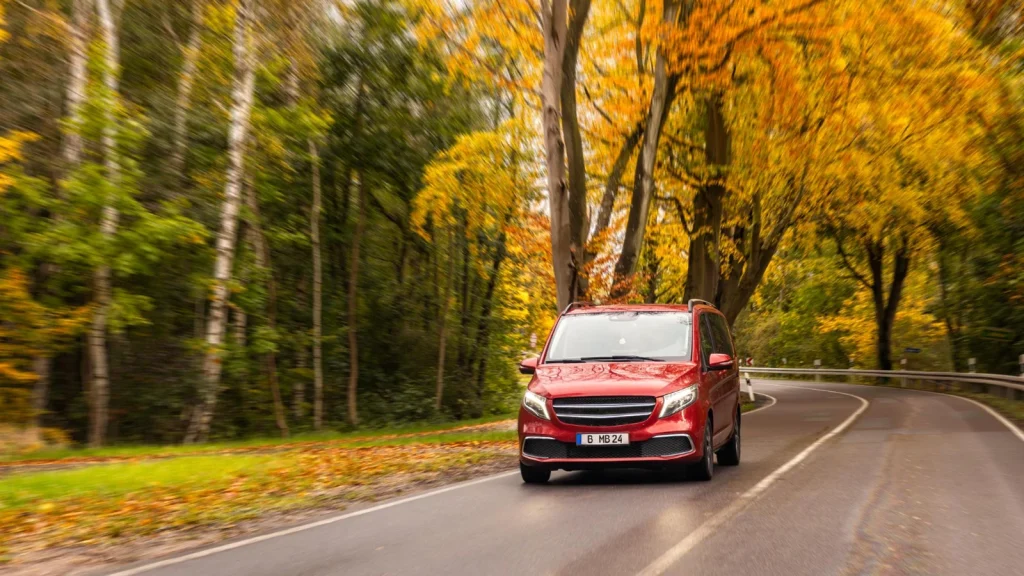
Forest roads add natural texture and depth, but patchy sunlight can create distracting bright areas across the hood and windshield. Overcast conditions are easier to control. With darker vehicles, position the car against lighter gaps in the trees to maintain separation.
Real-world location inspiration:
- Black Forest, Germany: Dense woodland and winding road environments.
- Pacific Northwest, USA: Evergreen forests and moody natural backgrounds.
- Victoria High Country, Australia: Forest roads mixed with elevated scenery.
12. Lakes, Marinas, and Waterfronts
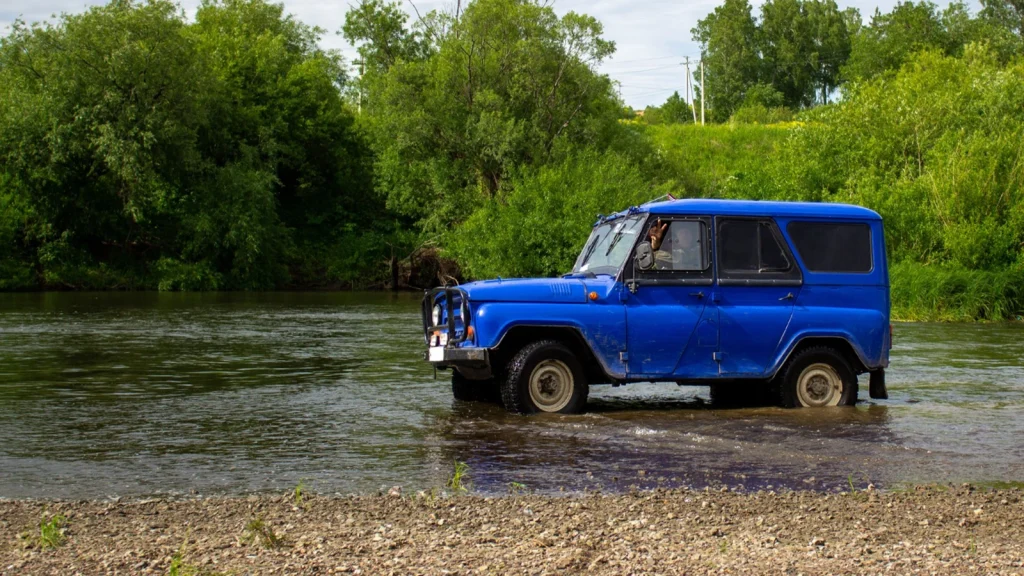
Waterfronts suit luxury cars, classics, and convertibles because they combine open horizons with a refined lifestyle feel. Water can bounce strong highlights into glass and chrome, so watch your exposure and reposition the vehicle if reflections begin overpowering the body lines.
Real-world location inspiration:
- Lake Como, Italy: Lakeside roads, mountains, and historic surroundings.
- Sydney Harbour areas, Australia: Water, skyline, and contemporary architecture.
- Lake Tahoe, USA: Mountain scenery paired with open lakeside backgrounds.
13. Open Country Roads
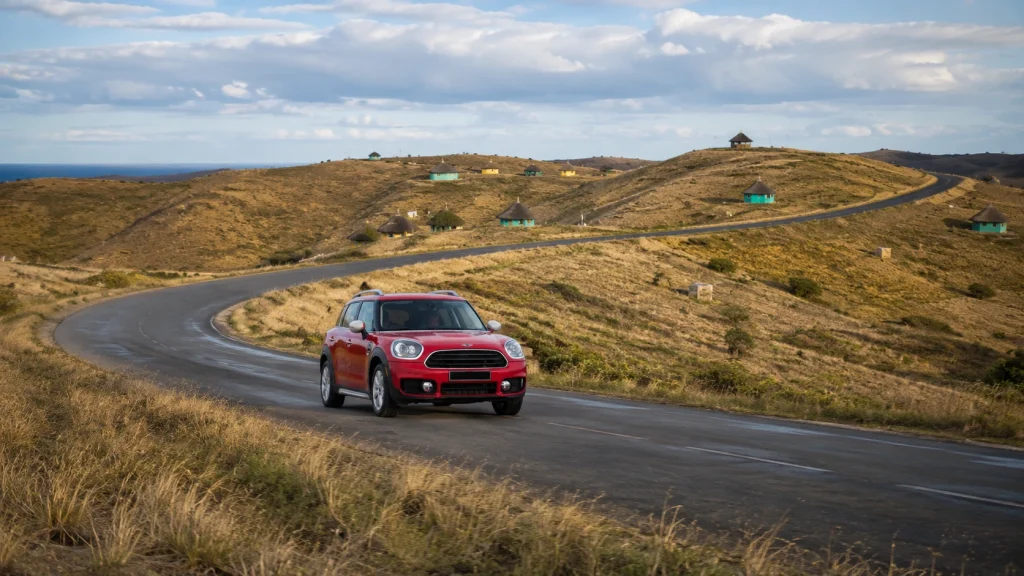
Country roads give you long sightlines, clean leading lines, and fewer background distractions than most cities. They suit sports cars, classics, pickups, and grand tourers. Use safe pull-offs or controlled areas rather than turning an active traffic lane into a shooting position.
Real-world location inspiration:
- Tuscany, Italy: Rolling countryside and long rural roads.
- Regional Victoria, Australia: Open farmland and natural horizons.
- American Midwest, USA: Straight roads surrounded by broad landscapes.
Best Industrial, Retro, and Character-Filled Locations
Industrial and retro locations add texture, age, and personality that cleaner settings cannot provide. However, many warehouses, service stations, workshops, and loading areas remain active private properties, so permission should be part of the planning process.
14. Industrial Warehouses
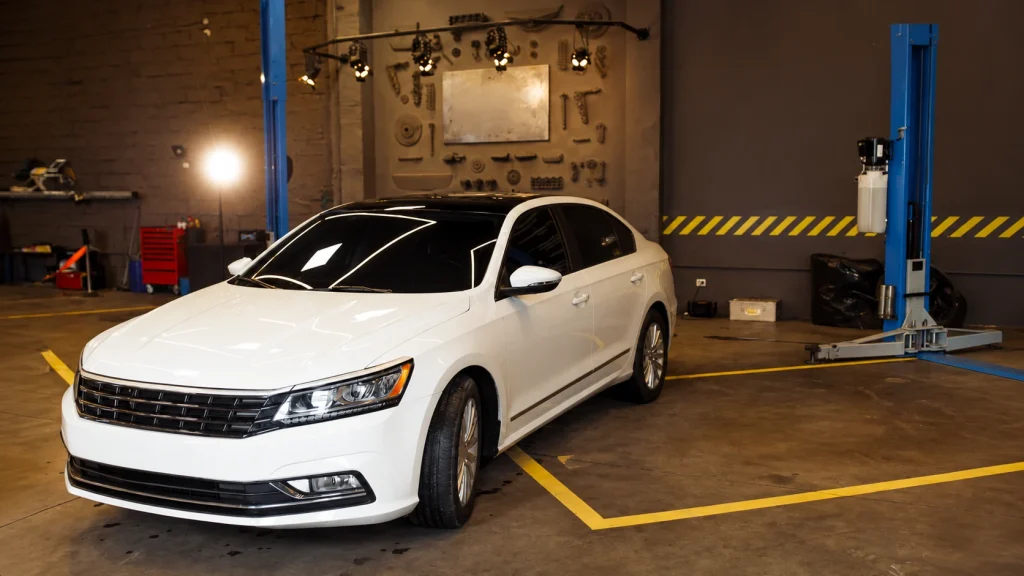
Warehouses give you concrete, metal, loading doors, and large surfaces that contrast nicely with polished paint. They suit muscle cars, modified vehicles, and pickups. Overcast light is useful because it keeps steel, windows, and glossy panels from producing uncontrolled specular highlights.
Real-world location inspiration:
- Los Angeles Arts District, USA: Warehouse-style streets and industrial architecture.
- Port Melbourne, Australia: Commercial buildings and broad industrial surroundings.
- Hamburg, Germany: Brick warehouse districts with strong texture.
15. Old Brick Buildings
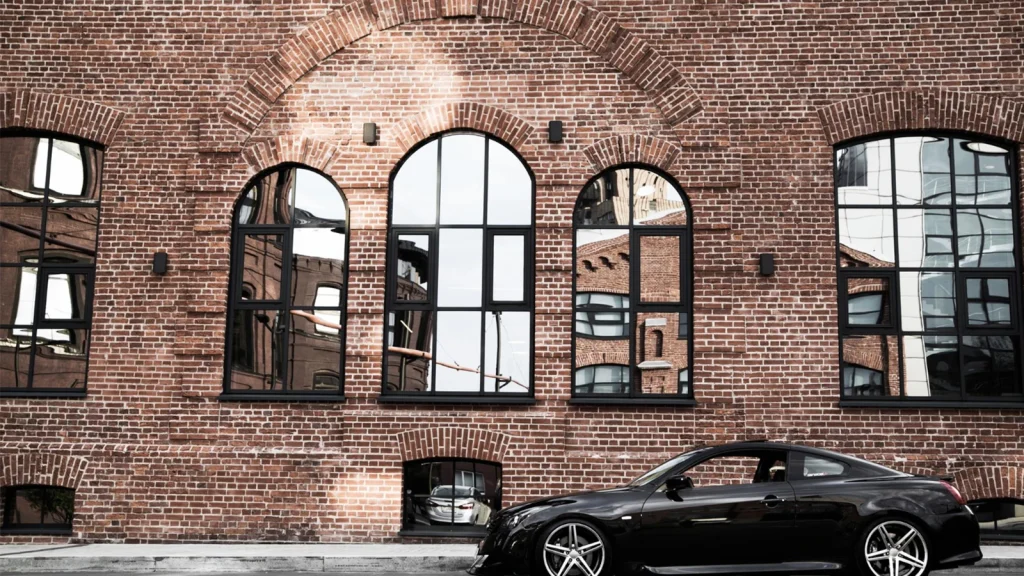
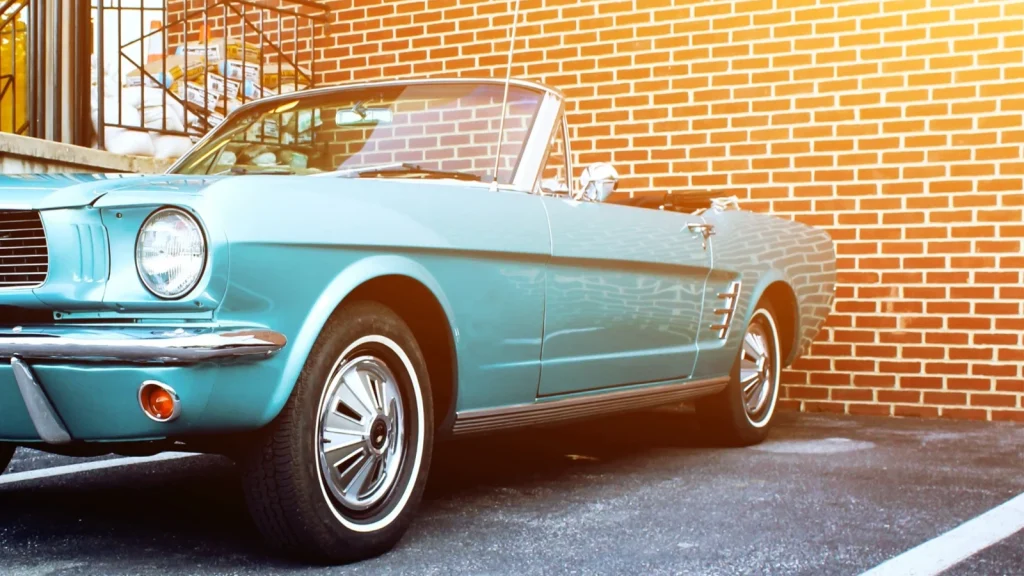
Brick adds warmth and texture without becoming as visually aggressive as graffiti. It works particularly well with classics, muscle cars, and darker paint. Keep some distance between the vehicle and wall so the brick texture supports the car rather than becoming a distracting pattern.
Real-world location inspiration:
- Brooklyn, New York, USA: Brick warehouse streets and older industrial architecture.
- Fitzroy and Collingwood, Melbourne, Australia: Character-filled brick buildings.
- Manchester, UK: Historic industrial architecture and textured streetscapes.
16. Vintage Gas Stations
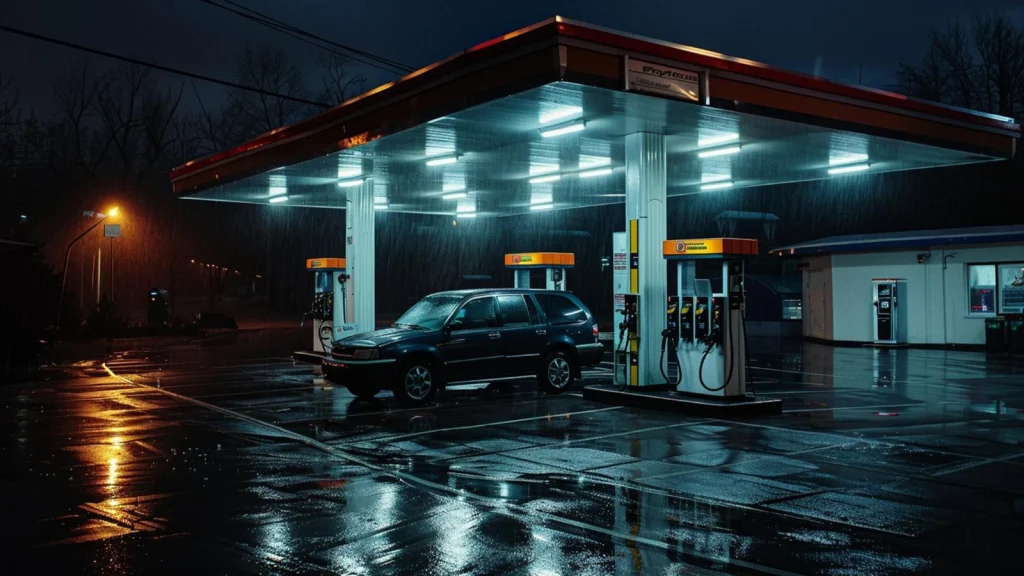
Vintage gas stations already tell a story through old pumps, signs, canopy lines, and roadside architecture. They are strongest with classic and muscle cars. Keep modern branding, unrelated vehicles, and clutter outside the composition so the retro atmosphere remains believable.
Real-world location inspiration:
- Route 66 towns, USA: Vintage service-station architecture and Americana.
- Regional Australia: Older roadside fuel stations and country settings.
- Rural European towns: Historic roadside architecture suited to classic vehicles.
17. Diners and Drive-Ins
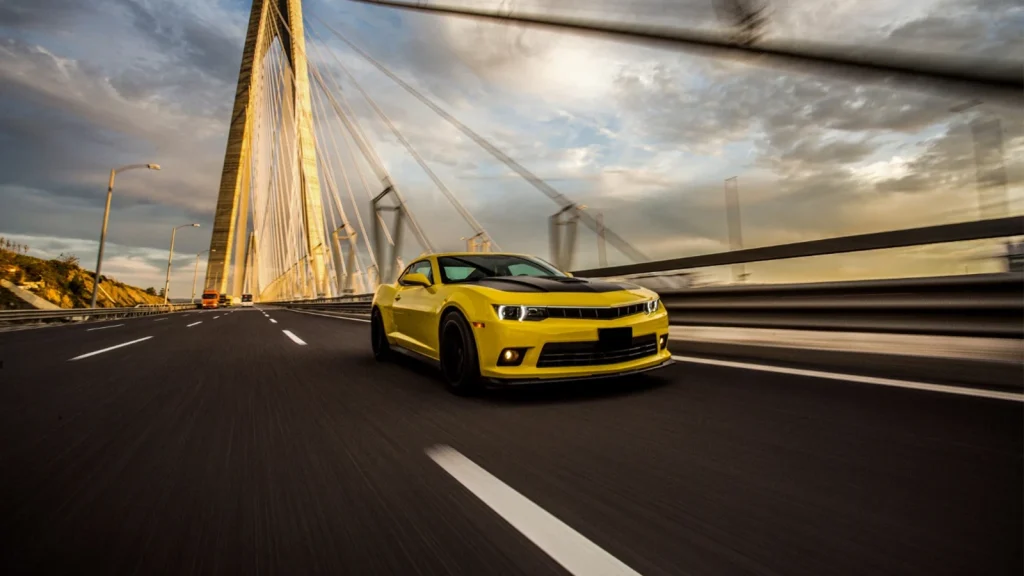
Diners and drive-ins give automotive images a strong lifestyle or retro feel. They work best when the car’s styling connects with the location. Use signs, windows, and parking markings as framing elements, but avoid letting bright branding dominate the vehicle.
Real-world location inspiration:
- Route 66, USA: Classic diners and roadside Americana.
- Retro roadside venues, Australia: Old-school signage and parking environments.
- American-style diners in Europe: Useful for deliberate retro-themed shoots.
18. Car Washes
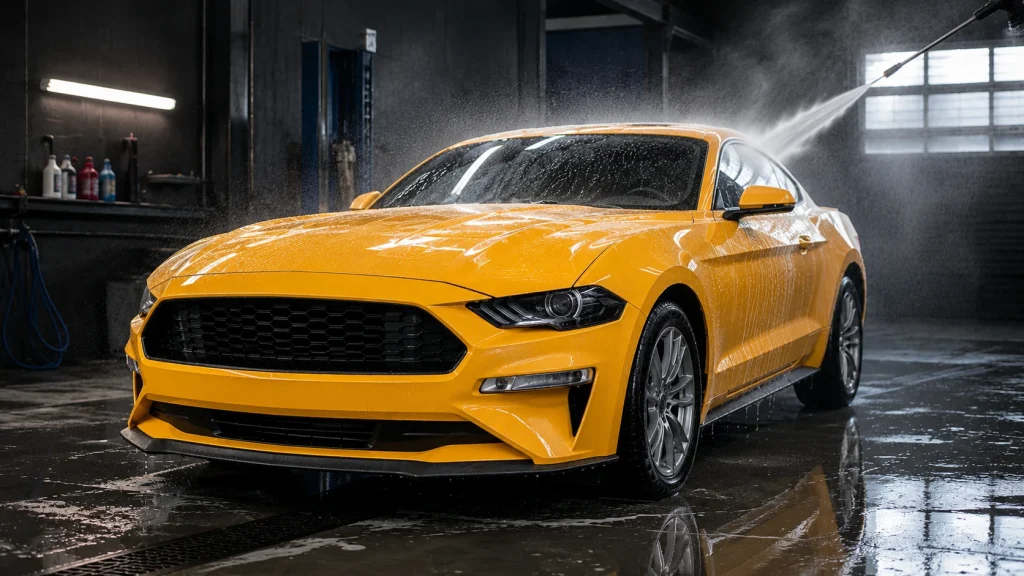
Car washes can create interesting frames through wet surfaces, colored lighting, reflective floors, and repeating structures. They suit modern and modified cars especially well. Protect highlights carefully because water, chrome, and LEDs can produce several very bright reflections in one exposure.
Real-world location inspiration:
- Los Angeles, USA: Self-service wash bays with urban surroundings.
- Melbourne, Australia: Modern car washes with colored artificial light.
- Germany: Clean, geometric wash bays suited to contemporary vehicles.
19. Historic Architecture
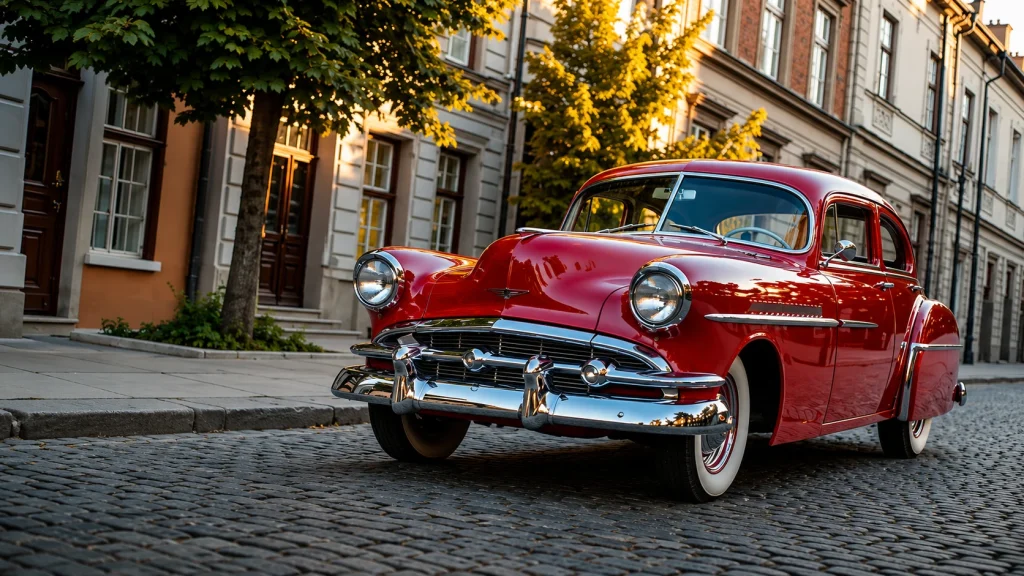
Historic architecture adds context through stone, brick, arches, and period details. Classics fit naturally, while luxury or modern cars can create intentional contrast. Longer focal lengths are useful for simplifying architectural detail and keeping the car as the dominant element.
Real-world location inspiration:
- Savannah, Georgia, USA: Historic streets and period architecture.
- The Rocks, Sydney, Australia: Stone buildings and older city textures.
- Italian and French historic towns: Traditional European streets and architecture.
20. Abandoned-Looking Locations Without Trespassing
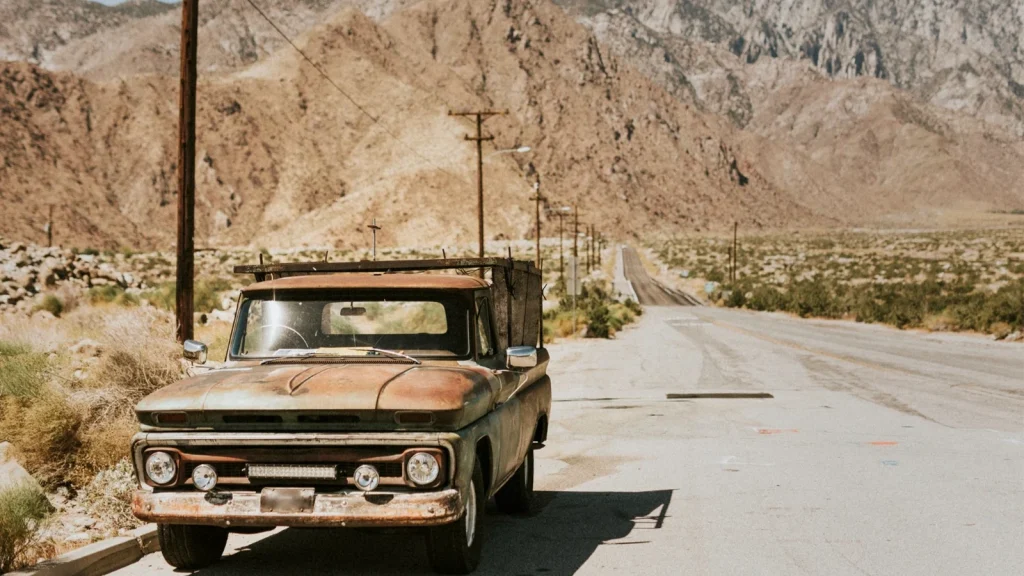
Weathered walls, empty lots, and disused industrial exteriors can create a gritty atmosphere without entering unsafe or restricted property. Shoot only from legal access. Use texture selectively, because excessive decay in the background can easily become stronger than the vehicle itself.
Real-world location inspiration:
- Public-facing industrial areas in Detroit, USA
- Older industrial outskirts around Melbourne, Australia
- Former factory districts in parts of Eastern Europe
Best Night Car Photography Locations
At night, available lighting becomes part of the composition. Neon signs, garage fixtures, storefronts, and skyline lights can shape the paint, but mixed colors, dark surroundings, traffic, and unsafe stopping areas require more careful planning.
21. Neon-Lit Streets
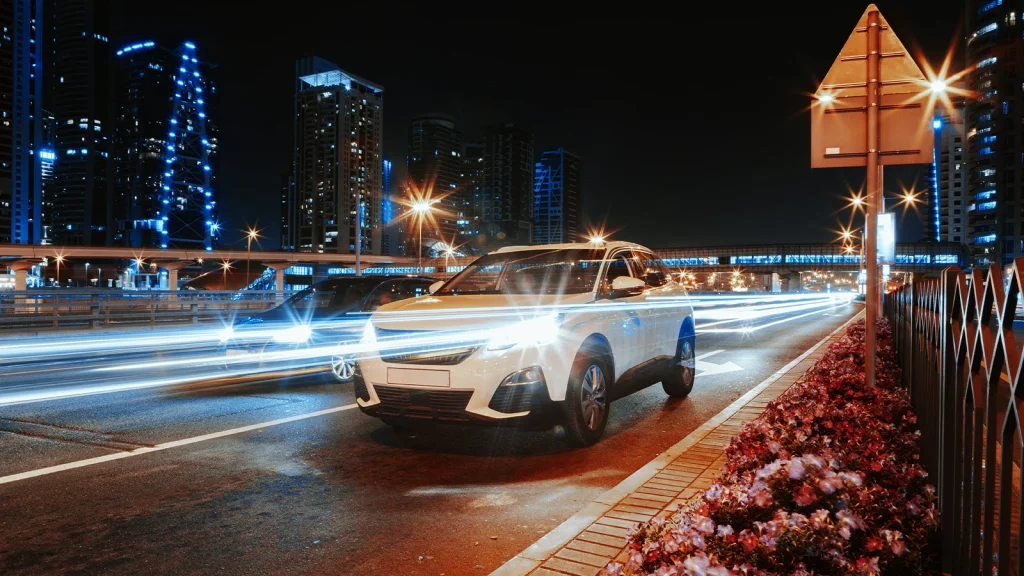
Neon and LED signs become part of the car’s surface at night, creating colored reflections across doors, windows, and body curves. Move the car slightly before changing exposure because even a small angle adjustment can completely change where those reflections appear.
Real-world location inspiration:
- Downtown Los Angeles, USA: Mixed signs, LEDs, and urban night light.
- Melbourne CBD, Australia: Modern lighting and active city backgrounds.
- Soho, London, UK: Shopfront light and dense nighttime atmosphere.
22. Parking Garages at Night
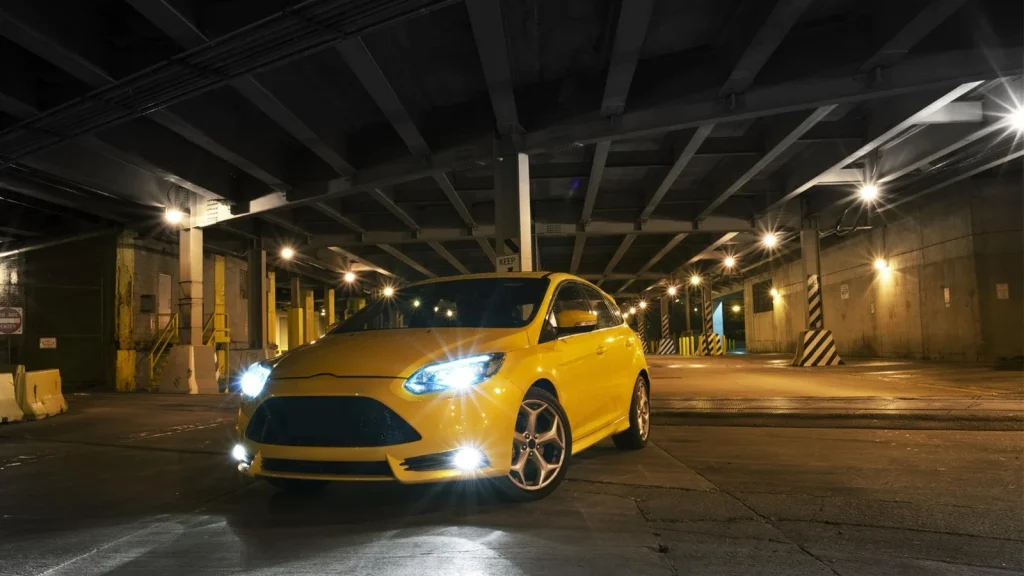
At night, parking garages become more dramatic because overhead fixtures create repeating pools of light and deeper shadows. Position the vehicle where light brushes the side panels rather than falling directly from above, which helps reveal shape without overexposing the roof.
Real-world location inspiration:
- Los Angeles parking structures, USA
- Melbourne CBD garages, Australia
- Berlin city garages, Germany
23. Gas Stations at Night
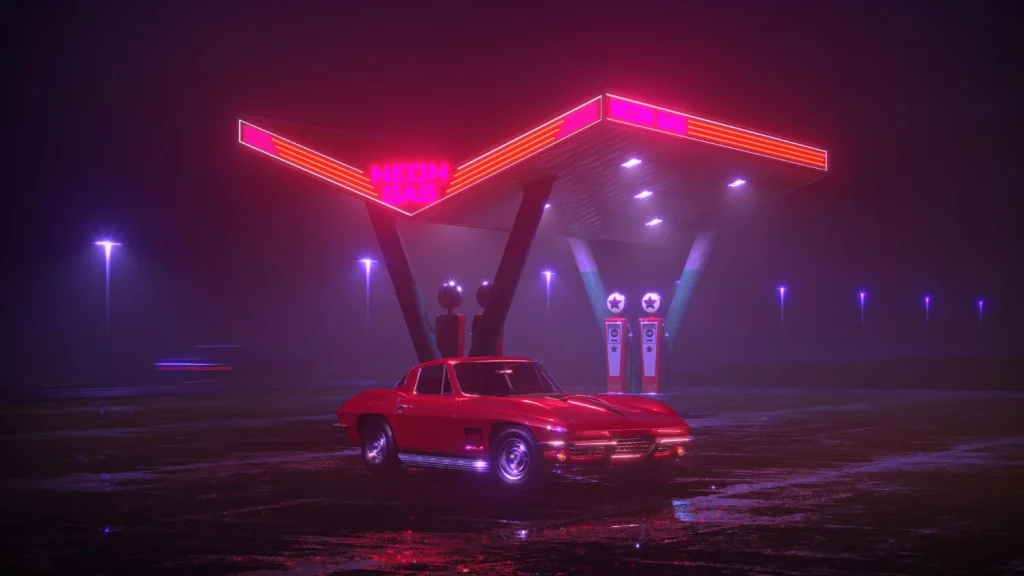
Gas stations provide bright canopy lighting, colored branding, and reflective pavement in one location. They suit sports, tuners, and modern cars especially well. Expose for the highlights first, then let the darker surroundings create separation around the vehicle.
Real-world location inspiration:
- Urban Los Angeles gas stations, USA
- Melbourne service stations, Australia
- European motorway service areas
24. City Skylines at Night
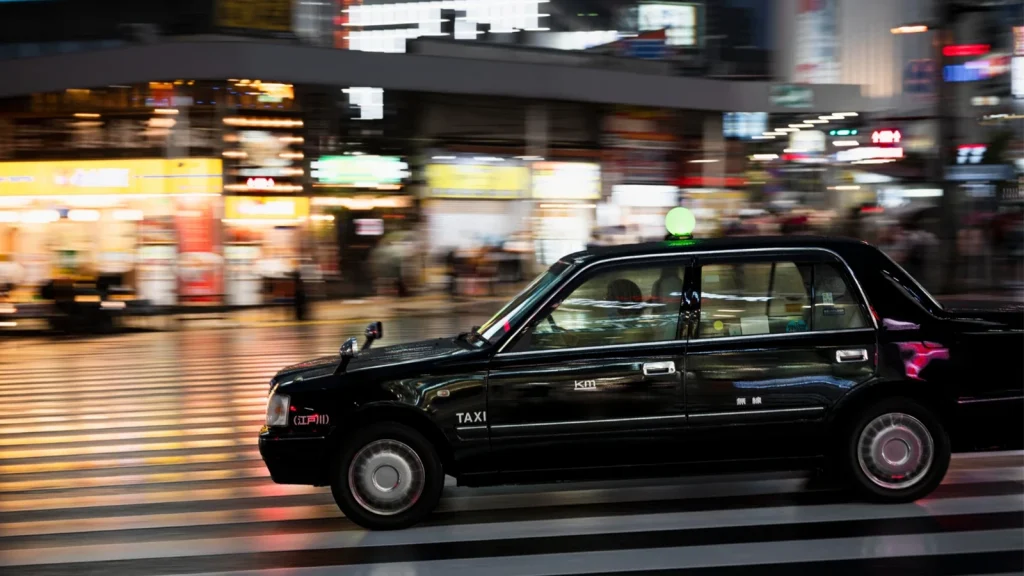
A night skyline works best when the car sits far enough from the city lights to maintain separation. Longer focal lengths can make distant buildings appear larger behind the vehicle, while blue hour often provides a cleaner balance between architecture and visible paint detail.
Real-world location inspiration:
- Los Angeles skyline viewpoints, USA
- Sydney skyline areas, Australia
- London skyline viewpoints, UK
25. Tunnels
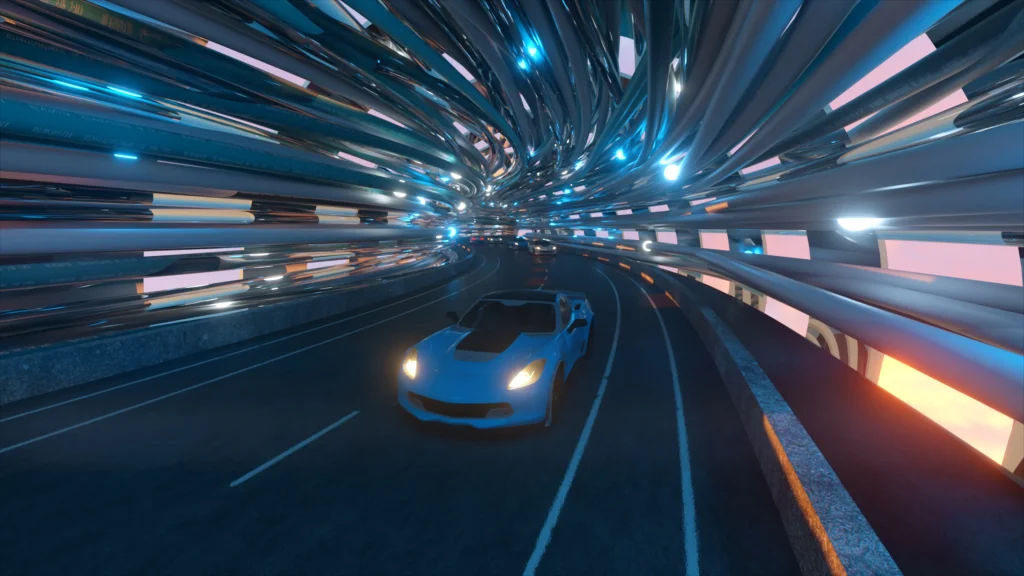
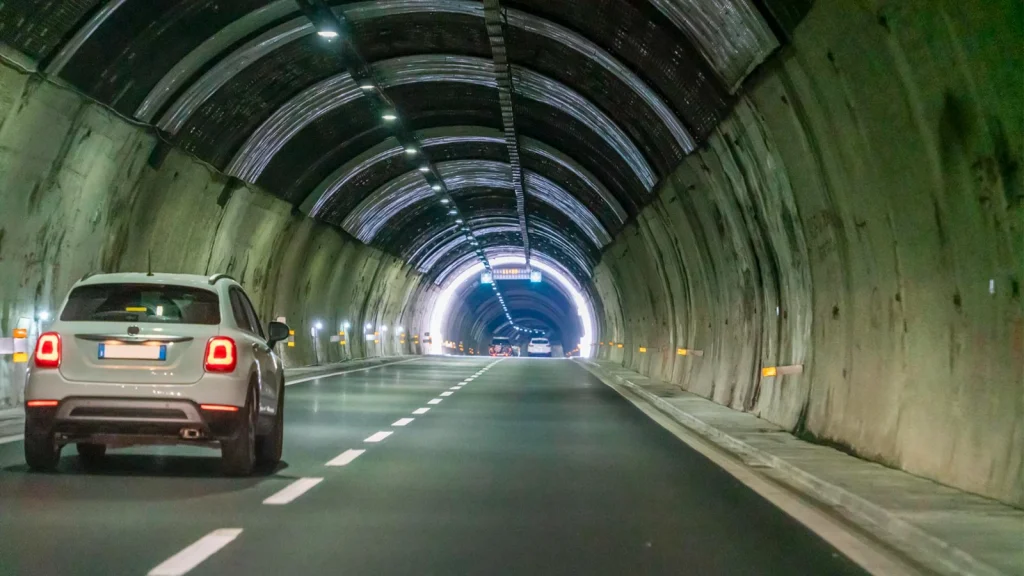
Tunnels create symmetry, vanishing points, and repeating lights that naturally pull attention toward the car. They can also produce mixed color temperatures and strong reflections, so position the vehicle carefully and avoid active traffic tunnels unless access is properly controlled.
Real-world location inspiration:
- Controlled tunnel environments in Los Angeles, USA
- Melbourne road and pedestrian tunnel areas, Australia
- Urban tunnel settings across Europe
26. Light-Painted Open Locations
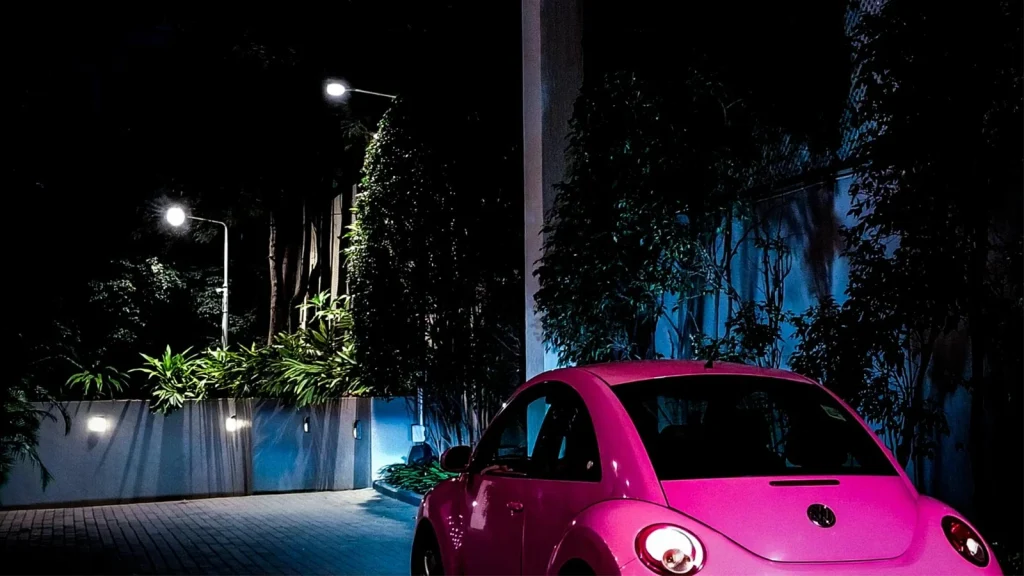
A dark open location gives you more control over light painting because there are fewer uncontrolled reflections and background lights. Lock the camera on a tripod, keep the car still, and build highlights gradually so your light follows the body shape instead of flattening it.
Real-world location inspiration:
- Open desert pull-offs in the USA
- Remote paved locations in Australia
- Private lots and controlled open spaces across Europe
For detailed exposure, equipment, and after-dark shooting techniques, check out our guide on night time car photography.
Which Location Is Best for Your Type of Car?
Every vehicle communicates a different personality, and the right location makes that character immediately recognizable through the final photograph.
Use this comparison to match your car with a setting that supports its design, purpose, and intended visual story.
| Car type | Best location style | Why it works |
|---|---|---|
| Sports car | Mountain road or racetrack | Creates a natural sense of speed, handling, and movement |
| Supercar | Modern architecture or controlled studio | Reinforces precision, exclusivity, and sculpted design |
| Luxury car | Downtown street or marina | Supports a polished, refined, and premium atmosphere |
| Classic car | Vintage gas station or historic district | Connects the vehicle with its era and heritage |
| Muscle car | Warehouse district or underpass | Complements its power, weight, and aggressive styling |
| Modified or tuner car | Graffiti wall, parking garage, or neon district | Reflects individuality, street culture, and customization |
| SUV or 4×4 | Mountain, forest, or desert landscape | Communicates capability, exploration, and off-road character |
| Pickup truck | Industrial district or open country road | Reinforces utility, strength, and ruggedness |
| Electric vehicle | Minimal architecture or rooftop garage | Supports clean design, technology, and modern positioning |
| Everyday car | Country road, waterfront, or downtown street | Creates a relatable and natural lifestyle story |
Whether you are planning sports car photography, luxury car photography, a classic car photoshoot, or modern EV photography, the setting should strengthen what already makes the vehicle distinctive. See our complete automotive photography guide before planning your shoot.
How to Match the Location With the Car’s Color
A location may suit the vehicle’s style but still fail if its colors blend into the paint. Effective car color photography depends on tonal separation, controlled reflections, and enough contrast to keep the body shape visible.
Adobe strongly recommends considering the vehicle’s color alongside the terrain, background, and available light. A contrasting background is usually the safest choice, while complementary colors can create a more expressive look when they do not compete with the car.
| Car color | Recommended background | Watch for |
|---|---|---|
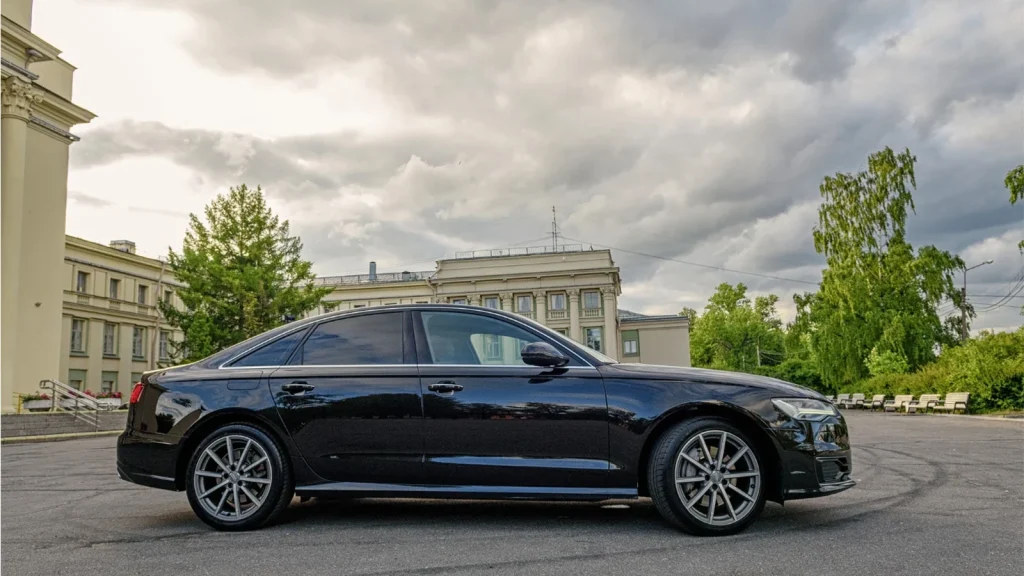
| Black | Light concrete, pale architecture, or an open landscape | Dark reflections hiding the body lines |
| White | Dark architecture, greenery, or a blue-hour city | Clipped highlights and strong environmental color casts |
| Red | Neutral gray, muted industrial areas, or dark streets | Warm backgrounds competing with the paint |
| Blue | Brick, desert tones, or a warm sunset | Weak separation from the sky, water, or cool architecture |
| Silver or gray | Dark architecture, greenery, or a colorful urban setting | Flat tonal separation and lifeless reflections |
| Bright or custom paint | Simple concrete, black walls, or another neutral background | Too many colors competing for attention |
How to Choose the Best Car Photography Location
Let’s choose the best car photography location by checking a few things that actually matter during a shoot: how well the setting fits the car, whether the light works, how clean the reflections are, and whether you can position the vehicle safely without fighting traffic or crowds.
A quick way to remember these checks is the CAR SPOT framework:
- C — Car fit: Does the setting support the vehicle’s design, purpose, and visual story?
- A — Access: Can the car enter, park, turn, and leave without blocking other vehicles?
- R — Reflections and background: Will glass, signs, buildings, or bright objects create messy automotive paint reflections?
- S — Sun and light: Will the lighting direction reveal the car’s shape at the planned shooting time?
- P — Permission: Who owns or controls the location, and does the photoshoot require approval?
- O — Obstructions and crowds: Could parked cars, pedestrians, bins, barriers, or other clutter enter the frame?
- T — Traffic and safety: Can the vehicle, photographer, and crew work without entering an active traffic lane?
Always Prepare a Backup Location
Even careful photoshoot planning cannot prevent sudden crowds, weather changes, security restrictions, or inaccessible parking. Include one nearby alternative in your location scouting checklist, preferably with a similar background style and suitable light at the same time of day.
Save the CAR SPOT checklist before your next automotive photoshoot.
How to Find Car Photography Locations Near You
Can’t find good car photography locations near you? Start by scouting online before driving around randomly. The goal is to narrow down a few promising spots, check whether the car can actually reach them, and then visit the strongest option before the shoot.
- Search by location type in Google Maps: Try phrases such as “rooftop parking garage,” “industrial district,” “scenic overlook,” “marina,” or “historic downtown” instead of searching only for car photography locations.
- Inspect access with Street View: Check entrances, road width, parking spaces, barriers, surrounding buildings, and whether the car can enter and turn safely.
- Explore terrain with Google Earth: Satellite and 3D views can reveal mountain pull-offs, coastal roads, open landscapes, elevation changes, and possible background directions that are difficult to judge from street level.
- Check Instagram and photography geotags: Instagram, photography pages, and local car communities can show how a location actually looks through a camera. Just remember that access conditions may have changed.
- Ask automotive communities: Local car clubs, photographer networks, and Facebook Groups often know quieter locations, suitable meeting points, and places where vehicle access has changed.
- Build a saved location map: Use Google Maps saved places to group candidates by urban, natural, industrial, or night photography. Add notes about access, parking, ownership, and the best vehicle type.
- Visit the final location in person. Visit around the same time you plan to shoot. Check traffic, crowds, sun direction, reflections, and parking, then keep one nearby backup spot ready in case the location does not work on the day.
Are you looking for more ways to plan the setting, angles, and composition? Read our car photography tips before your next shoot.
What Is the Best Time for Car Photography?
The best time for car photography depends on the location, weather, traffic, and look you want to create. Golden hour adds shape to the bodywork, blue hour balances the car with city lights, and overcast conditions soften harsh reflections. Sunrise is also useful when you need quieter roads and fewer people.
| Setting | Strong starting point | Why it works |
|---|---|---|
| Mountain road | Sunrise | Quieter roads and low-angle light |
| Beach or coast | Sunrise or sunset | Direction depends on where the coastline faces |
| Downtown street | Sunrise or blue hour | Less traffic or a balance of city lights and body detail |
| Industrial district | Overcast or late afternoon | Softer reflections and visible background texture |
| Desert landscape | Golden hour | Warm light reveals the car’s shape |
| Neon-lit city | Blue hour into night | Signs remain bright while the car stays visible |
| Automotive studio | Any time | Lighting can be controlled independently |
Check the sun’s direction before confirming the location, not just its rise and set times. A low sun behind the camera can light the car evenly, while side light adds shape. Also check the weather, since cloud cover can completely change the light and reflections you planned for.
Permissions, Safety, and Location Etiquette
A location being open to the public does not always mean every type of photoshoot is allowed there. Rules may change when you use tripods, lighting equipment, several crew members, reserved parking, drones, or the images for commercial purposes. Confirm the requirements before the shoot.
| Location or setup | What to confirm |
|---|---|
| Public property | Parking limits, photography rules, tripods, equipment, and temporary closures |
| Private property | Owner approval, access hours, parking, and whether a location release is needed |
| Commercial or crew-based shoot | Permit, insurance, lighting, drone, and traffic-control requirements |
Requirements vary between countries, cities, parks, and individual properties. Check with the relevant property owner, park authority, municipality, or local permit office. Keep written approval with you when permission has been granted, especially when working with clients, crew members, or extensive equipment.
Never block traffic, trespass, cross barriers, damage vegetation, or perform burnouts without approval and proper safety control. Avoid disturbing residents, businesses, and other visitors. When the shoot ends, remove all equipment and leave the location in the same condition in which you found it.
Car Photography Location Scouting Checklist
Use this car photoshoot checklist to keep automotive photography planning organized and avoid preventable location problems.
Before Leaving Home
- Address or GPS saved in Google Maps
- Backup location selected
- Weather and sunrise or sunset direction checked
- Property ownership and permission confirmed
- Lens, filter, or CPL selected
- Reference compositions saved
When You Reach the Location
- Parking and vehicle access confirmed
- Traffic and crowd levels assessed
- Operating restrictions checked
Before Positioning the Car
- Background and reflections inspected
- Ground and vehicle clearance checked
- Safe exit or emergency route identified
Before Taking the First Shot
- Car cleaned and detailing supplies ready
- Gear, safety equipment, and shot list checked
Save or print this location scouting checklist before your next car photoshoot.
Frequently Asked Questions
Where is the best place to photograph a car?
The best place complements the vehicle, provides useful light, offers enough working distance, and allows safe access. Modern architecture suits luxury cars and EVs, industrial settings suit tuners, while natural landscapes work well with SUVs.
What background makes a car look best?
Choose a clean background that contrasts with the paint and supports the car’s character. Avoid poles, signs, parked vehicles, and bright objects intersecting the body. The background should add context without stealing attention from the car.
Are parking garages good for car photography?
Rooftop garages provide open light and skyline views, while underground levels create symmetry and a cinematic mood. Check operating hours, security, clearance, traffic, tripod restrictions, and commercial photography permission before positioning the vehicle.
Do I need permission to photograph a car?
Permission may be required on private property or where local rules regulate commercial photography, equipment, parking, or crew activity. Contact the property owner or responsible authority whenever access is unclear, and keep written approval available.
What location is best for a black car?
A black car usually photographs best against light concrete, pale architecture, or an open landscape. Brighter surroundings provide tonal separation and clean reflections that reveal the hood, doors, fenders, and roofline instead of hiding them.
Can I take car photos on the side of the road?
Only use a legal stopping area with enough room for the car, photographer, and equipment. Never stand in an active lane, block traffic, or park near a blind bend. Choose another location if the setup creates danger.
Final Thoughts
The best car photography location is not always the most dramatic one. It is the place where the car stands out clearly, the light works with the body lines, reflections stay manageable, and you have enough space to shoot safely from different angles.
Use the ideas above as inspiration, then match the setting to the vehicle’s style, color, and purpose. Once the location and composition are right, post-production should only refine the final image.