Car photography pricing usually ranges from $80 for a beginner shoot to $5,000+ for professional commercial projects. But the right rate depends on your experience, portfolio, editing time, travel, equipment, client type, and image usage rights. A fair quote should follow real photography cost-of-business guidance, not just the time you spend behind the camera.
If you are wondering how much to charge for car photography, start by matching your price with the shoot’s purpose. Private owners, dealerships, auction sellers, car brands, and editorial clients all need different levels of work. You should also consider U.S. photographer wage benchmarks, image licensing, travel costs, and vehicle photo requirements before setting your final automotive photography pricing.
Want to charge more for your car photography? Start with cleaner, sharper, and more polished final images. If editing takes too much of your time, you can outsource your post-processing to a professional automotive photo editing team and focus more on shooting, clients, and higher-value projects.
How Much Should I Charge For Car Photography?
From my pricing perspective, car photography should never be priced only by the time spent taking photos. A proper quote should also include planning, travel, location preparation, shooting time, editing, revisions, equipment use, file delivery, and licensing. This is why I recommend building your rate around real photography cost-of-business guidance, then checking it against U.S. photographer wage benchmarks and copyright guidance for photographers when usage rights are involved.
Your location also matters. A car photographer in a small town may not charge the same as someone working in Los Angeles, Miami, New York, Dubai, London, or another high-budget automotive market. Cities with luxury dealerships, exotic car owners, rental fleets, auction sellers, and advertising agencies usually support higher automotive photography pricing.
Here is a practical level-based and geo-based pricing guide:
| Photographer Level | Small Town / Low-Cost Area | Mid-Size City | Major Metro / Luxury Market |
|---|---|---|---|
| Beginner | $80–$200 per shoot | $150–$300 per shoot | $200–$500 per shoot |
| Intermediate | $300–$600 per shoot | $400–$800 per shoot | $700–$1,500 per shoot |
| Professional | $800–$2,000 per project | $1,200–$3,500 per project | $2,500–$5,000+ per day or project |
| Commercial | $1,500–$4,000+ | $3,000–$8,000+ | $5,000–$20,000+ |
These ranges are not fixed rules. They are practical starting points. If you are shooting a private owner’s car for a sale listing, a per-car package usually works best. If you are working with a dealership, you can offer per-car pricing, half-day rates, full-day rates, or monthly retainers. For commercial clients, the quote should be more detailed and should separate the creative fee, production cost, editing cost, and licensing fee.
You should also adjust your price when the shoot includes extra work. Drone photography, for example, may require legal and safety considerations under FAA commercial drone operation rules. Travel should also be included in your quote, especially when fuel, parking, tolls, mileage, or long driving time are involved.
So, the best way to price car photography is simple: start with your experience level, adjust for your local market, add your real business costs, and then price higher when the client needs commercial usage, faster delivery, advanced editing, or more production support.
Your price becomes easier to justify when your final photos look consistent, clean, and client-ready. From reflection cleanup to color correction and background enhancement, professional car photo editing can help you deliver stronger work without spending hours behind the screen.
Factors That Influence Your Quotes
Estimating pricing to shoot products isn’t just random numbers you guess. Take factors like experience and portfolio, equipment, post-processing and editing, licensing, project complexity, and turnaround into account. Pricing connects technical execution and business sustainability. So it should be an amount that covers expenses with profit.

Experience
Your total time spent working in the automotive shooting determines your skill and service quality. Years of experience allow you to anticipate issues before they happen, understand perspective, and ensure a smooth shoot. This deep operational knowledge justifies a premium rate.
Expertise
This represents your highly specialized technical skills, for example, advanced light painting, rolling tracking shots, or precision rig work. Clients are willing to pay a significant premium for this unique artistic capability.
Portfolio Quality
Your portfolio acts as a silent salesperson for your pricing tiers. A well-decorated showcase of vehicles proves your capability to deliver high-quality images. Clients willingly invest more when they can see consistent, high-end creative work.
Equipment and Production Value
Premium gear allows you to charge more because it unlocks specific capabilities. Specialized tools like high-resolution cameras, drones, and polarizers reduce glare and deliver large, sharp files that cheap gear cannot produce.
Post-Processing and Editing Time
Advanced editing requires intense computer work. It increases your overall quote. Removing reflections, color-grading paint, and combining multiple exposures takes hours at a desk. So the final price must cover this unseen labor.
Licensing and Usage Rights
Your price changes based on how and where the images will be used. Commercial campaigns reaching millions of people hold higher business value, demanding higher fees than private sales. Some photographers charge for raw photos; they charge a high premium buyout fee to cover the loss of your intellectual property rights.
Project Complexity and Volume
High-risk environments, moving cars, and multi-vehicle setups require an intense plan and increased price. Static cars are easy to manage and shoot. Also, the overall volume of the project multiplies the required workflow, logistics, and planning. So, it will increase the total package price.
Turnaround Time and Rush Fees
Demanding a fast delivery requires an extra fee. It forces you to work overtime and delay other clients, which increases the rate. Shortening the standard delivery window to 48 hours requires a premium fee to cover the schedule disruption.
Geographic Location
Your local market demographics impact the photography services and prices. Major metropolitan hubs with high concentrations of luxury dealerships, supercar collectors, and ad agencies support much higher pricing than smaller, rural markets.
Car Value and Rarity
The monetary worth of the vehicle itself increases the price as well. Shooting a million-dollar vintage restoration or a rare hypercar requires specialized handling and elevated insurance coverage. So you may need to adjust the regular price.
Client Type
Your billing structure changes whether your client is a private enthusiast or a corporate entity. Commercial brands, advertising agencies, and corporate businesses operate on larger marketing budgets. Considering their requirement, charges are higher compared to individual car owners.
Travel, Permits, and Logistics
Driving, flying, or booking venues requires time and money. Smart photographers charge for local mileage or require upfront billing for flights and hotels, while also passing the cost of mandatory location permits and liability insurance directly to the client. Not calculating these external logistical expenses will cost you out of your pocket just to do the job.
Weather Contingency and Rescheduling Risks
Automotive photography relies heavily on ideal lighting and clean vehicle surfaces. Bad weather can easily force a last-minute cancellation, leaving you with empty calendar slots and dirty cars. Including a dedicated weather rescheduling fee or a non-refundable deposit ensures you get paid for your reserved time when the weather isn’t convenient.
Niche-Specific Pricing Models
Set pricing strategy based on the car niches along with experience. Check the demand on the market, analyze competitors’ websites for service categories and pricing. Know the target audience, how frequently they order, and what their living expense range is. Proceed with genre-wise shooting price. In this way, you won’t have to wait long for the next clients to come.
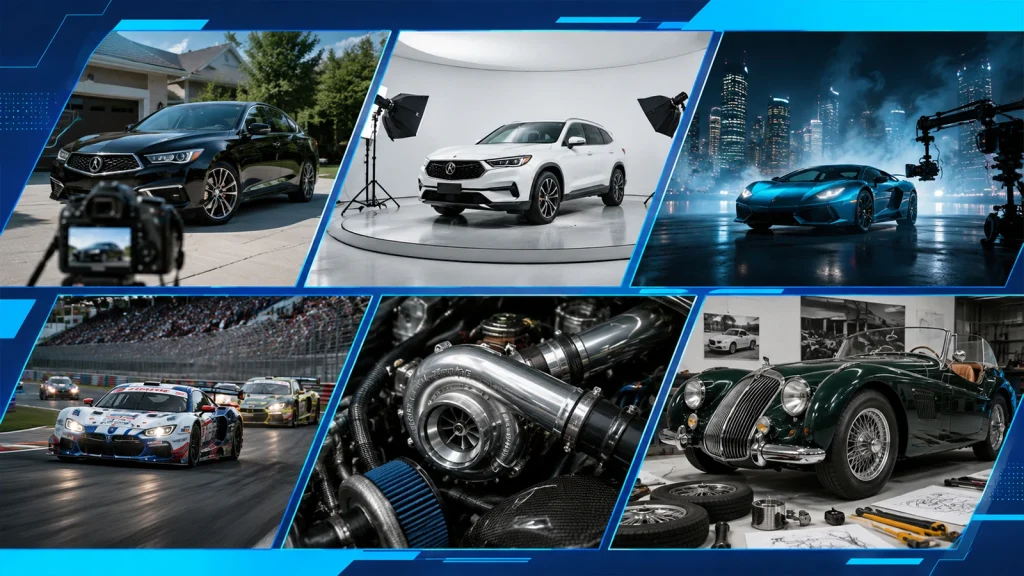
Some common niche-specific cars and their probable pricing structure are as follows.
Private Sales
Private sales shots are quick, clean sessions for individual car owners. They want to sell their vehicles on auction sites. Such photos provide objective, accurate, and comprehensive views showing multi-angles, exterior, interior details, engine bays, undercarriages, any flaws, etc. These types of shots cost $200 to $1000 per vehicle package.
Dealership Inventory Photography
Dealership Inventory Photography is sought after by local car dealers to keep their online vehicle inventory completely updated. These are fast, ultra-consistent shots using uniform framing angles. Dealership photos emphasize bright, neutral background, clear window lines, clean wheel position, window-sticker or tech-dashboard details, etc. Shooting prices start around $50 per vehicle.
Commercial & Editorial
Commercial and editorial photos are premium, high-budget images that car manufacturers, global ad agencies, luxury lifestyle magazines, or prominent public relations campaigns use. These photos have cinematic storytelling, dramatic rig shots, rolling tracking sequences, intricate light painting, etc., to show an aspirational lifestyle. Shooting such photos costs $1,000 to more than $5,000 per day.
Automotive Event & Motorsport Coverage
Event coverage photos are fast-paced shots that capture actions in competitive racing, track days, rallies, etc. Such photos are taken in fast-shutter, it freezes movements and motion blur. Such photos include race cars on asphalt, trackside cornering, pit-lane team interactions, etc. Shooting takes $150 to $300 per hour, or $50 to $150 per driver.
Parts, Modification, & Tuner Shop Branding
Parts, modification, and tuner shop branding are images of aftermarket parts. Its target groups are manufacturers, professional detailing garages, wrap shops, or custom performance builds. Such photos capture macro shots, crisp texture close-ups, precise weld patterns, ceramic coating gloss reflection, carbon fiber weave alignment, step-by-step mechanical transformations, etc. Shooting costs take around $400 to $1,500 per project session.
Classic & Concours Restoration Archiving
Classic and concours restoration archiving captures detailed shots of cars’ historical documentation. These photos include rare vintage vehicles, million-dollar museum pieces, or meticulous frame-off vehicle restorations. You will see accurate colors, historic factory stamps, paint matching, interior trim details, etc. The cost of such images starts around $800 and goes higher than $2,000 for each shooting project.
The “Add-On” Menu: Increasing Your Per-Shoot Value

Increase your per-shoot value, client retention rate, and expand the target audience by offering add-ons. It can be specialized, high-impact add-ons that transform standard images into premium production material. Some common add-ons are rig shots and motion, light painting, drone photography, rush delivery, hidden cost, tiered packages,
- Right Shots & Motion
Suction mounts attach a camera boom to the moving car. Shoot at slow shutter speeds while rolling the vehicle slowly. This keeps the car sharp but blurs the background. It takes a lot of time to set up and requires advanced editing to remove the metal arm. This service requires an extra fee per image.
- Light Painting
You take multiple long exposure photos with an LED light wand in total darkness. Later, you combine these frames to create perfect studio highlights on the car body outdoors. This requires late-night shooting and advanced editing skills. Due to ensuring a premium look, it increases pricing.
- Drone Photography
Drones capture unique overhead views and smooth tracking shots that normal tripods cannot reach. These aerial photos show the full environment around the car. It requires extra pricing to cover expensive gear, drone license costs, and piloting skills.
- Rush Delivery
Dealerships and auction sites lose money every day a vehicle stays unlisted. Fast delivery is highly valuable to these clients. Bumping a project to the front of your editing line disrupts your regular schedule. It also requires a surcharge to the total invoice for quick turnaround.
- Hidden Costs: Expense-Based Pricing
Many beginners lose profit because they forget to charge for daily business expenses. You must include travel mileage, equipment insurance, and location permit fees directly in your base quote. Smart photographers calculate their total business costs first to ensure they make a profit on every single job.
- Tiered Packages
Instead of offering one single price, present clients with clear choices, such as Basic, Enthusiast, and Commercial packages. This strategy naturally guides most clients toward the middle option. It changes their decision from a simple yes or no to choosing the specific package that fits them best.
Conclusion
Ready to make your car photography look more professional and profitable? Send us your automotive photos for expert editing, retouching, reflection cleanup, color correction, and background enhancement. We help car photographers, dealerships, and auto businesses deliver polished images faster.
Frequently Asked Questions

Should I Offer a “Per Car” Rate or a “Day Rate”?
Keep both ‘per car’ rate and ‘day rate’ open to cast your net wide. Per-car pricing is beneficial to attract private owners and high-volume dealership inventory lots. Their deliverables are predictable, so they go for simple payment options. Use per day for commercial production, online magazines, and multi-location brand campaigns, because they value time to complete projects.
Should I Charge For Travel Time?
Yes, you should charge for travel time with your base package cost. If you are taking any long-distance shooting projects, calculate the charge of a standard federal mileage rate or a flat driving-time fee.
Are Raw Files Included In The Price?
No, generally, raw files aren’t included in the standard pricing packages because they are unfinished work. Photographers legally own the copyright of the images they shoot. So, they exclude raw images from pricing packages. If clients ask for raw files, photographers charge a significant premium buyout fee via a written contract.
When Should I Raise My Rates?
Raise your rates after you have some experience and good reviews. By this time, you are getting a regular schedule. Improve your portfolio, show your high-volume works, use high-quality commercial equipment, and show them on your website to let the audience know your payment is worthy because of the value you offer.
What Is A Good Price For Automotive Photography Services?
Your expertise determines the price for Automotive photography services, the location you shoot in, the types of clients you are targeting, etc. As a beginner, the starting price to shoot is around $300 per project, $40 per hour, $2000 per day, $1,500 for high-end commercial shooting, etc.