Those days are only a memory now, when a few ground-level photos were enough to sell a house. But today, buyers seek the full footprint of a property, not just the front door.
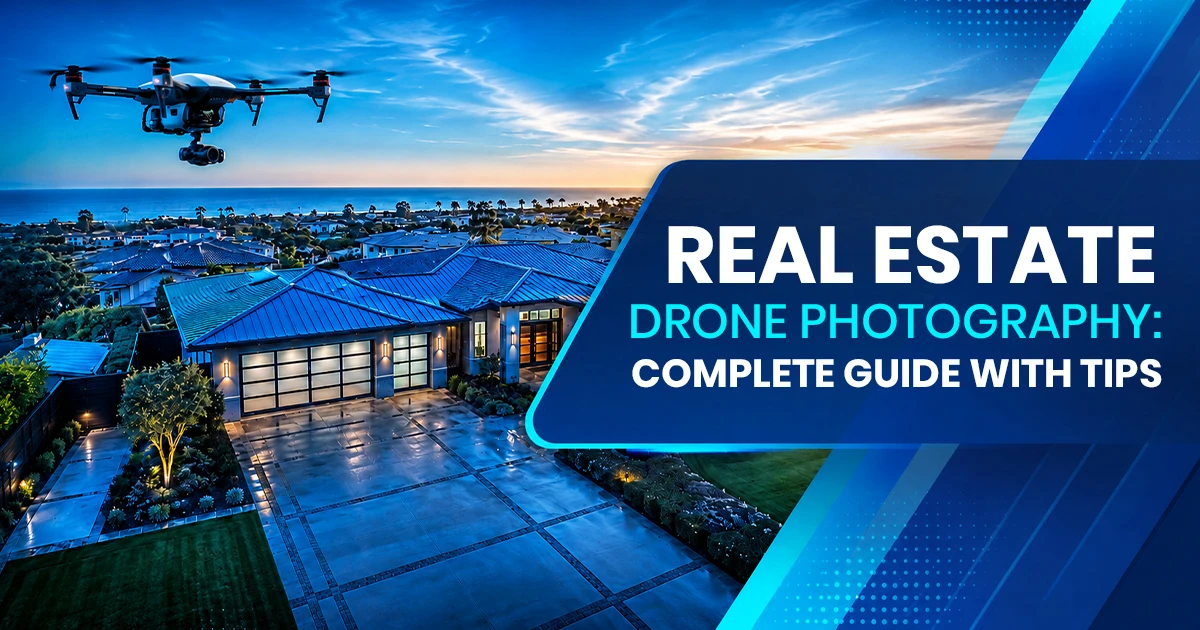
Drone photography gives a complete, cinematic view of a property. It shows not just the house, but the surroundings too. From above, buyers can see the neighborhood layout, nearby parks, schools, roads, and even how the property fits into the area.
Adapting drone photography in real estate, sellers can offer the whole story of the property. Real estate drone photography can capture all the scale space, breathtaking visuals, aerial views, neighborhoods, parks, schools, swimming pools, etc.
That’s why real estate agents, developers, and property owners now prefer drone photography as an essential part to grab buyers’ interest.
This article will explore the undeniable benefit of real estate drone photography in property marketing and explains as a powerful tool for standing out in this competitive industry.
What is Real Estate Drone Photography?
Real estate drone photography involves capturing high-resolution aerial images and video of the property using unmanned aerial vehicles (UAVs).
From hundreds of feet in the air, drones reveal details that ground-level shots often miss. They capture the dynamic flyover footage, detailed overhead shots that showcase a property’s full scale, surrounding landscape, and neighborhood context.
Real estate agents now prefer drone photography for all kinds of luxury estates, commercial developments, and modest suburban homes. It gives potential buyers a compelling visual perspective that simply cannot be achieved from the ground. Because of this, drone photography has become an essential marketing tool in real estate marketing.
Difference Between Drone vs Traditional Real Estate Photography
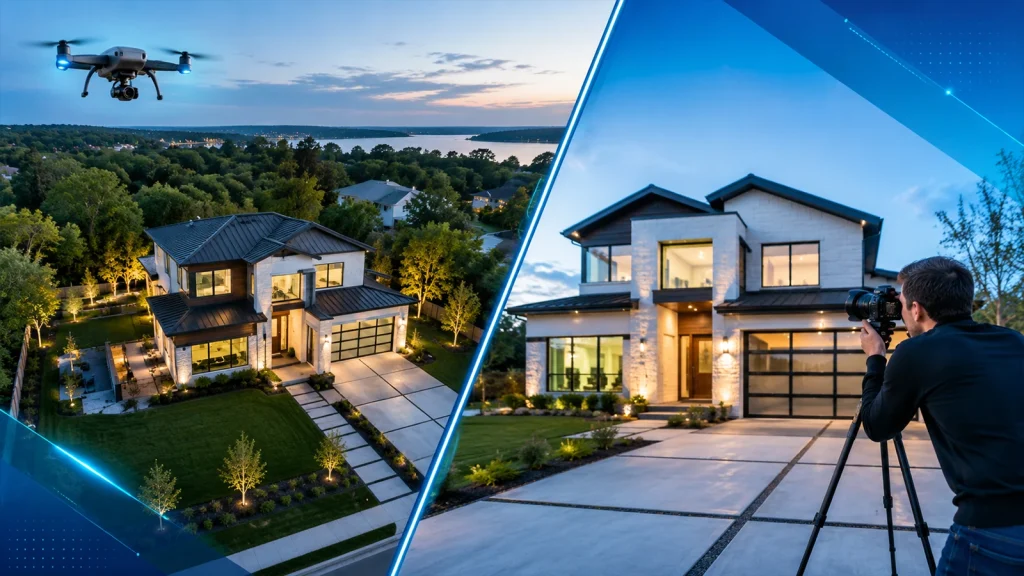
The difference between drone and traditional real estate photography are drone photography captures the wide-angle aerial view of the property boundaries, layout, and surrounding area.
Whereas traditional real estate photography only captures the ground-level footage and eye-level shots. Keep the focus only on the interior design and room dimensions.
Here is a table to highlight the difference between drone photography and traditional real estate photography:
| Aspect | Drone Photography | Traditional Real Estate Photography |
|---|---|---|
| Perspective | Aerial, bird’s-eye view | Ground-level view |
| Coverage | Shows the entire property, land, and surroundings | Focuses on rooms and interior details |
| Visual Impact | Dramatic, eye-catching | More natural and familiar |
| Equipment | Requires drones and remote control | Uses DSLR or mirrorless cameras |
| Cost | Usually higher due to equipment and skill | Generally lower |
| Skill Level | Needs a certified drone operator in some areas | Standard photography skills |
| Best For | Large properties, estates, and location context | Interior spaces, layout, design |
| Accessibility | Can reach high or hard-to-access areas | Limited to accessible spaces |
| Weather Dependence | More affected by wind and weather | Less affected, can shoot indoors |
| Legal Requirements | May require permits/licenses | Few legal restrictions |
Types of Drone Shots For Real Estate Property
The types of drone shots for real estate property are aerial overview shots, orbit shots, approach shots, bird-eye shots, rise shots, tracking shots, POI shots, and golden hour shots.
All these types assist in highlighting the property’s scale, location, architecture, and lifestyle appeal. Also helps to upgrade ordinary listings into visually attractive images that attract buyers faster.
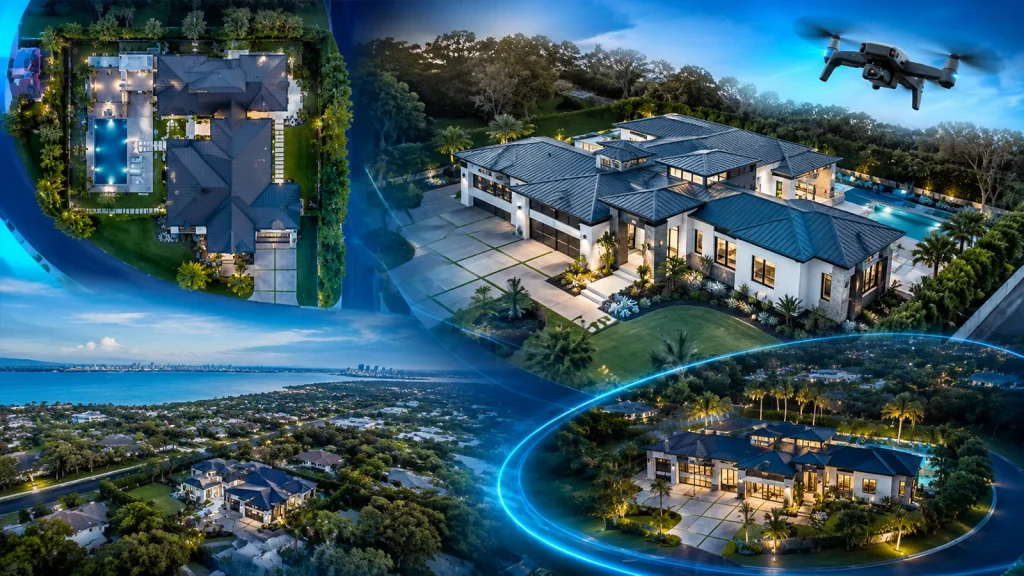
Here is a list of types of drone shots for real estate property:
Aerial Overview Shot: The aerial overview shot captures the full footprint exactly from above the property, also called a bird’s-eye perspective. This shot captures the home’s size, landscape, and surrounding land, providing an instant sense of scale and context for the buyer.
Orbit shot: This shot captures the 360° arc of the property, as it reveals every angle of the exterior. This orbit shot captures the architectural details, rooflines, and curb appeal from all sides.
Fly-In Shot: Fly-in shot captures the shots starting from the front entrance. This approach shot mimics the experience of arriving at the property for the first time. Also capture the driveway, landscaping, and façade in one fluid motion.
Bird’s Eye Shot: A bird’s eye shot is perfect for mapping out pool shapes, garden layouts, patio designs, and backyard features. These shots work best for marketing brochures and social media thumbnails.
Rise Shot: While capturing these shots, the drone starts from a low-roofline, then ascends slowly while the camera tilts downward. This shot reveals the neighborhood, nearby landmarks, and the surrounding environment.
Follow Shot: This shot captures the subject while the drone moves along with it. It keeps the subject centered in the frame, creating a smooth, dynamic feel as if the viewer is moving with the property or feature.
Low & Slow Glide Shot: This shot captures a smooth, steady movement close to the ground. The drone glides slowly forward, revealing details in a calm and cinematic way, highlighting the driveways, gardens, or entry paths.
Point of Interest (POI) Shot: This shot captures a subject while the drone circles around it. The camera captures the central point, highlighting the 360-degree view and showing the subject from multiple angles.
Golden Hour Shot: This shot is perfect during the last hour of daylight, as the golden warm amber tone spreads all over the property, and creates long shadows and a cinematic glow. This shot is considered to be the most compelling content for real estate properties.
Neighborhood Context Shot: This shot captures the far back and ascending high. This wide establishing shot places the property within its neighborhood grid, like parks, schools, bodies of water, or commercial areas.
Why Real Estate Drone Photography Matters
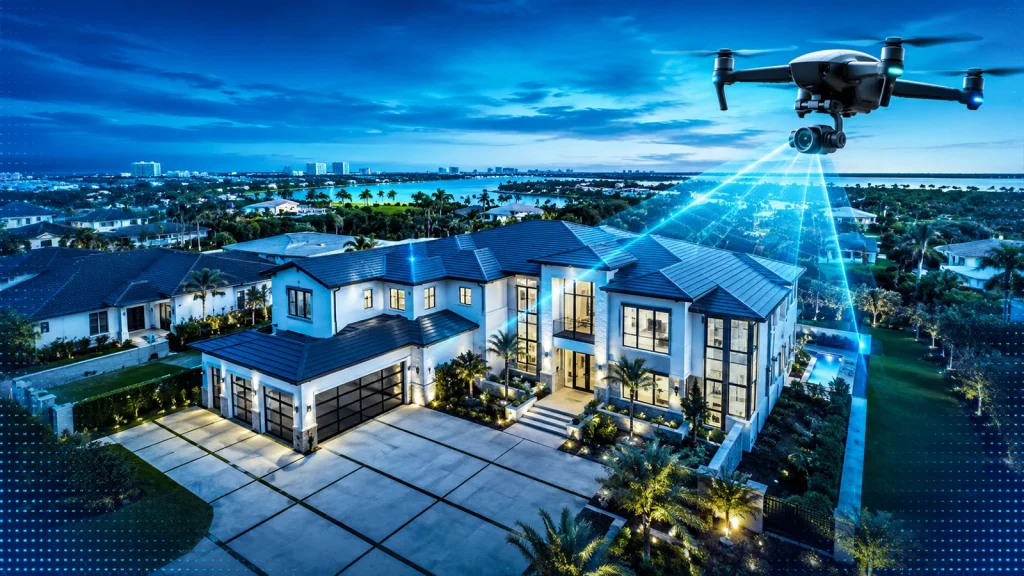
Real estate drone photography is important as it enhances the property’s visibility, boosts sales, changes perspective, and provides a complete view of the whole property.
Stunning aerial visuals create an immediate emotional connection, communicate scale and location, and set listings apart in a saturated market.
Here are some key reasons why real estate drone photography matters:
- Enhance visual appeal and context: A dramatic overhead shot instantly uplifts the perceived value of a property and sets a professional, premium tone that builds buyer confidence.
- Showcases the Full Property: Drone photography captures the entire lot, landscaping, pool, driveway, and exterior layout in a single breathtaking frame.
- Increase engagement and scale: Properties with drone photography receive significantly more clicks, shares, and saves on listing platforms and social media, according to data gathered by the National Association of Realtors.
- Unique perspective and storytelling: Drone photography reveals various sweeping angles, dramatic elevation, and exposes the natural flow of the property’s surroundings.
- Competitive advantage: Drone photography signals to buyers and sellers that you take marketing seriously, helping agents build a stronger brand and win more listings.
Real Estate Drone Photography Equipment & Tools
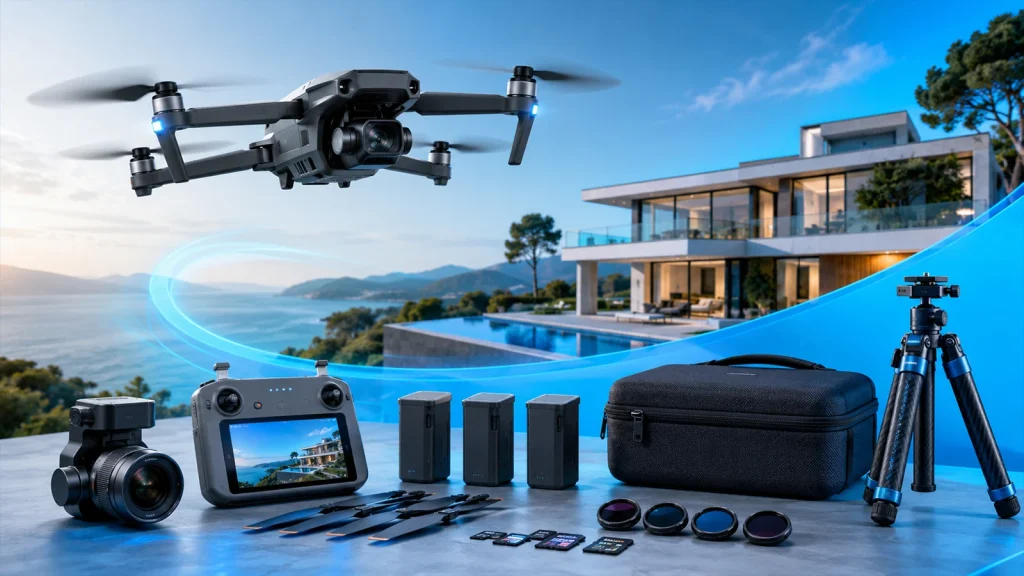
The equipment and tools required for real estate drone photography include a 4 K drone with a robust, stabilized gimbal, backup batteries, reliable memory cards for storing high-resolution photos and videos, ND filters, a remote controller, a sturdy carrying case, and editing software.
Here is a list of equipment and tools required for real estate drone photography:
Drone: Choose a professional-grade drone like the DJI Mavic 3 Pro/ DJI Air 3, which offers the stability, long-range, and camera quality needed to capture sharp, cinematic real estate footage in a variety of weather and lighting conditions.
Camera: Choose a high-resolution camera with a large sensor that offers at least 20 MP, 4 K video, and D-log color profiles.
ND filter: Neutral density filters control the light intake during bright outdoor shoots. This filter prevents overexposed skies and washed-out exteriors, and enables the shutter speed for smooth and cinematic video footage.
Extra Batteries: Carry 3 to 4 fully charged extra batteries to ensure uninterrupted coverage of the entire property without delays or missed angles.
Remote controller: A reliable controller can ensure a clear live feed, precise maneuverability, a stable signal, and control the navigation around the rooftops, trees, and structures.
Carrying case: Carrying a case to store the drone, batteries, filters, and accessories, it helps to keep the
Memory cards: Fast, high-capacity SD or CFexpress cards are essential for storing large RAW image files and 4K video footage without lag or data corruption during active shooting sessions.
Spare Propellers: Propellers usually get damaged during transport and minor collisions. Thus, keeping the spare set on hand prevents a single accident from shutting down an entire shoot day.
Photo Editing software: Use tools like Adobe Lightroom, Capture One, and Canva Pro to enhance colors, fix lighting, and crop images cleanly. Thus, turn raw shots into polished visuals that clients will pay for.
Legal Requirements for Drone Photography in the USA
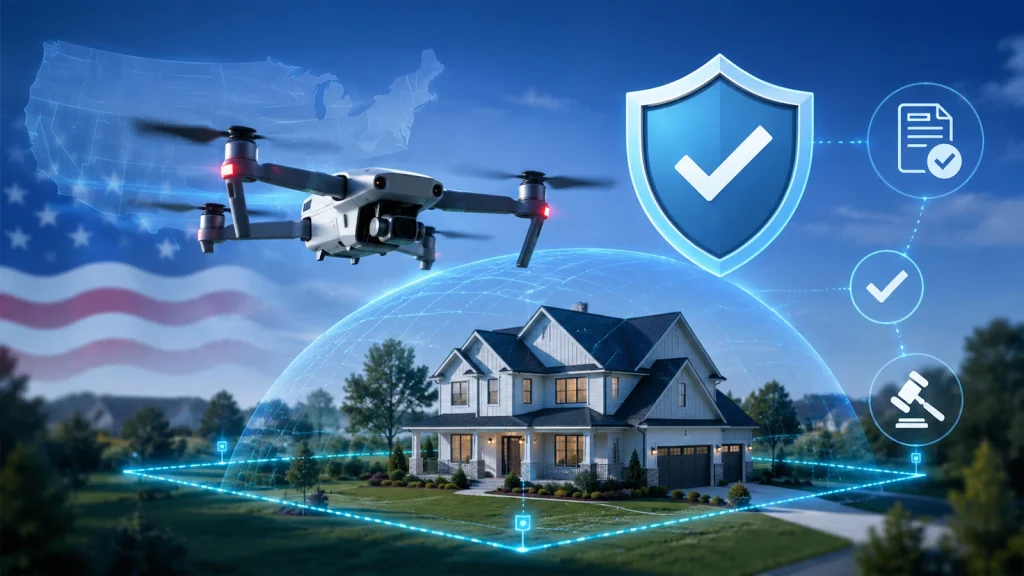
The FAA must regulate legal requirements for drone photography in the USA under Part 10 license. The drone operator must register drones over 0.55 lbs, pass a Remote Pilot Certificate exam, and follow strict airspace rules.
Here is an essential legal requirement for drone photography in the USA:
Register Your Drone: A drone with over 0.55 ibs must be registered with the Federal Aviation Administration. This registration is low in cost, and the number must be placed on the drone.
License: When using a drone for professional real estate photography or video, the drone must have a remote pilot certificate under part 107 by passing an FAA exam.
Basic Flight Rules: The drone must keep within sight at all times and fly 400 feet below. All flights must be taken during daylight or with proper lighting at night.
Airspace Restrictions: When flying the drone, you might need permission if you fly near an airport, controlled zone, or military area zone.
Remote ID Requirement: Make sure your broadcast identification and location are visible while flying. Thus, authorities can track drones in real time for safety and security.
Respect Privacy Laws: When flying a drone, the authorities must ensure the privacy of the nearest people.
Local & State Laws: When flying the drone, you must follow the local and state laws and regulations. This law directs where you can launch, land, or operate drones.
Real Estate Drone Photography Tips
Real estate drone photography elevates property listings by capturing striking aerial views that ground-level shots simply can’t provide.
It gives a clearer sense of space, layout, and surroundings, helping listings stand out instantly.
With drone photography, you can showcase the full footprint of a property, highlighting its structure, land coverage, and how it connects with nearby features.
This section will share some essential tips for real estate drone photography for beginners, intermediates, and advanced.
Start with the Right Drone: Choose a drone with a good camera, stable flight, and obstacle avoidance.
Learn the Basics First: Use it in pilot bases, understand the control, smooth movement, and landing safety.
Shoot During Golden Hour For Better Lighting: Golden hour creates a soft, warm, directional light that naturally flatters exterior architecture and eliminates harsh midday shadows.
Plan the Shots: Before you fly the drone, plan and understand the buyer’s need, problem, and what they want to see.
Start with Simple Angles: Plan you angels before you start flying a drone. Angels such as front elevation, rear yard, full aerial overview, and neighborhood context.
Capture Multiple Angles: Start your drone shot from low behind a tree line, fence, or roofline, then slowly ascend while moving forward to gradually unveil the full property.
Show Property Context: Capture the property from multiple architectural angles to tell the full story. Combine wide aerial shots, mid-level perspectives, and closer detail views.
Use Composition Techniques For Storytelling: Composition techniques help create a clear visual story of the space, flow, and lifestyle the home offers.
Use Cinematic Flyover Shots: Capture a smooth, flowing flyover that reveals the property. Start your drone from a distance, move, and capture the surroundings in a controlled motion to build anticipation and give a natural and cinematic feel.
Combine photo + video storytelling: Photos highlight key details, while video shows flow and space. Both photos and videos tell a complete story.
Master Exposure and Dynamic Range: For proper exposure, you can use techniques like HDR or manual settings to capture clear skies from blowing out and shadows from losing detail.
Real Estate Drone Photography Camera Settings
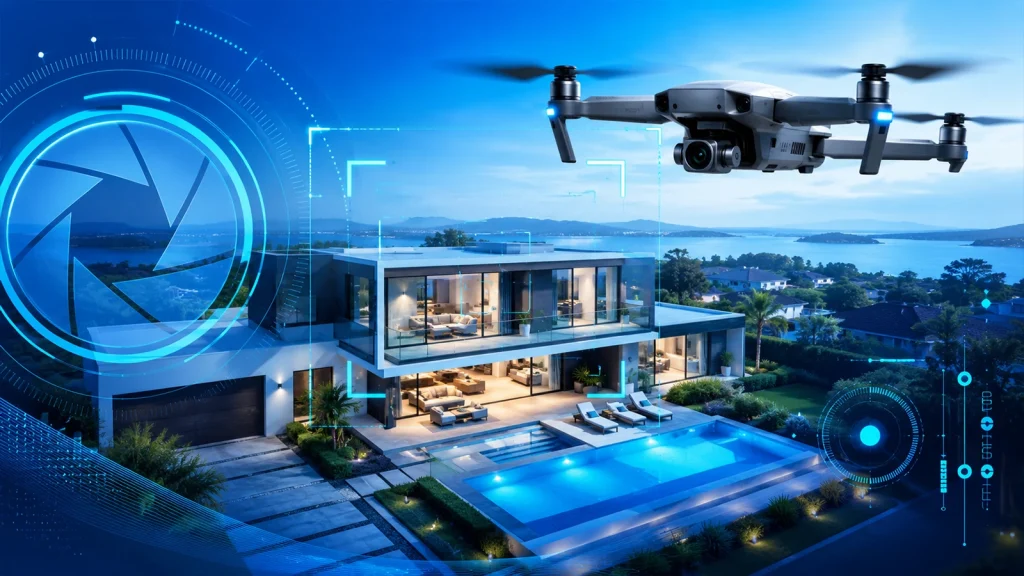
Real estate drone photography camera settings play a huge role in how professional your final images and videos look. The best setting for real estate drone photography camera is setting the aperture to f/8 or f/11, ISO 100-400, and shooting in RAW format.
Here are some camera settings needed for real estate drone photography:
ISO: Keep ISO as low as possible, usually around 100. This helps reduce noise and keeps your images sharp and clean.
Aperture: Use a mid-range aperture like f/8 to f/10 to balance sharpness across the frame, making both the property and surroundings look clear.
Shutter Speed: Adjust shutter speed based on lighting conditions and to get proper exposure without overexposing highlights or losing detail in shadows
Shooting in RAW for Better Editing: Always shoot photos in RAW format instead of JPEG. RAW files store more image data, giving you greater flexibility when editing.
Video Settings for Cinematic Footage: Shoot at 4K using 24fps or 30fps, by following the shutter rules. Keeping shutter speed roughly doubles your frame rate, which helps create natural motion blur
Using ND Filters for Proper Exposure: ND filters help you maintain correct shutter speed and avoid overexposed footage.
Ready to Elevate Your Real Estate Property Listings?
Ready to stand out in a competitive real estate market? Partner with Offshore Clipping for bulk property photo editing, drone footage enhancement, and clean virtual staging workflows tailored to your brand standards.
Get a custom, high-volume quote in under 30 minutes!
FAQs

Do you need a license for drone real estate photography?
Yes, a license for drone real estate photography is usually required. In many countries, you must hold a commercial drone permit and follow aviation rules, including registration, airspace limits, and safety guidelines. Always check your local authority.
How much does drone real estate photography cost?
Drone real estate photography typically costs between $150 and $350 for standard homes, though prices can vary based on location, property size, and deliverables. Adding video or premium edits can raise the price to $500 or more, while commercial projects often cost $500–$1,500+
What drone is best for real estate photography?
The best drones for real estate photography are the DJI Mini 4 Pro, DJI Air 3, and DJI Mavic 3 Pro. They offer strong image quality, stability, and features suited for property shots, from budget-friendly options to high-end professional results.
How do you start a drone photography business?
Start a drone photography business by getting licensed, buying a reliable drone, practicing flight skills, building a portfolio, setting prices, and marketing to real estate agents or local clients. Follow local laws and focus on consistent, high-quality visuals.