Your product listing went live. A few hours later, Amazon rejected the main image. The background was not pure white, the edges looked rough, and the product shadows were inconsistent. Meanwhile, your ad creatives looked unpolished, and your click-through rate dropped
This is a common problem in modern eCommerce and digital marketing workflows. According to Shopify, clean and professional product images can significantly improve customer engagement and conversion performance.
In competitive marketplaces, even small visual inconsistencies can affect clicks, trust, and purchase decisions. That is why background removal is no longer just a simple editing task. It has become a critical part of:
- e-commerce product management
- Marketplace compliance
- Creative production workflows
- Brand presentation and visual consistency
Today, businesses are not simply removing backgrounds. They are building scalable image production systems that combine:
- photography setup
- editing workflows
- AI automation
- quality control
- bulk SKU management
From online sellers and product photographers to creative agencies and marketing teams, every industry now depends on high-quality background removal. This creates visuals that look clean, consistent, and conversion-ready.
Whether you are editing a few images or managing thousands of SKUs, the right image background removal method directly affects your brand consistency, visual quality, and conversion rate.
Why Remove White Background from Images?
Removing a white background is no longer just a design preference. It directly affects how products, campaigns, and brand visuals perform across digital platforms.
Different industries rely on background removal for different reasons, but the goal is always to create cleaner, more professional, and conversion-focused visuals.
- eCommerce Businesses & Marketplace Sellers: Online marketplaces like Amazon, Etsy, Walmart, etc., require product images to meet strict visual standards. Listings can be rejected, suppressed, or receive lower engagement if images do not meet marketplace requirements.
- Product Photographers & Studio Teams: Even with professional photographers and studio setups, raw product images often contain uneven lighting, background imperfections, and distracted shadows. Without a proper backdrop, images can lose their quality to stand out in the market.
- Marketing Teams & Advertisers: Marketing teams use transparent or clean-background images. These help create ads, banners, social media campaigns, and promotional materials across multiple platforms.
- Graphic Designer and Creative Professional: Designers use isolated subjects to create layered compositions, UI elements, and branded marketing assets. They can get creative flexibility with background-free images.
- Business Managing SKUs: Background removal becomes part of a large-scale production workflow for some brands. Because they handle hundreds or thousands of SKUs.
How to Remove White Background from an Image (Quick Methods)
Background is something that helps your image to highlight perfectly sometimes. And sometimes an unwanted background can damage the object’s performance. If you are looking for a fast answer, these are the most effective ways:
- Use AI background remover tools for a quick result
- Edit in Photoshop manually for precise control
- Use mobile apps for quick edits on the go
- Outsource to professionals for high-quality and bulk editing.
Each method mentioned here depends on your goal, time, and quality requirements.
Best Ways to Remove White Background from Images
1. AI Tools
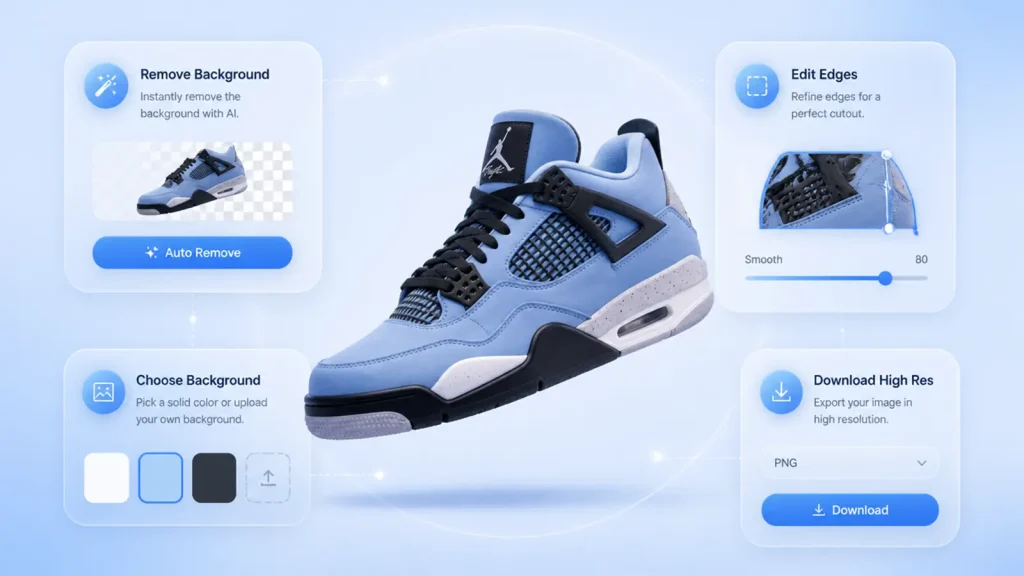
AI-powered tools are the easiest way to remove white background online. It’s easy, hassle-free, non-professional, beginner-friendly, and time-effective. What used to take hours can now be done in seconds.
Common Steps:
- Upload your image to an AI tool on your device
- The tool detects and removes the background automatically
- Review and refine edges if needed
- Download the image, usually in a transparent background, in the so-called PNG format
Advantages:
- Fast and beginner-friendly
- No software or application installation required
- Works well for simple images
Limitations:
- Struggles with complex edges like hair and fur
- Sometimes removes necessary details
- Limited control over final output
- Not appropriate for all images
- Asks for subscription after free trial
Best Use Case:
- Quick product previews
- Social media posts
- Simple subject images
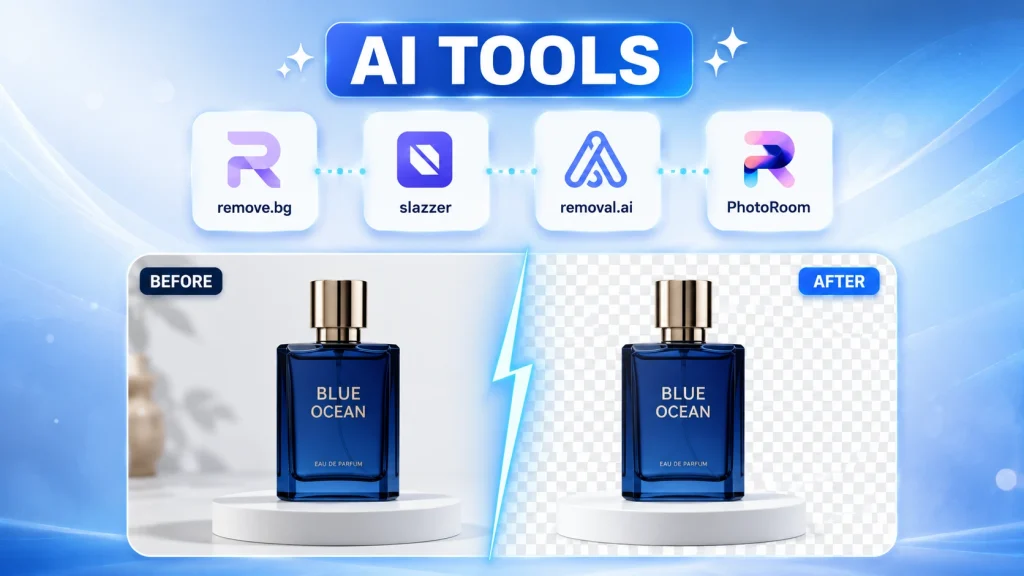
Some Online AI Tools for Beginners:
If you are a beginner, don’t have enough time, or don’t need that much delicate editing, you can try these tools online:
- Remove.bg
- Slazzer
- Removal.ai
- PhotoRoom – Web
2. Remove White Background in Photoshop
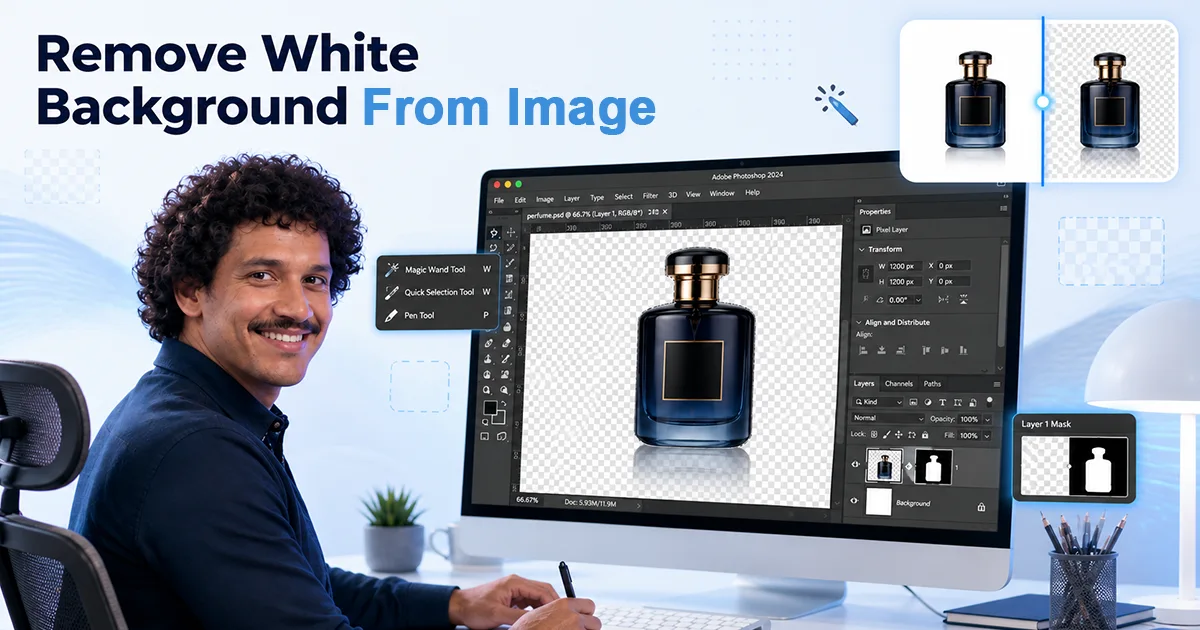
Photoshop background removal is the professional method among all the ways. It helps make precision and control for the image cutout. Photo editing software like Photoshop gives you complete control, but it requires time and skill. Photoshop remains one of the best options available.
Fastest Methods to Remove White Background (2026):
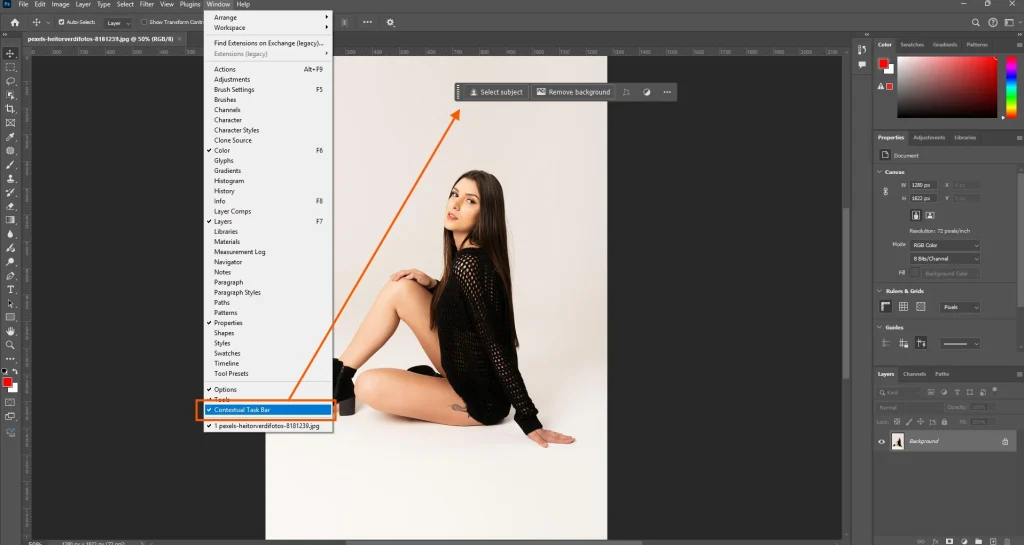
- Contextual Task Bar (Recommended):
- Open your image and ensure the layer is unlocked.
- If the taskbar isn’t visible, go to Window > Contextual Task Bar.
- Click the Remove Background button directly on the taskbar.
- Properties Panel/Quick Actions:
- Open the Properties panel (Window > Properties).
- Under Quick Actions, click Remove Background.
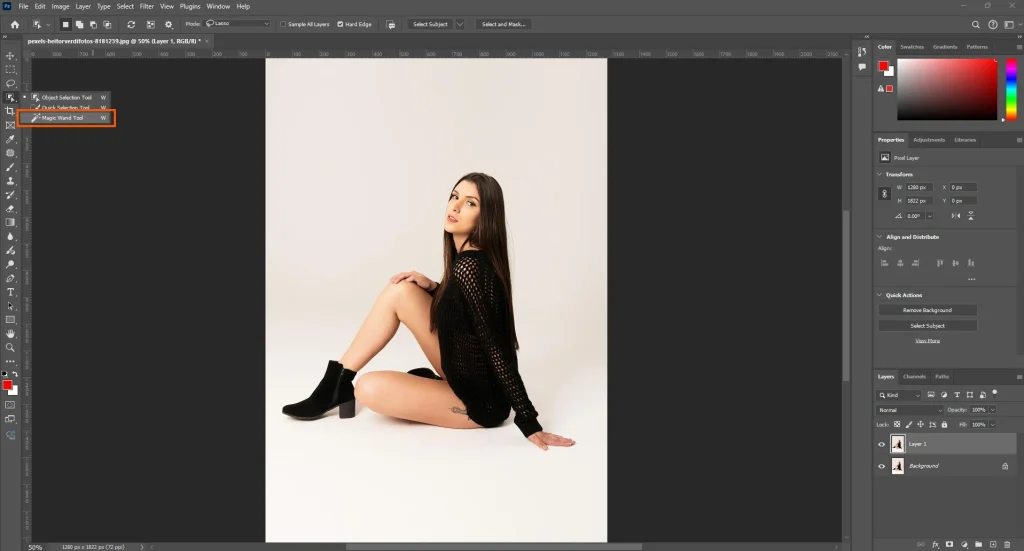
- Magic Wand Tool (For solid white backgrounds):
- Select the Magic Wand tool (W).
- Click on the white background.
- Press Delete (ensure the layer is not a locked “Background” layer or convert it to a regular layer first).
Refining the Selection:
If the automatic removal leaves white edges, you can use the Refine Edge Brush in the Select and Mask workspace to clean up details like hair or fur.
Export as PNG: Save the image with a transparent background.
More advanced ways:
Using Quick Selection Tool + Select and Mask
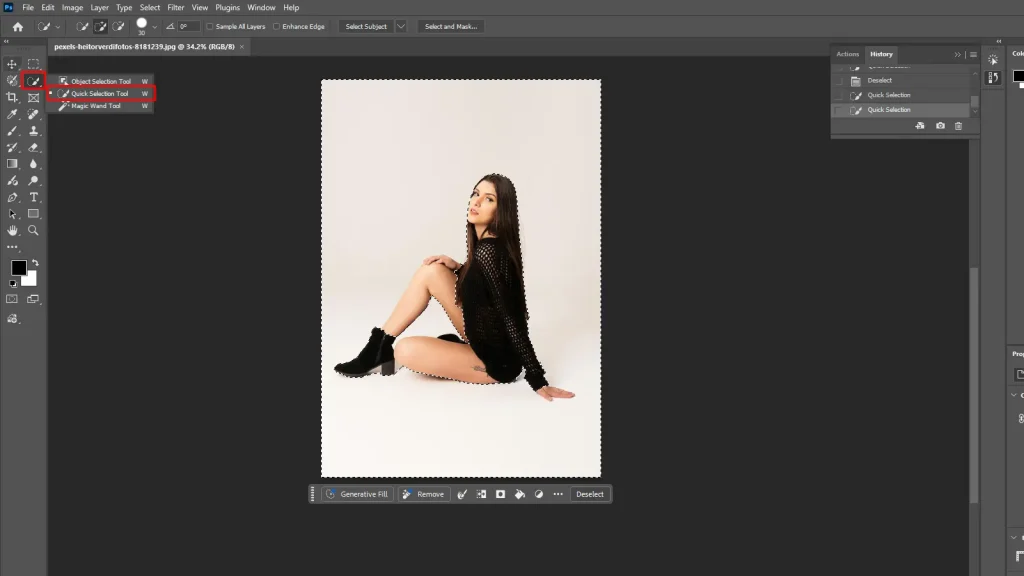
Step 1: Select the Subject
Choose the Quick Selection Tool (W). Drag over the subject to select it.
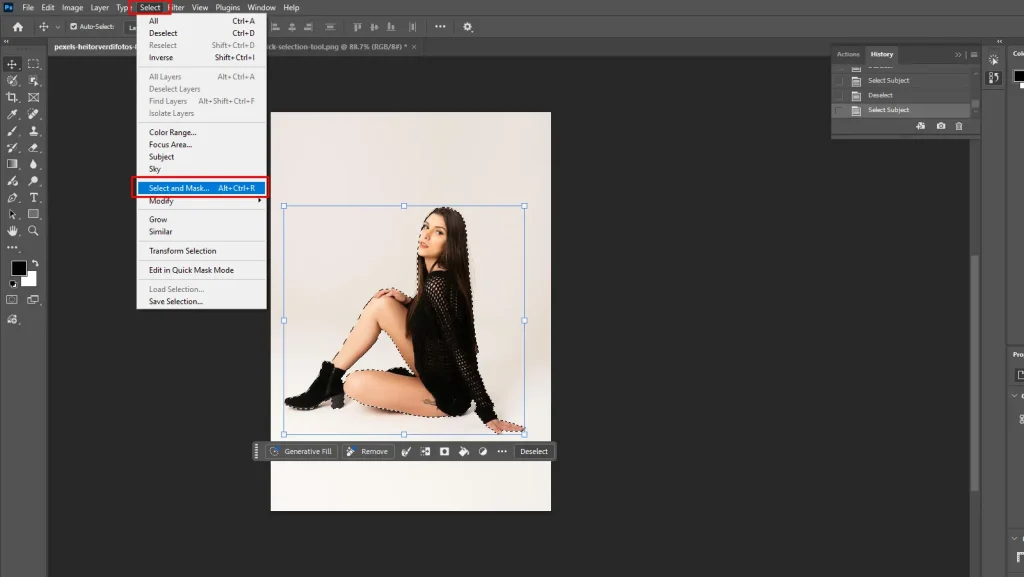
Step 2: Open Select and Mask
Click “Select and Mask” from the top menu.
Step 3: Refine Edges
Use the Refine Edge Brush Tool for hair and fine details. Adjust:
- Smooth
- Feather
- Contrast
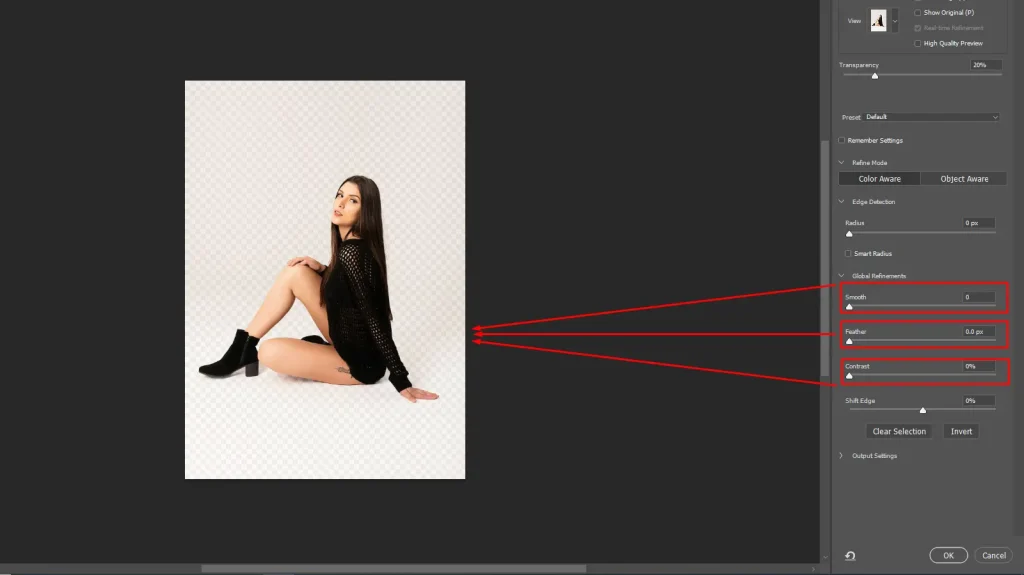
Step 4: Output Selection
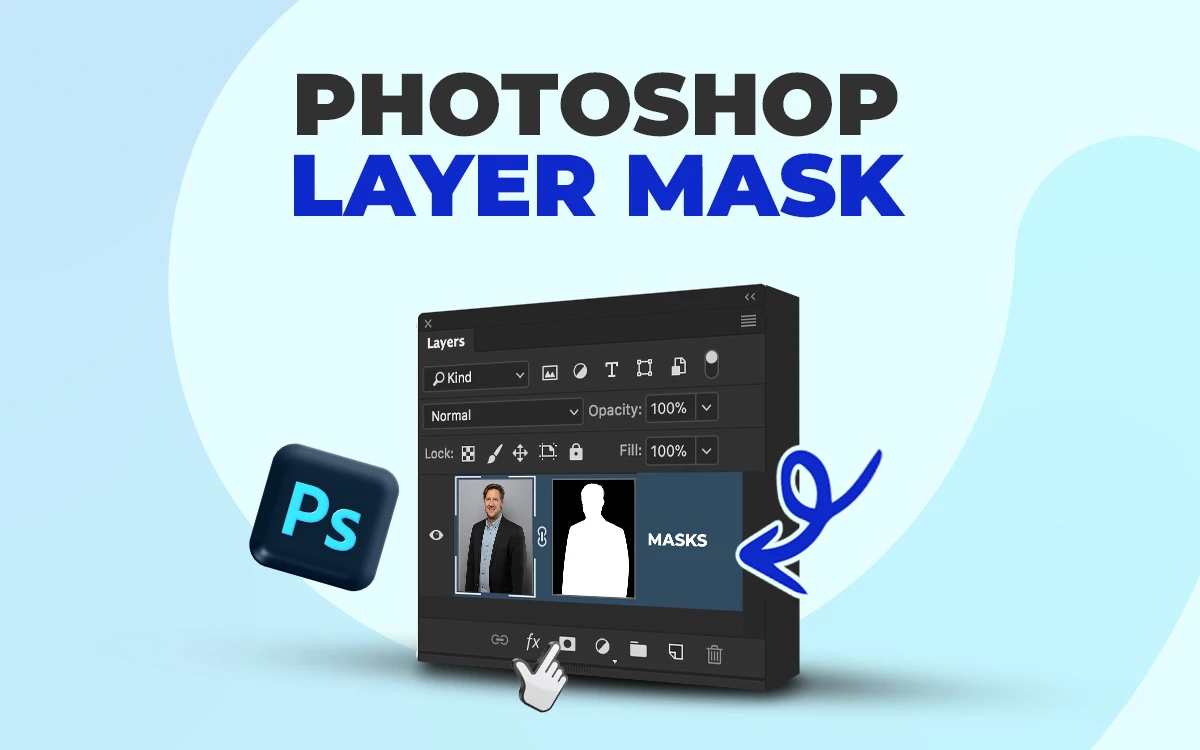
Set output to Layer Mask and then click OK.
Using Pen Tool (Most Accurate Professional Method)
The Pen tool is one of the most used Photoshop tools for removing the background. This is the most precise method done with clipping paths and used by professionals. Here is how to do:
Step 1: Select the Pen Tool
Press P or manually select the Pen tool from the toolbar to activate it
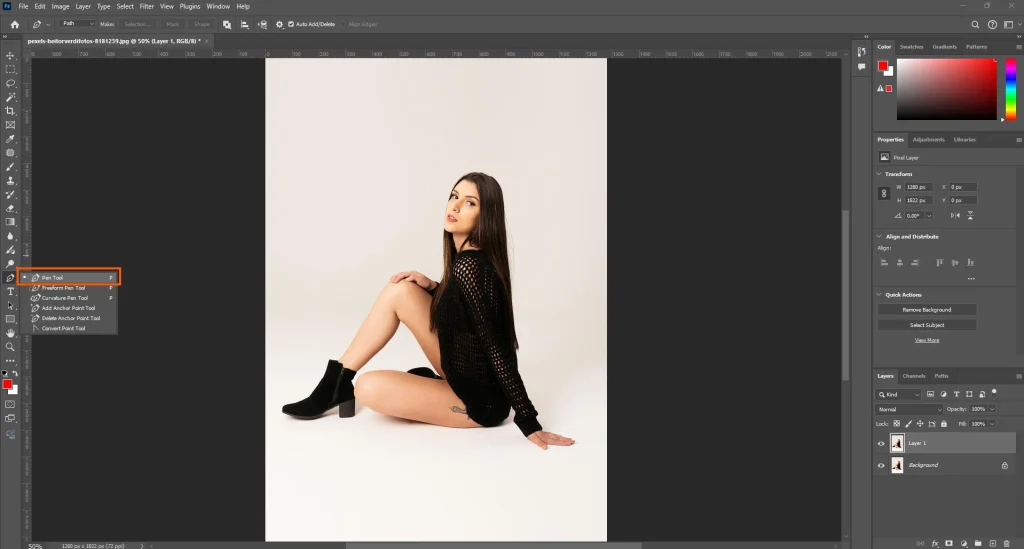
Step 2: Create a Path Around the Subject
Click around the edges carefully. Use anchor points to create smooth curves. Connect the last point to the first point.
Step 3: Convert Path to Selection
Right-click and click on “Make Selection.” Set Feather Radius to 0.5–1 px
Step 4: Invert Selection
Press Shift + Ctrl + I to select invert.
Step 5: Delete Background
Press Delete.
Pro Tips:
- Zoom in while refining edges
- Use soft brushes for natural transitions
- Preserve shadows for realism
Common Mistakes:
- Over-smoothing edges
- Ignoring fine details
- Removing natural shadows
When to Use:
- e-Commerce product photo editing
- Marketing materials
- Automotive industry
- High-resolution projects
3. Mobile Apps
Mobile apps are ideal for quick edits. It helps you when you’re outside and need to edit photos in an emergency.
Common Steps:
- Upload your image in the app
- Use auto-remove or manual tools
- Adjust edges and erase unwanted areas
- Export the image
Advantages:
- Easy to use
- Convenient for quick edits
- Good for content creators
Limitations:
- Lower precision than desktop tools
- Limited editing features
- Concise area for professional edits
Best Use Cases:
- Instagram posts
- Quick marketing visuals
- Personal projects
Common Beginner Mistake
Most mobile apps default to JPG/JPEG, which does not support transparency and will automatically add a background again. Always choose PNG format to preserve a transparent background.
Some Mobile Apps to Remove White Background from Image
| App | Platform | Best For | Key Differentiator |
| PhotoRoom | iOS and Android | Product Photos, creators | Ready-made templates for social media and marketplaces |
| Picsart | iOS and Android | Creative edits | Strong editing tools beyond background removal |
| Background Eraser | iOS and Android | Simple cutouts | Lightweight app focused on quick background removal |
| Canva | iOS and Android | Social content and marketing | Easy drag-and-drop design workflow |
4. Professional Background Removal Service
Tools often fail when quality truly matters, though these are convenient. The more complex an image is, the more fine touches it requires. Professional background removal offers the most precise and customized photo editing service according to your needs.
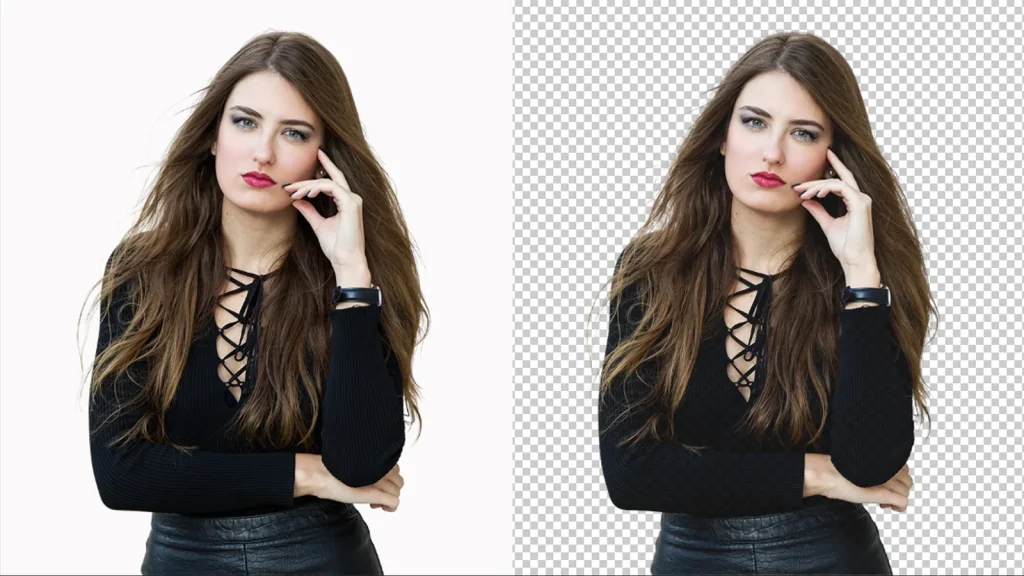
Why Tools Fall Short:
- Tools can’t handle complex hair, shadows, and reflections. It’s the limitation
- Tools can provide consistent results across images
- Lacks of fine details and precision, causing unwanted output
Why Professionals Make a Difference:
- Outsourcing or taking professional services makes the pixel-perfect edge refinement
- Professionalism offers manual attention to detail
- You will get consistent results for bulk images
- You can customize your image as you want
- You get several revisions of the images
Real Use Cases:
You can use this method on the following terms:
- e-Commerce product catalogs
- Amazon and Shopify listings
- Advertising campaigns
- Automotive industry
- Brand marketing materials
Differences Between White Background Removal Methods
Though every method is helpful, it can’t fulfill all the requirements for all. At this point, users choose one over another. Here is a practical comparison to help you choose the right method based on your workflow
| Method | Skill Level | Turnaround | Estimated Cost | Value Capacity | Best File Output | Ideal Use Case |
| AI Tools | Beginner | Very Fast | Free – Low subscription cost | High (bulk-friendly) | PNG | Quick edits, simple product cutouts, social media visuals |
| Photoshop | Advanced | Medium | Time cost (~$5/image*) | Medium | PSD, PNG, TIFF | Professional editing, detailed refinement, photographers |
| Mobile Apps | Beginner | Fast | Free – Low | Low | PNG, JPG | Quick edits on the go, creators, personal projects |
| Professional Service | None | Fast (24–48 hrs turnaround)** | ~$0.30–$5/image | Very High | PNG, PSD, TIFF | eCommerce brands, agencies, marketplaces, bulk editing |
DIY methods work fine if you are handling a few images. Professional services are often a better investment for consistent and high-quality output.
How Different Industries Handle Background Removal
Different industries follow different ways. They follow the way that suits them best. Here you can see the overview of different industries leading in this sector in their own way.
eCommerce & Online Marketplaces (High Volume + Strict Standards)
For the eCommerce industry, background removal is not optional—it is a mandatory compliance requirement. Major marketplaces like Amazon, Etsy, Walmart, Tesco, etc., enforce strict product image guidelines to maintain consistency across their platforms.

According to Amazon Seller Central guidelines, the main product image must use a pure white background (RGB 255, 255, 255). This helps create consistency across listings and improves the customer browsing experience.
Marketplace Image Requirement Comparison
| Platform | Background Requirement | Visual Style Focus | Common Use Case |
| Amazon | Pure white (#FFFFFF) required for main image | Clean, compliance-focused | Product listings |
| Etsy | More flexible backgrounds allowed | Lifestyle and handmade brandings | Creative/small business |
| Shopify Stores | Brand-dependent visual style | Custom branding and storytelling | Direct-to-consumer stores |
Why It Matters
It matters because:
- Clean images improve click-through rate (CTR)
- Consistent visuals build customer trust
- Standardized presentations increase conversion rates
Platform Requirements Typically Include
- Pure white background (#FFFFFF)
- Clean, sharp product edges
- No distracting elements
- Proper product alignment and framing
Real Industry Workflow
Even if a product is shot on a white background, it goes through a structured process. This ensures every image meets marketplace standards.
- Capture product images in controlled lighting
- Remove the original background, even if it looks white
- Replace with pure white (#FFFFFF)
- Adjust shadows, brightness, and contrast for consistency
Best for
- eCommerce business owners want to focus on sales and conversions.
- Marketplace listing managers ensure compliance with platform rules
- Product upload teams handle bulk image processing
- Creative QA teams maintain consistency across listings
Core Challenge in eCommerce & Online Marketplaces
Amazon, Etsy, or platforms like Shopify Stores handle SKUs in different ways. Because their rules and regulations are different. In real-world eCommerce:
- 1 product = 3–6 images
- 500 products = 1500–3000 images
- Large stores = 10,000+ images
Manual editing becomes slow, inconsistent, and operationally expensive.
Industry Solution (Scalable Workflow)
Successful businesses use a hybrid model:
- AI tools: Fast initial background removal
- Manual editing: Fix edges, shadows, details
- Professional services: Ensure consistency at scale
Product Photography & Studio Workflow (Capture → Edit Pipeline)
Background removal starts before editing in product photography. It starts during the shoot. Raw images are rarely ready for publishing, even with a professional setup.

Common Issues in Raw Images
Some common issues always persist in raw images. These issues make direct use impossible for commercial platforms:
- Uneven lighting across the background
- Wrinkles or texture in the backdrop
- Harsh or misplaced shadows
- Slight color shifts, especially on off-white backgrounds
Professional Studio Setup Factors
Professional photographers focus on some key points to minimize editing effort:
Lighting:
- Softbox or diffused lighting for even exposure
- Avoiding harsh shadows and hotspots
Background:
- White seamless paper (sweep setup)
- Clean and wrinkle-free surface
Camera Settings:
- Low ISO (100–200) that reduces noise
- Aperture (f/8–f/11) sharp product focus
- Proper white balance offers accurate colors
Reality Check in Product Photography
A professionally shot raw image and a marketplace-ready image are different.
| Raw Studio Image | Post-Processed Commercial Image |
| The background may appear light grey instead of pure white | The background becomes true white (#FFFFFF) |
| Shadows can look uneven | Shadows are balanced naturally |
| Edges are refined and clean | Edges are refined and clean |
| Reflections may distract from the product | Product details appear sharper and more isolated |
This final refinement is what creates the polished “eCommerce-ready” look customers expect online.
Best for
- Product photographers
- Studio assistants
- Retouchers/photo editors
- Creative production teams
Creative & Marketing Industry (Flexibility + Visual Storytelling)
Background removal is about creative control and compliance for designers and marketers. Designers start with a transparent-background product image to make their process faster and more scalable.
Real Creative Workflow
Do you follow the same workflow that marketing teams actually use? In real-world creative production, the workflow typically looks like this:
Step 1 – Asset Creation: A product is photographed or designed as the primary visual asset. This can include:
- product photography
- packaging renders
- lifestyle shoots
- branded product visuals
Step 2 – Background Removal: Editors isolate the product by removing the original background. Then export the file with transparency, usually in PNG format. This creates a reusable design asset.
Step 3 – Template Composition: Designers place the transparent product image into multiple campaign layouts using tools like Figma, Adobe Express, or Canva. The same product image can then be adapted into:
- Meta ad creatives
- Google Display banners
- email headers
- website hero sections
- promotional posters
Step 4 – Multi-Format Export: Designers builts the design system, then export creatives into multiple sized and formats for different platforms like
- Instagram post
- Facebook ad
- YouTube thumbnail
- website banner
- Mobile ad variation
The Content Multiplier Effect
One professionally edited transparent-background product image can generate
- 10–20 ad creatives
- multiple campaign variations
- cross-platform marketing assets
This is one of the biggest reasons brands invest in high-quality background removal.
Best for
- Graphic designers
- Social media managers
- Creative directors
- Brand strategists
Automotive & High-Value Product Industry (Premium Visual Impact)
In industries like automotive, luxury goods, and high-ticket items, image quality directly impacts perceived value. Background removal is far more complex than standard product editing here.

Cars are one of the most difficult subjects to edit professionally because of
- Reflective paint surfaces
- Chrome details
- Glass reflections
- Complex shadows
- Large body contours
According to insights from Cox Automotive and Autotrader, listings with multiple high-quality custom vehicle photos receive substantially higher vehicle detail page engagement than listings with poor or limited imagery. Multiple real photos increased engagement by over 100% compared to stock or low-quality images.
Unlike most products that are shot in controlled environments, vehicles pose editing challenges that require a lot more precision.
Reflective Paint & Chrome Management
Car surfaces naturally reflect buildings, people, lighting equipment, and sky color, as well as nearby objects. Chrome trims, glossy paint, and windows make this even harder. Poor editing often creates
- Distorted reflections
- Unrealistic body panels
- Uneven paint appearance
Professional automotive editors manually refine reflections to keep the vehicle looking realistic while minimizing distractions. This is especially important for dealership inventory listings, luxury vehicles, and premium automotive advertising
Ground Shadow Placement
Removing shadows completely is one of the biggest mistakes in automotive editing. When shadows disappear, the vehicle looks artificial, and the car appears to float unnaturally.
Instead, professional editors preserve or recreate subtle ground shadows to maintain realism, visual depth, and premium presentation.
Use Case
- Automotive Photography and photographers
- Dealership marketing teams
- Branding and advertising teams
- Luxury product catalogs
Managing Bulk Images (Large SKU Workflow)
This is where the real industry strategy comes in, and most businesses struggle. Managing a few product images manually is possible. Managing hundreds or thousands of product photos while maintaining speed, consistency, and marketplace compliance is a completely different problem.
As product catalogs expand, businesses must maintain
- Consistent backgrounds
- Uniform image quality
- Clean product edges
- Identical alignment and framing
- Marketplace-ready formatting
Without a structured workflow, image production quickly becomes slow, inconsistent, and difficult to scale.
Real-World Scenario
Bulk action comes with:
- 500+ products
- 4–6 images per product
- Total: 2000–3000 images
For large brands:
- 10,000+ SKUs
- Continuous updates
Why Bulk Image Management Becomes Difficult
Modern eCommerce stores rarely rely on a single product photo. A typical listing often includes
- Front view
- Side angle
- Close-up details
- Packaging shots
- Lifestyle visuals
For Small Stores:
50 products × multiple product views
= hundreds of images
For Growing Brand:
500+ products with multiple variations
= thousands of assets to process
Enterprise-Level Catalog:
Seasonal updates, color variations, and product refreshes
= continuous image production demand
Optimized Industry Workflow
Top-performing businesses use a 3-stage system:
1. AI Processing (Speed)
- Bulk background removal
- Fast turnaround
2. Manual Refinement (Quality)
- Fix edges
- Adjust shadows
- Correct imperfections
3. Professional Outsourcing (Scale)
- Handle large volumes
- Maintain consistency
- Reduce internal workload
Bulk Image Workflow and Cost Comparison
| Workflow Method | Purpose | Turnaround | Estimated Cost | Quality Level | Best For | Limitation |
| AI Processing | Initial background cutout | Very Fast | Low | Medium | Bulk first-pass editing, simple products | Struggles with reflections, shadows, hair, transparent objects |
| Manual In-house Editing | Edge refinement and corrections | Medium-Slow | ~$5/image* | High (depends on skill) | Small catalogs, internal creative teams | Time-consuming, inconsistent at scale |
| Professional Outsourcing | High-volume production and consistency | Fast (100+ images in 24–48 hrs)** | ~$0.30–$5/image | Very High | Growing eCommerce brands, agencies, large catalogs | Depends on vendor quality and communication |
When Not to Use AI Tools
AI tools can not always provide accurate output. This happens especially when images contain fine details, transparency, or reflective surfaces. Manual editing can produce cleaner and more professional output in these types of situations.
In Cases of Hair and Fur
Hair and fur contain soft and fine strands that AI tools often struggle to separate from the background. Common issues
- Cut-off hair strands
- Rough edges or white halos
- Unnatural outlines
Jewelry & Fine Chains
Thin details such as chains, gemstones, and delicate metalwork are difficult for AI to detect accurately. Issues are
- Missing chain parts
- Broken edges
- Distorted details
Transparent Products (Glass & Plastic)
AI struggles with semi-transparent edges and reflections. So it is difficult and defective for products like perfume bottles, glassware, or transparent packaging. Manual editing helps preserve realism and product quality. Common issues:
- Lost highlights
- Unrealistic transparency
- Damaged glass edges
Lace & Detailed Apparel
Preserving texture is important for a professional look for fashion e-commerce. AI tools get confused with lace, mesh, embroidery, or fine textures. Common issues:
- Missing fabric details
- Rough cutouts
- Oversimplified edges
Reflective & Glossy Surfaces
Cars, chrome, electronics, and glossy products reflect light and surroundings. AI suffers harder while processing these types of images. Common issues:
- Distorted reflections
- Uneven cutouts
- Unnatural product appearance
When You Must Remove White Background
A white background in images is sometimes necessary, and sometimes it’s not. Removing a white background is not just about aesthetics. It can directly impact performance.
- eCommerce Product Listings: Transparent backgrounds help products stand out and look consistent across platforms.
- Social Media Marketing: Clean cutouts allow you to create more engaging designs and help in increasing reach.
- Advertising Creatives: Background-free images can be placed in different layouts when needed. This is suitable for better storytelling.
- Catalog Design: A consistent catalog layout signals that your company is established and detail-oriented. Professional images improve brand perception and trust.
- Automotive Industry: Professional car photo editing can grow your car dealership business, automotive photography, and the car industry.
- Customized Video Editing: Sometimes, you may need professional video editing where image optimization with a proper background is required.
Common Mistakes to Avoid
Small mistakes during background removal can reduce the overall image quality. If you’re trying to remove white background from images, pay attention to the following points:
Jagged or rough edges
Uneven or jagged edges are one of the most common issues in image background removal. This happens when selections are not properly refined. For this, the images look cut out and unnatural.
Removing natural shadows
Shadow is a crucial factor in making an image look realistic. Eliminating shadows can make the subject appear flat or floating. Try to preserve soft shadows instead. Try to recreate them subtly to keep depth and realism.
Over-editing the subject
Over-editing can damage the natural look of your photo. Over-sharpening, smoothing, or adjusting colors can make the object artificial. Try to enhance the image while keeping it visually and naturally balanced.
Using the wrong file format
It is important to choose the correct file format after background removal. As a beginner, most users save images in JPG format. This doesn’t support transparency. Always save the file in PNG or similar formats to maintain a transparent background. This helps in preserving image quality and transparency.
Pro Tips for Better Results
It’s important to follow some proven techniques to achieve the best results when you remove white background from image. These can significantly improve the final output.
- Always export images in PNG format: For a transparent background, PNG is the most reliable format. This preserves image quality and allows you to place the subject on any background.
- Maintain soft shadows for realism: Try to keep subtle ones under the subject instead of completely removing shadows. For product photography and marketing visuals, soft shadows add depth and make the image look more natural.
- Zoom in while refining edges: Fine details such as hair, fur, or curved edges require close attention. You can refine selections more accurately and avoid rough or unnatural edges by zooming in.
- Use high-resolution images: The quality of your final result depends on the original image. High-resolution images provide better detail. This makes it easier to achieve precise background removal.
- Avoid over-sharpening after editing: Sharpening enhances details. But too much of it can create harsh edges and noise. To maintain a smooth and realistic background finish, apply sharpening carefully.
How to Evaluate a Background Removal Service
Do you want your images to be ruined? Of course not! The right background removal service is as crucial as the right editing method from the photo editing company. So you have to decide carefully while outsourcing background removal.
A good service should not only remove backgrounds. It should help you maintain consistent image quality, faster turnaround, and marketplace-ready visuals. Evaluate these key factors before choosing:
Turnaround Time (SLA)
Fast delivery is important for product launches, seasonal campaigns, or large catalog updates. A slow workflow can delay listings, campaigns, and product launches. You may ask:
- How quickly can they deliver images?
- Can they handle urgent or bulk orders?
- Do they offer a 24–48 hour turnaround for large batches?
Revision Policy
Professional editing often requires small adjustments to match your brand standards. Look for services that offer:
- Revision support
- Clear feedback options
- Quality corrections when needed
File Format Support
Output formats can be different for individual business needs. It depends on their workflow. Check the service supports the following:
- PNG: Transparent backgrounds
- PSD: Editable Photoshop files
- TIFF: High-quality production workflows
- JPG: Optimized web delivery
Minimum Order Size & Scalability
Service focus can be different for individual service providers. Some services focus on small projects. Some others are built for high-volume production. Evaluate:
- Minimum order requirements
- Bulk handling capability
- Scalability for growing SKU catalogs
Free Sample Edit Policy
A reliable service offers you the opportunity to test the quality of their work before placing your full order for free. A free sample edit helps you to evaluate
- Edge refinement quality
- Shadow realism
- Consistency
- Overall editing standards
Marketplace Compliance Support
Image compliance is important if you sell on marketplaces like Amazon or Walmart. Evaluate the provider to see if they can deliver:
- Pure white backgrounds (#FFFFFF)
- Clean, professional edges
- Properly aligned product images
- Marketplace-ready formatting
Frequently Asked Questions
Why would you need to remove the background from an image?
To give a realistic and unique look by avoiding noisy details, you need to remove the background from an image.
Can a JPG have a transparent background?
No. JPEG uses RGB color spaces, which won’t allow transparency.
How can I make the background transparent after removing the white background?
After removing the white background, you need to save the image in PNG format to keep it transparent. Formats like JPG do not support transparency and will add a solid background again.
Can online apps edit photos like a professional?
The online app’s advanced photo editing features can provide you with satisfactory results. But to get a professional and perfect edge solution, you need professionals and experts.
Can I remove the background from an image for free?
Yes. You can use online free apps or software to remove backgrounds from images.
Is it possible to remove the background from complex images like hair or fur?
Yes, but it is more challenging. AI tools may struggle with fine details like hair or fur, while manual editing techniques, such as masking in Photoshop, provide better results. Professional editors usually handle these cases more accurately.
What is the difference between clipping path and masking?
Both are background removal techniques. Clipping path is mainly used for hard-edged objects like electronics, furniture, clothing products, etc. Meanwhile, masking is best for soft or detailed edges.
Do I lose image quality after removing the background?
If done properly, background removal should not reduce image quality. However, using low-quality tools or saving in the wrong format can affect the final result.
How much does it cost to have a background removed from a picture?
Pricing depends on complexity. Simple AI bulk edits can cost ~$0.25–$0.50/image. Manual professional editing can range from ~$1–$3/image. Complex images (hair, jewelry, automotive) can cost ~$5–$15/image.
How do I remove backgrounds from images in bulk?
You can use AI tools with batch-processing features for small batch processing. For large product catalogs, process images using AI tools. Or manual refinement is good. Or you can go through professional outsourcing.
What is an image background removal service?
Cutting out or erasing unwanted objects from the image background by professionals in exchange for payment is an image background removal service.
Conclusion
Removing a white background from an image is easier than ever. Thanks to modern tools and technology. However, the right method depends on your goal.
If you need speed, AI tools work well. If you want control, Photoshop is a strong choice. But if you are aiming for consistent, high-quality results, and especially for business use, professional editing or outsourcing is the most reliable option.
Instead of spending hours fixing edges and details, you can focus on growing your business while experts handle your images with precision.