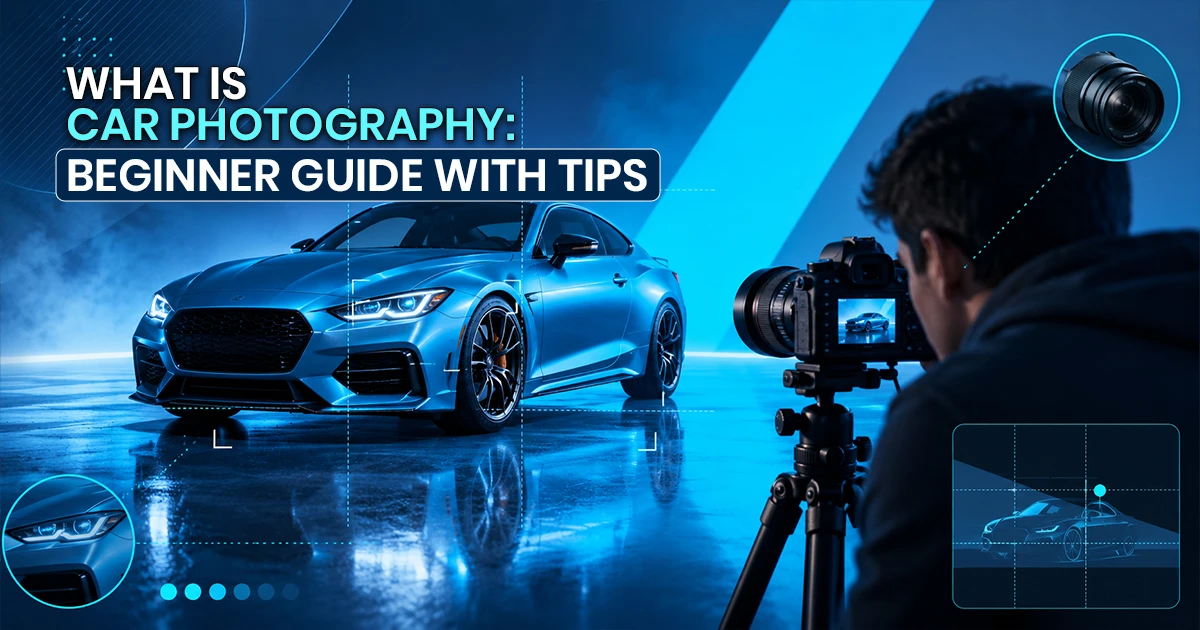
Cars are more than machines. It’s a combination of style, speed, luxury, aggression, and freedom. And car photography can bring all this into one single frame. It is the art of capturing cars in a way that looks clean, sharp, and eye-catching.
You see car photos in ads, on Instagram, and in showrooms. But not all of them are attractive. Some images get ignored. Others make people stop and look.
Today, people decide fast. They scroll, they look, and they judge within seconds. A strong car photo grabs attention right away. A weak one gets skipped without a second look.
So, what is car photography really? And why does it matter so much for business, social media, and even personal passion?
In this guide, I’ll walk you through it like you’re right next to me on a shoot. No fluff. Just practical steps to help you improve fast.
What Is Car Photography?
Car photography is the art of photographing cars in a way that makes them look their best. It’s about shaping how people feel when they see them.
Car photography is not just about pointing a camera and clicking. It is about picking the right angle, light, and background so the car stands out and shows its design, details, and personality.
Not all photographs get attention. Some photos feel flat and boring. Others make the same car look powerful, premium, and exciting. The difference comes from how you use light, reflections, and composition. Look stunning when photographed the right way.
Why Is Car Photography Important?
Car photography is important because it creates an attractive visual that greatly assists in marketing purposes and increasing sales.
Good car photography grabs attention fast. It helps brands sell cars, helps creators grow online, and makes businesses stand out.
The photo creates the first impression. A strong image makes people stop and look. A weak one makes them scroll away.
Here are some reasons why car photography is important:
Helps Sell Cars Faster
Clean, sharp, and professional car photo images make the car look more valuable and trustworthy. This attracts buyers’ attention to notice a vehicle quickly. People are likely to click on a listing when the photos stand out.
Creates a Strong First Impression
Car photography is the first thing a user notices when it comes to their eyesight. Before they check the price, features, or specs, they look at the image. A clean and well-shot photo can instantly make the car feel premium and exciting.
Builds Brand Trust & Value
Professional car photography makes a brand or dealership look more reliable. Poor photos can make even a great car feel cheap or unprofessional. Strong visuals help businesses look more serious and polished.
Increases Social Media Engagement
People stop scrolling when an image feels dramatic, clean, or unique. Any eye-catching car photos naturally attract more likes, shares, and comments on social media.
Types of Car Photography
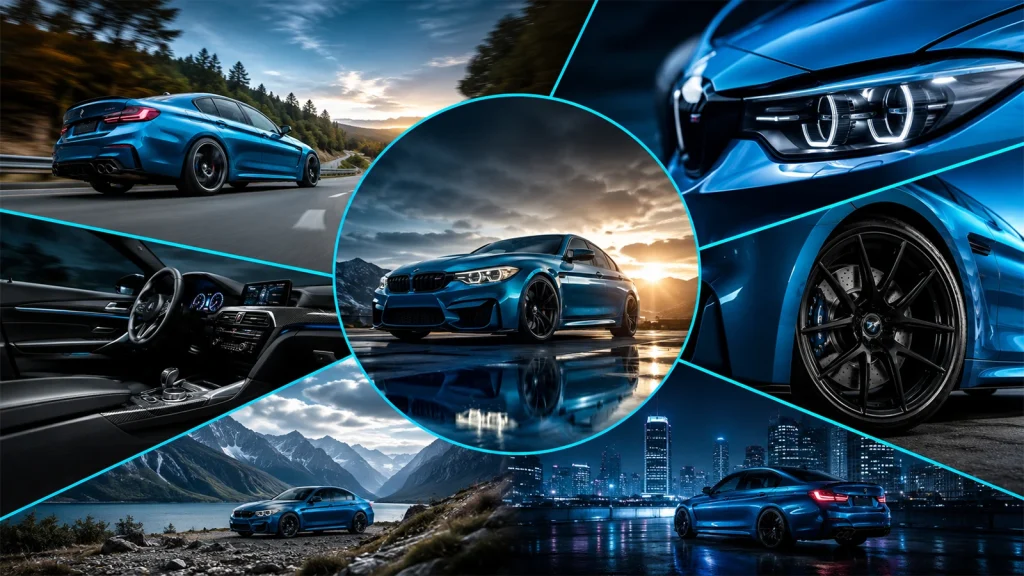
There are different types of car photography, such as commercial, detail, lifestyle, studio, rolling shots, event photography, and portrait photography. Each car photography style uses different lighting, camera angles, settings, and locations. Most photographers prefer low-angle shots with a three-quarter view during golden hour because soft lighting makes the car look cleaner, sharper, and more dramatic.
I do not mean just taking random photos of cars in different places. Every type of car photography is planned carefully to create a certain mood, highlight specific features, or tell a story through the image. Same car, different vibe. Change the shooting style, and it can look luxurious, sporty, or even aggressive.
Here are some types of car photography:
Commercial photography:
Commercial car photography is mainly used for advertisements, marketing campaigns, and brand promotions. The goal is to focus heavily on reflections, paint clarity, and symmetry because every small detail matters in advertising.
Detail Photography:
Detail photography focuses on the smaller parts of a car, such as headlights, badges, wheels, stitching, exhaust tips, or interior controls. I usually use tighter framing and controlled lighting here because reflections and shadows can easily ruin close-up shots.
Lifestyle Photography:
Lifestyle car photography shows the car in a real-world environment rather than a controlled setup. The idea is to create emotion and tell a story through the image. For lifestyle photography, location, weather, and natural light are very crucial. This gives an authentic and cinematic feel.
Studio Photography:
Studio car photography is used for luxury, exotic, and product-focused shoots because it allows photographers to control every reflection and shadow on the car’s surface. Studio shoots require careful light placement since car bodies reflect almost everything around them.
Rolling Shots or Motion Photography:
Rolling shots capture a car while it is moving. The car move in the speed abound 30 to 40 miles per hour. These shots are usually captured from another moving vehicle using slower shutter speeds between 1/30s and 1/100s. This creates motion blur in the background and wheels while keeping the car sharp.
Event/Car Show Photography:
Event or car show photography happens at meets, exhibitions, races, or automotive events.
The most challenging part is that the photography has to be done in a very crowded or unpredictable environment with changing light conditions.
Portrait Photography
When doing portrait photography, the focus is on the subject. Portrait car photography brings out a car’s personality. Photographers use lighting, angles, and composition to create emotion in the shot. Low camera angles, dramatic backgrounds, and clean reflections help the car look bold, elegant, and powerful.
What Makes a Car Photo Look Professional?
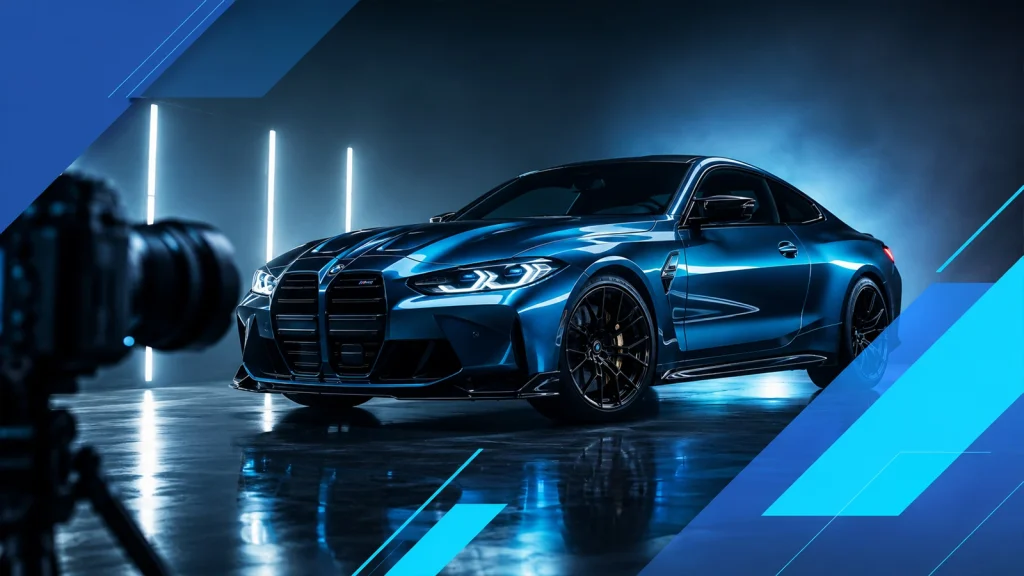
A good car photo needs the right light, clean reflections, a strong angle, a simple background, and sharp focus.
As it grabs attention in seconds. In fact, according to Auto Remarketing, clean and well-framed photos can get up to 87% more clicks than blurry and poor images.
Good photography builds trust, highlights details, and makes the car feel more valuable.
Here are some tips and ways to make a car photo look professional:
Lighting (golden hour explanation)
You shoot at noon. The car looks flat. You shoot at sunset. The car looks alive. That is the golden hour. It lasts only for 60 minutes. This happens shortly after sunrise or before sunset. The softer light reduces harsh reflections and keeps the paint color accurate.
However, lighting can make a $20,000 car look like a luxury model or make a supercar look dull. Golden hour light sits around 3000K to 4500K. This warm light makes metallic paint look richer and more cinematic.
Essential Equipment
Definitely, you might need a Hollywood setup for a professional car shoot. But you do need the right tools.
Tools like a gear, a DSLR, a 50mm f/1.8 prime lens, a sturdy tripod, LED light panels, a 5-in-1 reflector, and a polarizing filter.
Most professionals shoot between f/7.1 and f/11 aperture settings. This keeps the entire car sharp from front to back.
Angle (low-angle magic)
Shooting a car from a low angle makes it look more powerful and aggressive. This is the single biggest technique that separates beginner shots from professional ones.
The best trick is to start with the 3/4 front angle. Stand 45 degrees from the front corner of the car. Crouch at knee height. Lie on the ground. Shoot up at the car. The wheels look bigger. The body looks longer. The car dominates the frame.
Background (clean vs messy)
A cluttered background kills a professional photo instantly. The car is the subject. Everything behind it should support, not compete.
Professional photographers choose backgrounds that support the vehicle instead of competing with it. Color contrast also matters. A dark car often looks better against lighter surroundings, while bright cars stand out against darker environments.
Reflections control
Cars are mirrors. They reflect everything. Expert photographers take precautions. A clean reflection on the hood and doors adds depth and realism. An ugly reflection of a tree, a building, or your own shadow ruins the shot completely.
Shoot at 90 degrees to the sun. Reflections peak here. The polarizer works hardest. Test angles. Move three feet. Check the hood. Move again.
Composition Basics
Professional car photography is not random. Every frame guides the viewer’s eyes toward the vehicle. Composition is how you place the car inside the frame.
One of the most common techniques is the Rule of Thirds. Instead of placing the car directly in the center, photographers position it slightly off-center. This creates movement and balance.
Leading lines also improve composition. Roads, bridges, lane markings, and architecture naturally direct attention toward the car. Most automotive shots use horizontal framing because it matches the shape of the vehicle and captures more environmental context.
Post-Processing
Editing is the only thing that turns a good photo into a great one. But you have to keep in mind that over-editing destroys credibility.
Most photographers shoot in RAW format because RAW files capture more image data than JPEG files.
According to Adobe, RAW files can store up to 4,096 brightness levels per channel, while standard JPEG files store only 256.
How Can You Learn Car Photography
Car photography may feel tough in the beginning. But it becomes simple when you follow the right steps. You do not need expensive gear or a professional studio to start.
Most successful automotive photographers improve by consistently practicing basic skills.
In fact, Adobe reports that photographers who practice shooting techniques regularly improve technical accuracy significantly faster than those who only study theory.
Here’s a step-by-step path that actually works:
Step 1: Learn How Your Camera Works
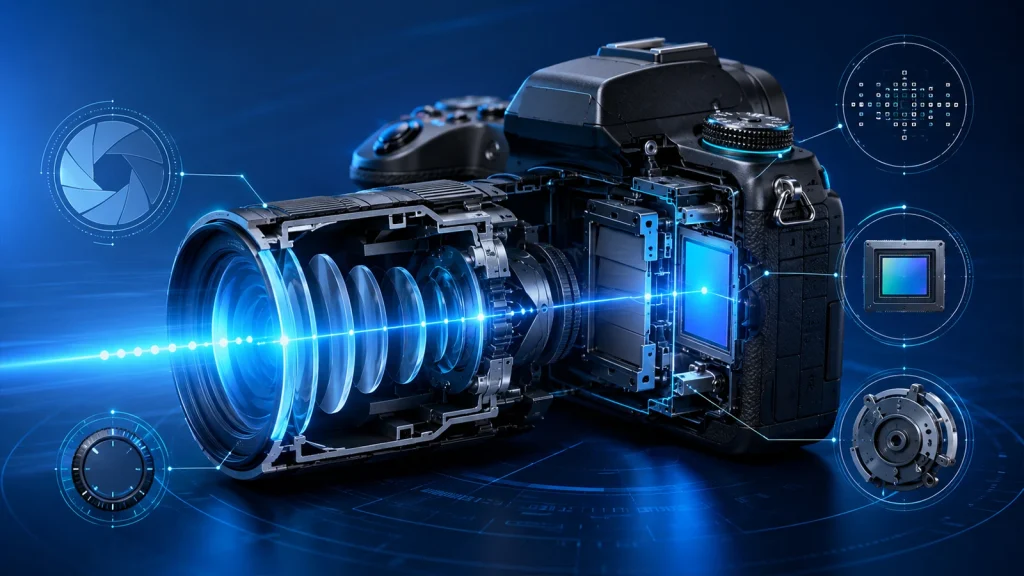
It’s better to start with your smartphone. Your smartphone shoots 4K video and 12MP photos, which is enough to begin.
Start simple. Take the same car, change your camera settings each time, and compare the photos side by side.
Before shooting cars, learn the basics of camera control. Understand the exposure, shutter speed, ISO, and aperture.
For starters, the following settings directly affect how the car looks in the final image:
- A low ISO, like 100, keeps images clean and sharp
- A wider aperture, like f/2.8, creates background blur
- A smaller aperture, like f/8, keeps the whole car sharp
Step 2: Study Light Before Anything Else
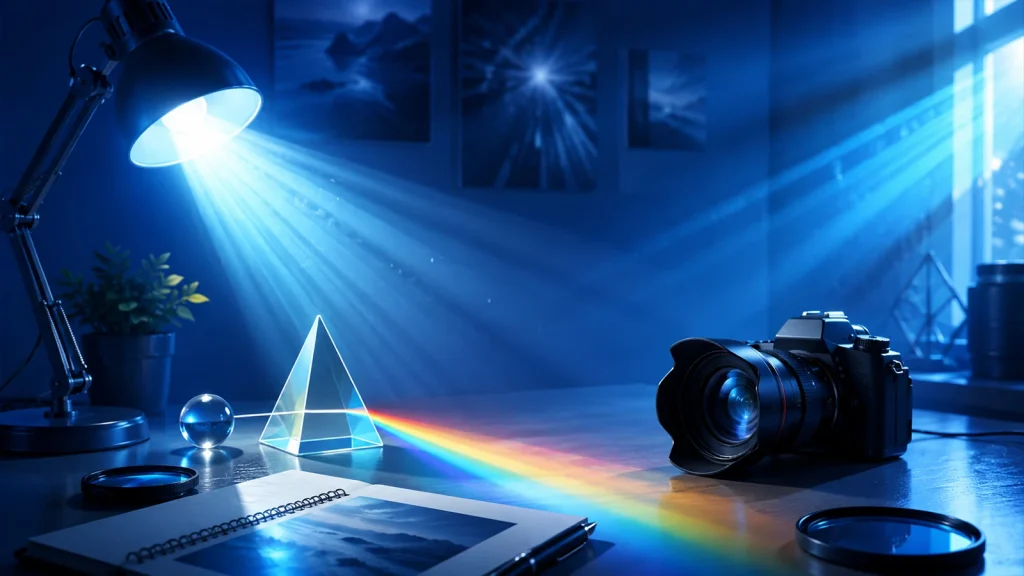
As a beginner, you should know that good lighting can take better photos than using expensive gear in poor light. Choose golden hour for shooting, as it’s lighting reduces reflections and improves paint detail naturally.
As a photographer, you need to understand the direction of light, reflection control, shadow placement, and color temperature.
Position the car so sunlight hits at 45 degrees. This creates defined shadows that emphasize hood lines and wheel arches. Flat front-lighting kills dimension.
Step 3: Practice Angles That Make Cars Look Better
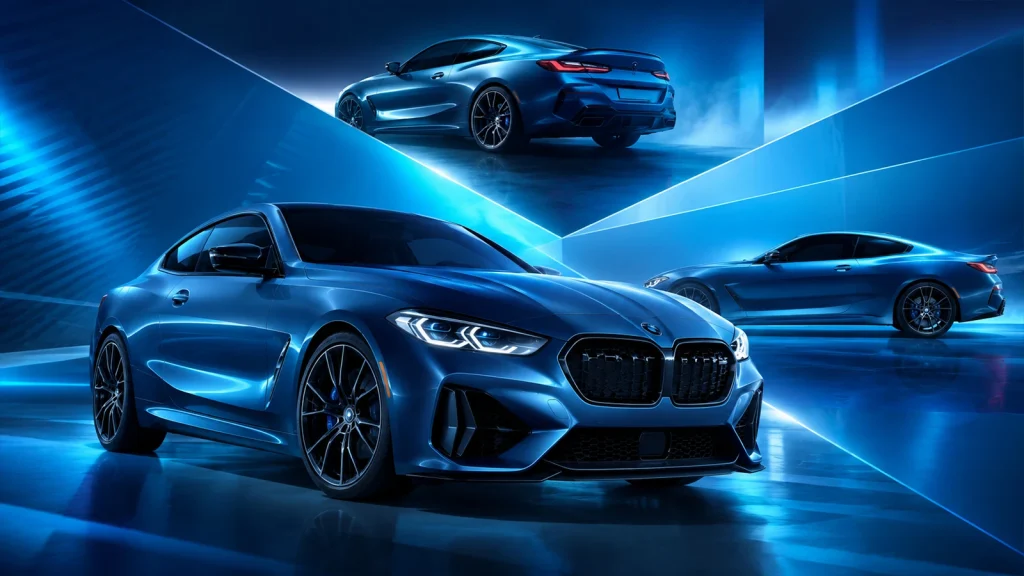
Car photographers rely on a few key angles. They shoot from the three-quarter front, straight side, low front for impact, rear three-quarter, and close-up detail shots to highlight design.
Low angles usually make cars look wider, faster, and more aggressive. High angles can make performance cars look smaller and less powerful.
Start with the classic 3/4 front angle because it shows the front design, side profile, wheels, and body lines.
Step 4: Learn Composition Like a Professional
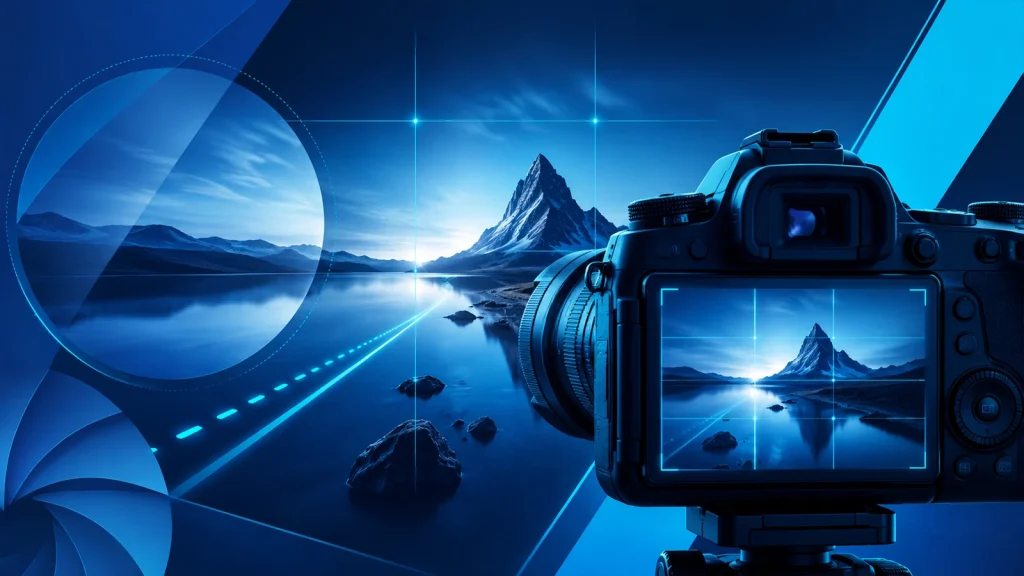
Composition guides the viewer’s eye. Professional car photographers avoid placing the vehicle without intent inside the frame.
Start your photography journey with simple composition rules like the rule of thirds, leading lines
Symmetry and negative space.
Roads, bridges, and parking lines guide the viewer’s eye toward the car. Clean composition improves visual clarity and creates a cinematic, high-end look.
Step 5: Master Reflection Control
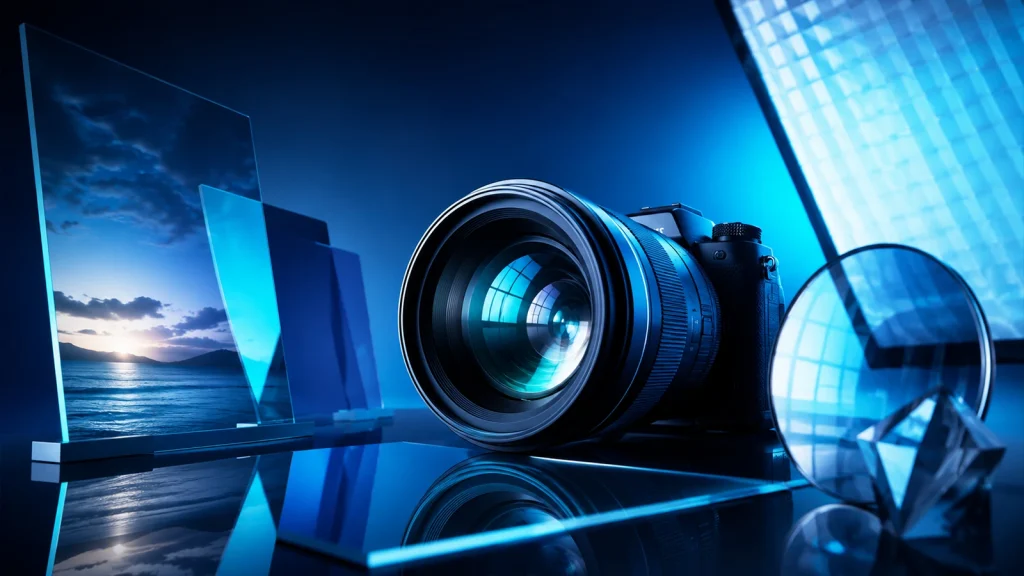
When you control reflections well, your car photos instantly look more professional. Cars reflect everything around them, like trees, buildings, street signs, people, and bright sunlight.
Professional photographers shift the position until the reflections on the car body look clean and controlled. A circular polarizing filter helps reduce glare on glass, chrome, and paint surfaces.
Step 6: Start Editing Your Photos Properly
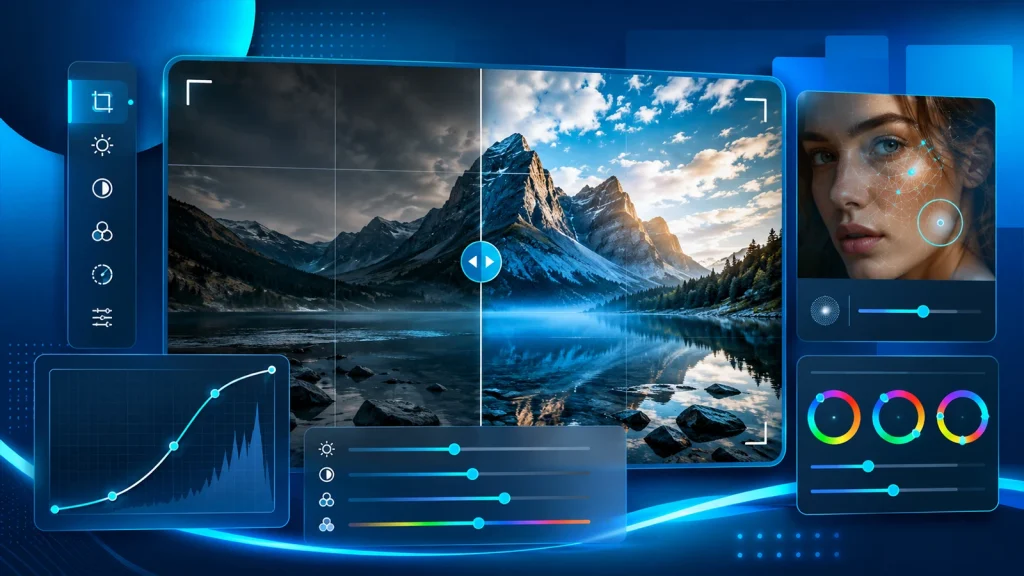
Post-processing is where good shots become portfolio pieces. Most beginner photographers prefer Adobe Lightroom, Adobe Photoshop, and Capture One for editing. This software hugely helps exposure, color balance, contrast, sharpness, and reflection cleanup.
Shoot in RAW format whenever possible. RAW files store far more image data than JPEG images. This gives better flexibility during editing.
Here are simple steps for a beginner to the editing workflow:
- Fix white balance first, aim for neutral, accurate color
- Boost contrast by 10–20 points to add punch
- Lift shadows slightly to reveal detail in dark areas
- Add clarity (+15 to +25) to sharpen body lines and textures
- Use an HSL panel to make the car’s color more vivid without oversaturating
Step 7: Practice Rolling Shots and Motion Photography
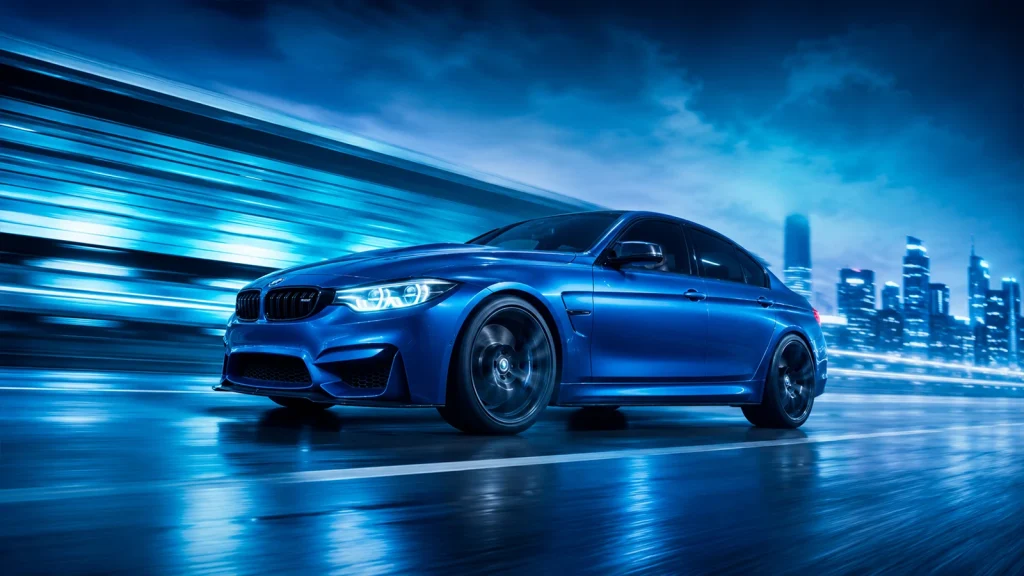
Static shots look clean, but motion shots create excitement. The simplest way to execute rolling shots is by setting the shutter to 1/60s to 1/125s, driving parallel to the subject car, and burst shooting.
Rolling shots make viewers feel speed and energy. Safety matters here. Professional rolling shots are usually done on controlled roads, with good communication between drivers, and of course, at safe speeds.

As a beginner, you need to put in extra effort to stand out. Thus, post your work. Get eyes on it. Improve. Show only your 20 absolute best images. Quality beats quantity. Studios hire based on 5-10 images, not 500.
Post your best car photos regularly on platforms like Instagram, Behance, and 500px to build your audience and attract potential clients.
The best platforms for car photographers:
- Instagram: Automotive creators who post 4 to 5 times every week often grow nearly 3x faster than creators who post randomly.
- 500px: Great for serious critique and connecting with professional photographers.
- Reddit: Helpful feedback from people who know automotive photography well.
Basic Equipment You Need to Do Car Photography
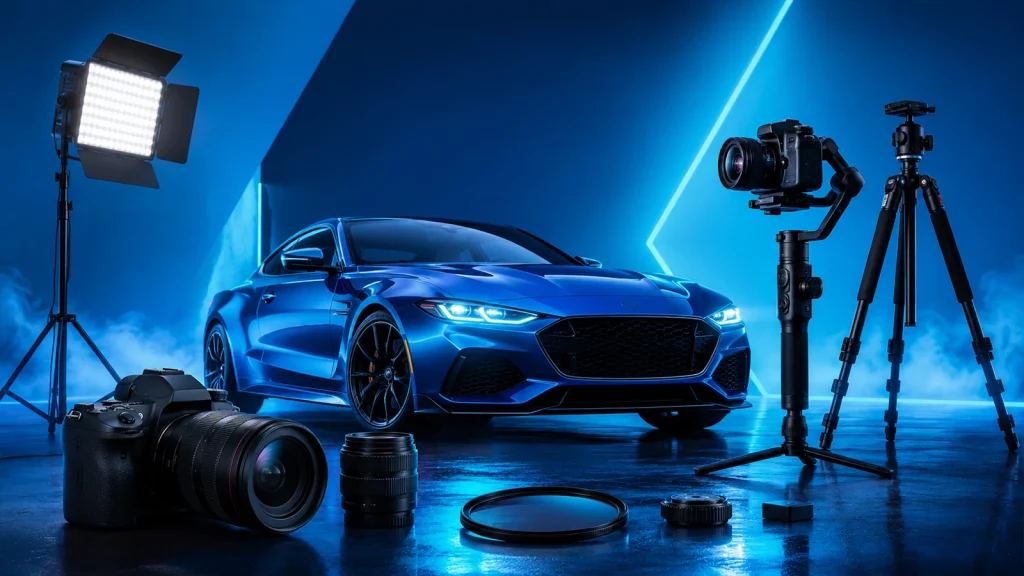
Did you know that many professional car photographers started with used cameras and lenses? As a beginner, you won’t need any massive studio setup to shoot great car photos.
As a photographer, you must first learn how to use light, angles, and camera settings the right way.
You only need a few basic tools to start, like a camera with manual mode, a sharp lens, a tripod, and a polarising filter. And this setup helps you shoot clean and professional car photos.
Here is the basic equipment you need to do car photography:
- Camera: Start With Full Manual Control
A camera with manual settings gives you complete control over shutter speed, aperture, ISO,
and focus. This control is crucial when shooting any reflective surface, moving cars, or low-light scenes.
However, according to CIPA camera industry data, mirrorless camera sales now outperform DSLR sales globally due to improvements in speed and image quality.
Mirrorless cameras make car photography easier in several ways. They focus faster, handle low light better, and show exposure changes in real time. Plus, they weigh less, so photographers can shoot longer without fatigue.
- Pick the Right Lenses
Can you guess the most common mistake most photographers make? They spend too much money on the camera body and ignore the lens.
A great lens can help you capture sharper details, better depth, cleaner background blur, and more natural car proportions.
Most car photographers prefer wide-angle lenses like:
- 24mm for dramatic wide shots
- 35mm for balanced perspectives
- 50mm for close-up details
- Tripod: The Secret to Sharp Photos
A tripod is a non-negotiable piece of equipment, especially during car photography. During the day, you can get away with handheld shooting. But for night shoots, light trails, and long exposures, having a tripod is mandatory.
Get a tripod with the following features:
- Must have the Load capacity of 2x your heaviest setup
- Ball head with separate pan lock
- Carbon fiber legs
- Must have a height of at least 150cm
- Polarizing Filter
Even though a polarizing filter is a small accessory, it still makes a huge difference. Without a polarizer, reflections can hide the car’s body lines and paint texture. Professional photographers rotate the filter while shooting to control glare levels directly inside the camera.
A circular polarizing filter reduces unwanted reflections on windows, windshields, paint surfaces, and chrome trim. Professional photographers rotate the filter while shooting to control glare levels directly inside the camera. Therefore, it creates richer paint color, cleaner reflections, better contrast, and more visible details.
- Lighting Equipment
It’s best to use natural lighting, especially golden hour. But once the sun goes down, lighting equipment becomes important.
Soft lighting helps reveal the shape of the vehicle without creating harsh hotspots on the paint.
Most professional photographers use LED light panels, portable strobes, softboxes, and light wands. Professionals place lights at angles instead of directly facing the car. This creates smoother reflections and better body definition.
- Cleaning tools
For photographers, dust, fingerprints, water spots, and tire marks, or any kind of visible marks, are highly disturbing for a photographer.
Therefore, a photographer needs to carry a microfiber cloth, tire shine, glass cleaner, and quick detail spray.
What Is the Correct Position of a Car for Photography?
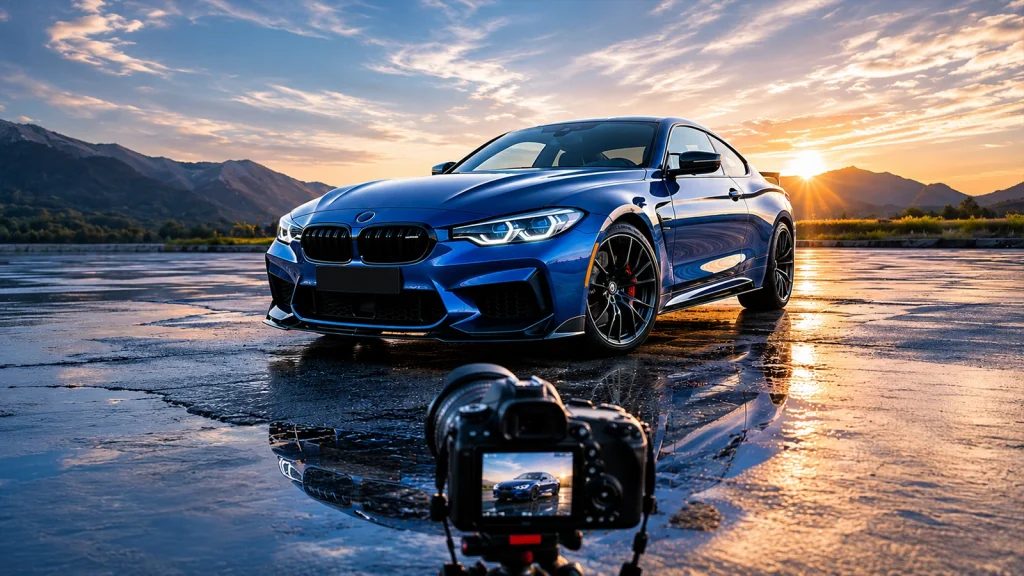
Do you know that a car’s position can completely change how a vehicle looks in photos? A small movement of just a few feet can improve lighting, reflections, and body lines instantly.
A professional automotive photographer sets a car in such a way that it transforms any ordinary car into a premium-looking car.
They positioned the car in such a way that it controls the light direction, reflections, background balance, camera angle, and shadow placement.
Here are some tricks to position a car for photos:
- Start with the Front 3/4 Angle: The front 3/4 angle is the most popular position in automotive photography. It shows both the front and side of the car in a single frame. 3/4 Angle highlights the headlights, front grille, hood lines, wheels, and side profile.
- Face the Car Toward the Light: Professional photographers usually position the car at a slight angle toward the light source instead of directly facing it.
- Keep the Wheels Straight or Slightly Turned: Straight wheels create a clean and balanced appearance. Slightly turned wheels create a more sporty and aggressive feel.
- Leave Space Around the Car: Professional photographers leave negative space around the vehicle to create a cleaner and more cinematic composition.
- Avoid Distracting Background Objects: Poles, signs, trash bins, and random vehicles can appear to “grow” out of the roofline if the car is positioned badly.
- Use Reflections to Shape the Car: Professional photographers place the car where reflections appear smooth and controlled across the body panels.
- Lower the Camera for a Stronger Look: Most professional automotive shots place the camera around headlight height or lower.
Common Car Photography Mistakes Beginners Must Avoid
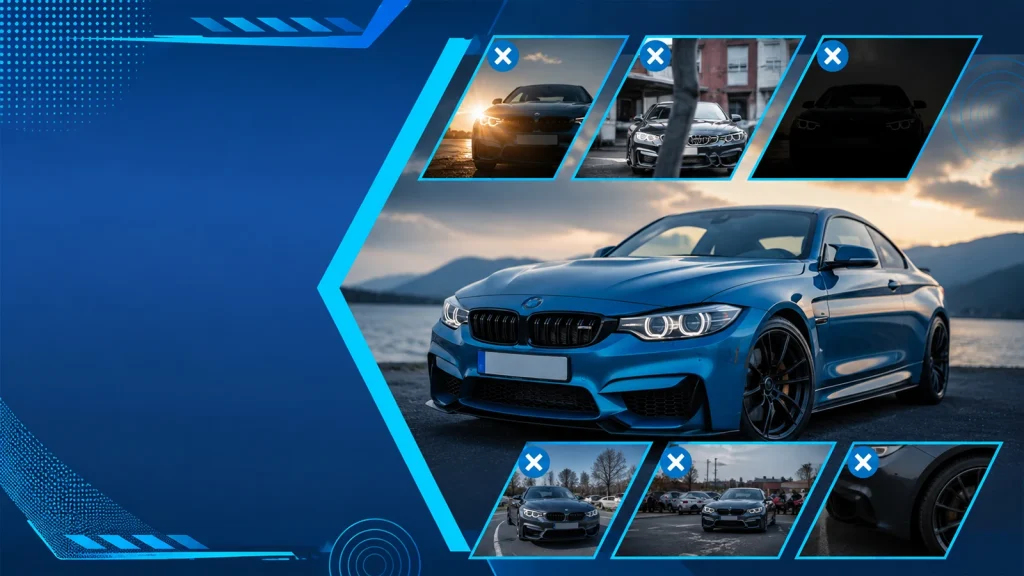
Do you know a slightest mistake can ruin the whole shot? One bad angle, one harsh reflection, or one messy background, and the whole car loses its impact.
Here are some mistakes beginners must avoid:
- Shooting at the Wrong Time: Shooting at midday (10 am to 3 pm) will create hard shadows under the car, overexposed highlights on paint, strong glare on glass, and a flat-looking body shape.
- Standing at the Wrong Height: Shooting from eye-level, 160 cm to 170 cm, can compress the car vertically and make it look small and uninspiring.
- Letting the Background Steal the Show: Any kind of cluttered backgrounds, like parked cars, rubbish bins, random pedestrians, ugly signage, can pull the viewer’s eye away from the subject
- Ignoring Reflections: A car is basically a moving mirror. It picks up everything around it. If you are not careful, you will see yourself, nearby cars, or ugly objects on the paint.
- Weak Framing and Composition: Good composition guides the viewer’s eyes. Following these simple techniques, such as the rule of thirds for balance, using roads as leading lines, and leaving space around the car for breathing room.
Is Car Photography a Good Career or Side Hustle?
Yes, car photography can pay well and also work as a side hustle. If you enjoy cars and cameras, you already have a strong starting point.
Everyone needs great car photos. Dealerships, brands, marketplaces, and social media creators use them every day.
Cars sell faster when photos look professional. That is why businesses invest heavily in automotive visuals.
Here are some of the reasons why a photographer is a good career choice:
- Turn a weekend hobby into paid client work faster than most creative careers.
- You do not need a studio setup to start getting clients.
- Earn from multiple sources like shoots, reels, editing, and brand content.
- Can start locally and still attract global audiences through social media.
- Stay creative because every car, location, and lighting setup feels different.
- Learn valuable technical skills like lighting, composition, and color grading.
- Build a personal style that helps people recognize your work instantly.
Who are the Best Car Photographers to Follow?
Well, this is the best section, do you know why? Because in this, you get to know about your inspiration. Some of the popular car photographers are Larry Chen, GF Williams, Chris Labrooy, and Amy Shore.
Many of these creators reach millions of viewers on Instagram, YouTube, and automotive magazines.
Here are some of the best car photographers worth following right now:
- Larry Chen: He is known for high-energy motorsport photography, cinematic rolling shots, and behind-the-scenes car culture content. Larry Chen also uses advanced action photography techniques.
- GF Williams: GF Williams also uses wide environmental framing. Instead of showing only the car, he includes mountains, roads, cities, and weather. This builds atmosphere and makes the photo feel alive.
- Chris Labrooy: He creates surreal 3D automotive art using CGI and digital rendering. He takes real car designs and places them in unreal worlds. You see floating roads and futuristic landscapes that feel almost dream-like.
- Amy Shore: She captures natural emotion and atmosphere. That makes her work feel authentic and timeless. Often use soft natural light and documentary-style composition.
Want your car photos to look professional while you learn? Try Offshore Clipping’s editing services to see how clean, sharp images can transform a shot. Use it as a reference for your own photography practice.
FAQs on Car Photography

Is car photography hard for beginners?
Yes, car photography is hard for beginners at first. Reflections, lighting, and camera angles can feel tricky. Start with natural light, simple backgrounds, and low-angle shots. Practice regularly, and your car photos will improve much faster.
Can I do car photography with a phone?
Yes, you can do car photography with a phone. Modern smartphones use AI image processing, HDR, and multiple lenses to capture sharp car photos. Shoot during golden hour, use low angles, clean the lens, and avoid digital zoom for more professional results.
What is the best time for car photography?
The best time for car photography is during golden hour, shortly after sunrise or before sunset. Soft natural light reduces harsh reflections, improves paint color, and adds cinematic depth to your car photos.
How much do car photographers earn?
A car photographer earns between $35,000 and $75,000 per year on average. Experienced automotive photographers working with luxury brands, dealerships, or commercial campaigns can earn over $100,000 annually through shoots, editing, and licensing fees.